

Recommended for 3rd graders! A collection of easy self-study ideas you can try

For third-grade independent study, we recommend first identifying what your child is interested in.
When they learn about what they like, they can keep going and enjoy it.
Here, we introduce simple daily ideas that help with independent study while learning a little each day.
When children and adults learn together, they can be more curious and have more fun learning.
Learning opens up new worlds and helps build confidence.
Please use this as a reference, find something that sparks interest, and enjoy independent study!
- Recommended for 5th graders! A collection of easy self-study ideas you can enjoy while learning
- Recommended for 6th graders! A collection of easy self-study ideas you can enjoy while learning
- Recommended for 4th graders! A collection of easy self-study ideas to try
- Independent study that impresses your teacher! Science self-study ideas recommended for third graders
- Third graders will be hooked! A collection of science project ideas using everyday materials
- Recommended for elementary students! A collection of fun craft ideas for 3rd graders
- Self-directed study that impresses your teacher! Recommended independent science study ideas for 6th graders
- Self-study that impresses your teacher! Recommended science self-study ideas for 5th graders
- Recommended for elementary school students' independent research! Experiment and observation ideas using everyday materials
- Recommended for elementary school students! Science fair topics & craft ideas
- [For 2nd Graders] Make it with everyday materials! Irresistibly engaging ideas for independent research projects
- Recommended in March! A collection of surprising, little-known trivia that elementary school students will want to share
- Self-study that teachers will praise! Recommended independent science study ideas for 4th graders
Recommended for 3rd Graders! Easy Self-Study Ideas You Can Try (1–10)
Plant dyeing with vegetables

Would you like to try natural dyeing with vegetables? This time, let’s give onion dyeing a try.
First, as preparation, get a plain white towel and soak it in a mixture of 1 part soy milk to 2 parts water, then let it dry.
For the dye bath, place onion skins in a mesh bag and simmer for 20 minutes to make the dye.
Fold the towel and tie it with rubber bands—changing how you fold it and where you tie it creates different, interesting patterns.
Put the towel into the dye bath and simmer over low heat for 20 minutes, then rinse with water and let it dry.
Finally, fix the color using a mordant solution, and you’re done! Why not enjoy this as a free research project by exploring different perspectives, such as variations in patterns, results without the initial prep or mordant, and differences in color depth depending on simmering time?

Try making a train with copper wire and a battery

Let’s try making a train that runs using magnetism by applying the properties of electromagnets.
Wind copper wire into a long coil and place a battery with magnets attached to it inside the coil.
Then the magnetic force generated in the coil and the magnets’ magnetic force repel each other, causing the battery to start running through the coil like a train.
By changing conditions—such as why the battery starts moving, when the moving battery will stop, and whether changing the way you wind the coil affects how the battery runs—and summarizing the results in a report, you can create an excellent independent research project.

Bath bomb making

As a science project recommended for people who love stylish things, making bath bombs is a great choice.
You can make bath bombs with items from home improvement stores or 100-yen shops, so it’s quite easy.
However, simply making them isn’t enough for a middle school research project, so it’s recommended to test how they dissolve using various materials or explain in detail how bath bombs work.

Recommended for 3rd graders! A collection of easy self-study ideas you can try (11–20)
Self-made game in Scratch

Scratch is a game creation tool that makes it easy to give children opportunities to learn programming.
It’s free to use and runs in the browser—why not make game development your independent research project theme? Choose a game stage from a wide variety of backgrounds and give the stage a name by changing the costume name.
After creating three costumes for the stage, use a new message to set up character selection.
Prepare a character from “Choose a Sprite” and rename it.
By duplicating and modifying the code you create, you can experience programming.
With intuitive drag-and-drop operations, it’s a tool that helps you learn how to use a computer and how to make games.

Make a pinhole camera and study its structure

For your summer vacation independent project, how about making a pinhole camera? You can easily make one with craft paper, black construction paper, tracing paper, and aluminum foil! First, draw the layouts for an inner box and an outer box on the craft paper and cut them out.
Cut the construction paper to the same shapes and glue it onto the craft paper.
Assemble the boxes so that the black paper faces inward.
Attach tracing paper to the inner box, then sandwich aluminum foil in the pinhole frame and glue it in place.
Make a small hole in the center and attach it to the outer box.
Stack the outer and inner boxes, and your camera is complete! When you look into the box, the world appears upside down—it’s really fun.
Try to use it in a bright place.
Handmade claw machine

Crane games that let you grab candy, plush toys, and figures are popular with kids.
Let’s try making a homemade device so you can enjoy the excitement of “I wonder if this prize can be picked up with this arm movement…” at home.
Build the main body using cardboard or empty boxes.
Next, create the crane arm with straws or wooden chopsticks, and connect it with thread so it can move.
Prepare prizes you like, such as small toys or snacks.
By researching how crane games work as you build, you’ll also discover the fun of crafting.
This is a science project idea that’s enjoyable not only during the building process but also when you play with the completed game.
Research materials that can melt ice faster
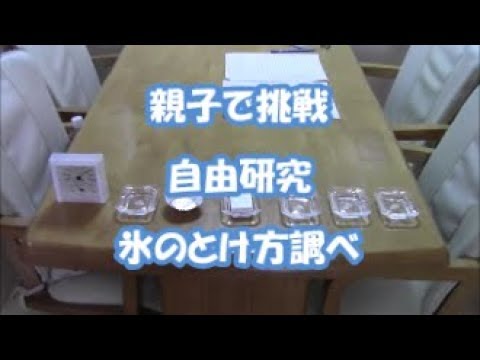
Here’s a science project that investigates how ice melts! For the experiment, use ice made from tap water as well as ice made by mixing in sugar or salt before freezing, and compare how they melt.
Also prepare materials like Styrofoam, aluminum cups, and glass plates to compare how the type of plate affects melting.
To properly record the experiment, use a thermometer and a timer to measure the exact room temperature and time.
Watching ice melt feels refreshing in the hot summer, making this a perfect project for summer vacation.