

[Diction Training] A Collection of Tongue Twisters to Improve Articulation

Tongue twisters are phrases that you repeat as fast as you can, even though they’re hard to say.
Many of you may have played with them when you were kids.
Tongue twisters aren’t just a fun pastime—they’re also effective for improving your articulation.
In this article, we’ll introduce tongue twisters that help you speak more clearly!
They’re great not only for articulation practice if you’re aiming to become an announcer or voice actor, but also useful when you’re asked to give a wedding speech or have to present in front of your class.
Practice hard and use them to achieve your dreams and goals!
- A collection of long tongue twisters. Also recommended for practicing announcements and narration.
- Tongue twisters that will make you laugh out loud! Super funny
- Challenging tongue twisters: Introducing high-difficulty phrases and sentences!
- [Recreation] Challenge! A roundup of tongue twisters recommended for elementary school students
- [Diction Training] A Collection of Tongue Twisters to Improve Articulation
- Perfect for pronunciation practice! A collection of English tongue twisters.
- Bursting into laughter! A roundup of Hakata dialect tongue twisters
- Nagoya dialect tongue twisters are exquisite! A fun collection where your tongue gets tied in knots with regional dialects
- “Chau chau, anta” — a Kansai-dialect tongue twister. A phrase only Kansai folks can say.
- [For Seniors] Boost Oral Function with Tongue Twisters! Recommended Picks to Try
- Chinese tongue twisters: A collection of rao kou ling helpful for learning Chinese
- Challenge together! A roundup of word games for adults
- [Rec] Interesting! A roundup of wordplay games
[Diction Training] A Collection of Tongue Twisters to Improve Articulation (1–10)
Frogs hop-hoppity three hop-hoppities; together that’s hop-hoppity six hop-hoppities.
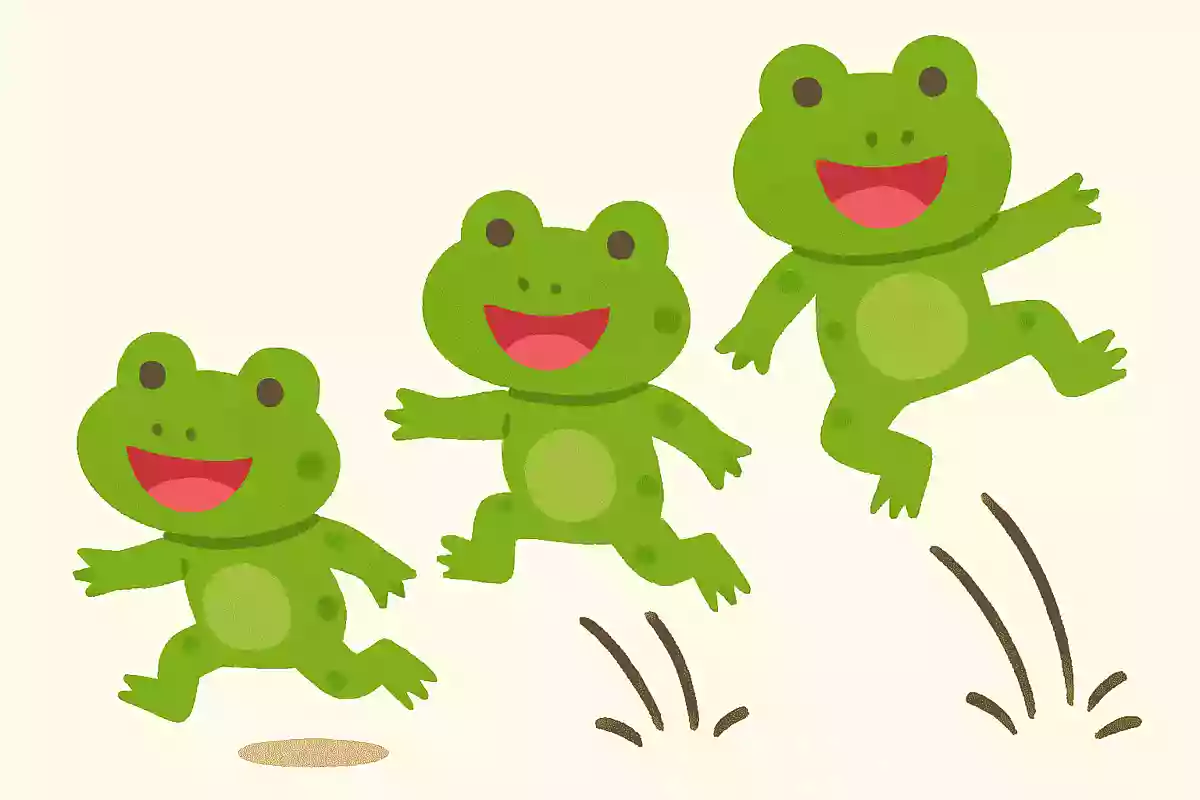
This classic tongue twister, which depicts frogs gathering, has a cute, playful feel to it.
The key points are the lip movement for “pyoko” and how you use your breath.
Be mindful of the combination: “pyo,” where you briefly close your lips to pronounce it, followed by “ko,” where you release the sound with your breath.
By focusing on your breath, you can imagine not only using your mouth but also engaging the muscles in your throat.
Also, because different mouth shapes come right before “pyo,” where lip movement is crucial, it becomes harder to say—so it helps you consciously focus on shaping your lips correctly.

Kit Kat cut cuntNEW!
It’s a tongue twister that goes, “I had to make sure to buy ‘KitKat’”—the product name.
KitKat is a famous chocolate snack, and many people love it.
Maybe the person who came up with this tongue twister wanted to eat one but forgot to buy it and was shocked.
For those used to speaking Hakata dialect, it might be easy, but for those who aren’t, it can be hard to say.
Since there are repeated small ‘tsu’ sounds, be careful not to bite your tongue and give it a try.

Say: “Apologize to Aya and Aya, apologize to Aya and your parents.”
A tongue twister in dialogue style: “Apologize to Aya, and tell her to apologize to her parents.” There are several versions of this tongue twister, such as “Apologize to Aya, and tell her to apologize to the greengrocer,” or “Tell the greengrocer that Aya is going to the bathhouse with her parents.” All versions rhyme on ‘Aya’ (o-aya) and make the sentences complex in a similar way.
Even without small kana or voiced sounds, it’s still difficult—a rare type of tongue twister.
Give it a try!

[Diction Training] A Collection of Tongue Twisters to Improve Articulation (11–20)
You request a yo-yo as a method to prevent becoming frail.
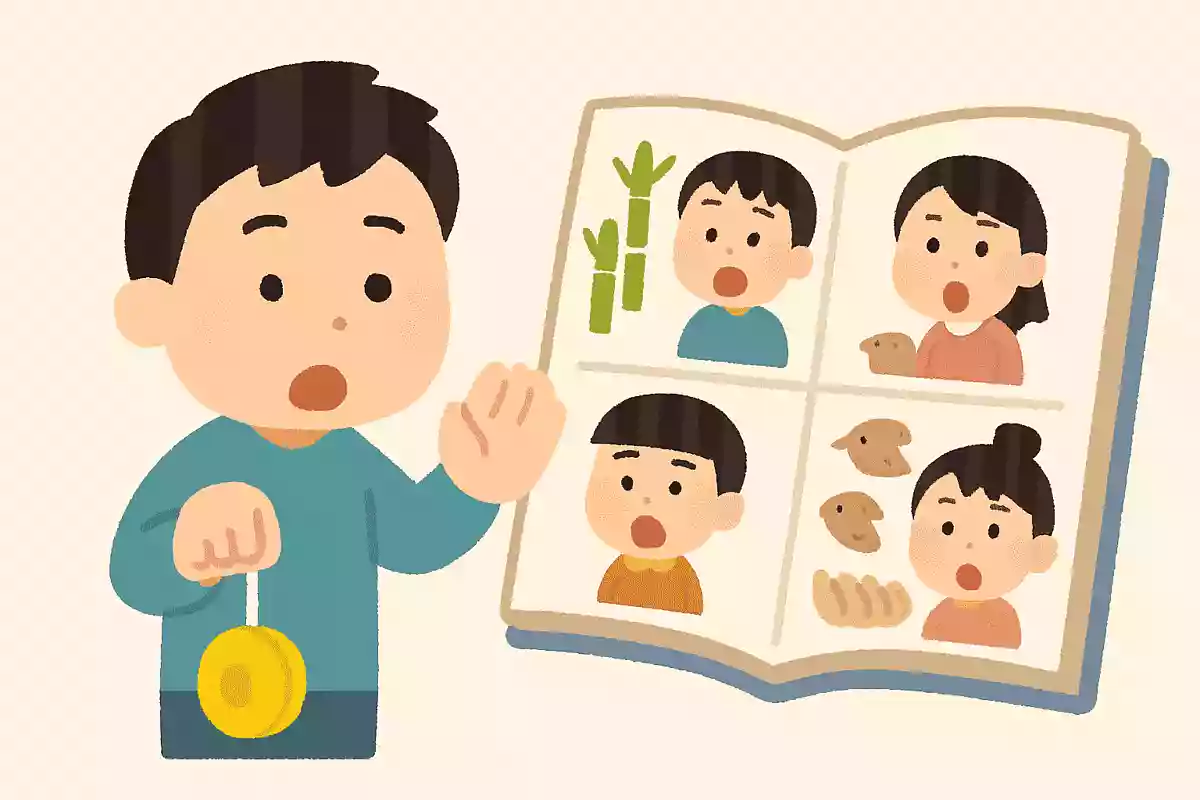
For those who struggle with the pronunciation of “yo,” this tongue twister might be a real hurdle: “A request for a yo-yo as a way to prevent becoming feeble.” Is someone asking for a yo-yo to prevent aging? Looking at the whole tongue twister, “yo” appears six times, and “yobo” appears four times.
Fortunately, there are no small characters (ゃゅょ), so just focus on the voiced sounds and give it a try.
Try saying it with an emphasis on the “bo.” By the way, some say yo-yos are effective for brain training.
Raw wheat, raw rice, raw eggs

Among tongue twisters, this one has long been a favorite, often played with by groups like The Drifters.
It’s simple yet quite difficult—but did you know there’s more to it? Surprisingly, the continuation goes: “yakimugi yakigome yaki-tamago, mushimugi mushigome mushi-tamago, yumugi yugome yu-tamago,” meaning “grilled barley, grilled rice, grilled egg; steamed barley, steamed rice, steamed egg; boiled barley, boiled rice, boiled egg.” It’s surprising that there’s a continuation at all, and saying it all the way through makes it even harder—pretty challenging! Don’t stop at the first part; try the whole thing for a real enunciation workout.

Author intraoperative
The tongue twister “chosakusha shujutsu-chu” (author undergoing surgery) gives off a somewhat serious vibe.
It makes you wonder what happened to the author, doesn’t it? This tongue twister is simply composed of hard-to-say words lined up in a row.
However, it’s trickier than it looks, so be careful.
In particular, the “shujutsu” part is where many people stumble.
Also, because it’s short, you keep running into the tricky spots as you repeat it, which is one reason it’s so difficult.
Red paper roll, blue paper roll, yellow paper roll

There’s a classic Japanese tongue twister that goes, “Aka-makigami, ao-makigami, ki-makigami” (red wrapping paper, blue wrapping paper, yellow wrapping paper).
You can probably get through the first part, but the latter part around “ki-makigami” tends to be tricky.
The repeated “ki” in a short span makes your tongue trip up.
If you consciously separate the color and the word “makigami,” as in “aka | makigami,” it should come out more smoothly.
Incidentally, it’s said that the three colors in this tongue twister refer to a red ogre, a blue ogre, and a yellow ogre, and that chanting the tongue twister can drive them away.