

[Diction Training] A Collection of Tongue Twisters to Improve Articulation

Tongue twisters are phrases that you repeat as fast as you can, even though they’re hard to say.
Many of you may have played with them when you were kids.
Tongue twisters aren’t just a fun pastime—they’re also effective for improving your articulation.
In this article, we’ll introduce tongue twisters that help you speak more clearly!
They’re great not only for articulation practice if you’re aiming to become an announcer or voice actor, but also useful when you’re asked to give a wedding speech or have to present in front of your class.
Practice hard and use them to achieve your dreams and goals!
- A collection of long tongue twisters. Also recommended for practicing announcements and narration.
- Tongue twisters that will make you laugh out loud! Super funny
- Challenging tongue twisters: Introducing high-difficulty phrases and sentences!
- [Recreation] Challenge! A roundup of tongue twisters recommended for elementary school students
- [Diction Training] A Collection of Tongue Twisters to Improve Articulation
- Perfect for pronunciation practice! A collection of English tongue twisters.
- Bursting into laughter! A roundup of Hakata dialect tongue twisters
- Nagoya dialect tongue twisters are exquisite! A fun collection where your tongue gets tied in knots with regional dialects
- “Chau chau, anta” — a Kansai-dialect tongue twister. A phrase only Kansai folks can say.
- [For Seniors] Boost Oral Function with Tongue Twisters! Recommended Picks to Try
- Chinese tongue twisters: A collection of rao kou ling helpful for learning Chinese
- Challenge together! A roundup of word games for adults
- [Rec] Interesting! A roundup of wordplay games
[Diction Training] A Collection of Tongue Twisters to Improve Articulation (21–30)
Ministry of Agriculture and Commerce Patent Bureau, Bank of Japan Treasury Bureau, Monopoly Patent Authorization Bureau, Tokyo Patent Authorization Bureau
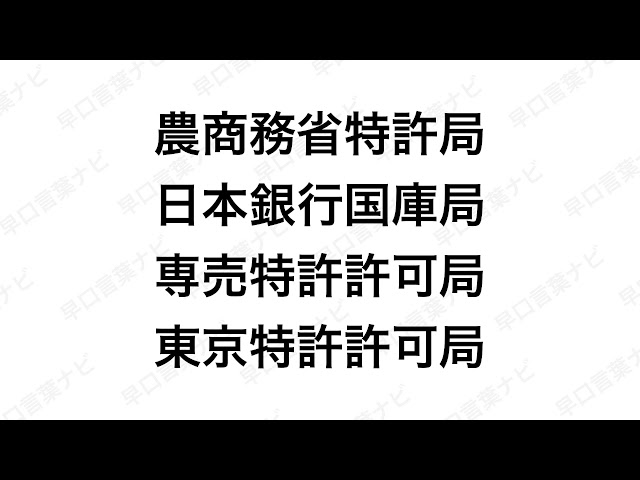
It’s a classic tongue twister that’s long and easy to trip over.
Because a string of names of government offices and bureaus with long titles comes one after another, you can’t help but lose the rhythm and laugh when you say it out loud.
Both kids and adults can enjoy taking on the challenge while getting into the rhythm.
Words with similar sounds like “tokkyo” (patent), “kyoka” (permission), and “kyoku” (bureau) appear repeatedly, so each repetition naturally trains your mouth movements and sense of rhythm.
Every time you read it, the tempo and timing change, letting you enjoy both the fun of speaking out and a good laugh—there’s plenty of challenge to it, isn’t there?

Oh yeah, I split my bike and ended up messing it up, so I had to hurry and go kick the bike.
“Speaking of which, my bike ended up breaking, so I had to hurry to the bike shop” is a dialect phrase used around Nagoya and Mikawa, and it’s also known as a tongue twister.
It means, “Come to think of it, my bicycle broke, so I had to quickly go to the bike shop.” “Sou iya” corresponds to the standard “sou ieba” (“speaking of which”), “ketta” means “bicycle” and is commonly used in Aichi Prefecture, “kowakete matta” means “ended up breaking,” “chatto” means “quickly” or “in a flash,” and “ikanakankatta” means “had to go.” Because similar sounds repeat, it becomes a bit tricky to say quickly, making it a fun sentence.
Red Myakumyaku, Blue Myakumyaku, Yellow Myakumyaku

A tongue-twister so fiendishly hard it’ll tie your tongue in knots, bursting with playful rhythms of color and sound.
Because the repeated “Myaku-Myaku” appears over and over, saying it aloud naturally tangles your mouth and sparks laughter.
The key is that both kids and adults can enjoy it like a game.
Images of red, blue, and yellow pop into your head, letting you imagine a little story just by reading, which makes speaking it out loud even more fun.
Each repetition shifts the rhythm and timing, so every attempt brings new laughs and fresh discoveries.
Try it once and you’ll be hooked—this is a notoriously tricky tongue-twister.
Questioning conducted at the water intake site regarding distilled water upstream

This is a tongue twister with amusing sound rhythms and word links.
Because of similar sounds like “jōryū,” “jōryū,” and “shūryō,” and tricky combinations such as “shusui-jō” (water intake station) and “jijō chōshu” (questioning about circumstances), your mouth tangles when you say it aloud, which leads to laughter.
Children can enjoy taking on the challenge while playing to the rhythm, and adults can use it for tongue and mouth exercises or pronunciation practice.
Each time you read it, the rhythm and timing of your voice change, so the more you repeat it, the more fun it becomes to speak out loud; it’s also enjoyable to imagine a little story as you read.
Even though it’s short, the sequence of catchy sounds makes it an addictive and rewarding tongue twister to try.
Symphony, songs, concerto
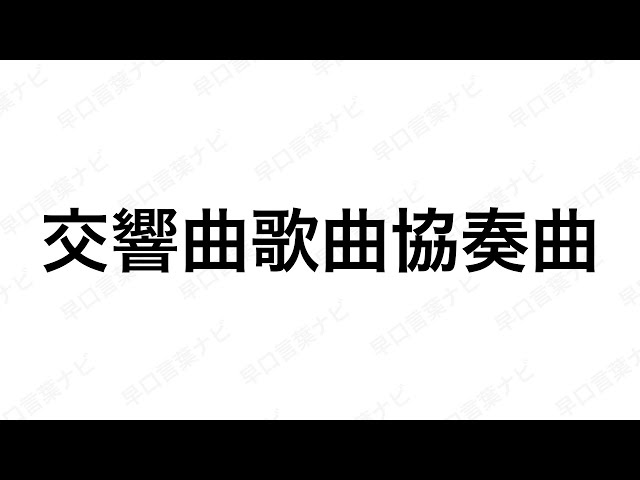
As a tongue twister, it’s a short sentence, but it seems quite hard to say.
Right at the start with “symphony,” you might almost bite your tongue.
Picture the hiragana for “kōkyōkyoku” in your head and articulate it clearly.
The next word, “kakyoku” (art song), is easy to say on its own, but saying it right after “kōkyōkyoku” is much more challenging! Many people probably stumble when moving from the “ku” to the “ka” sound.
However, the final word, “kyōsōkyoku” (concerto), is easier to pronounce, so if you can make it through “kakyoku,” you can surely master the whole thing.
Do some mouth exercises first, then give it a try.

Ultimate luxury aircraft at a deserted Kyushu airport

This passage contains many words starting with the K sound, so many people might stumble over the latter half with “kyūkyoku kōkyū kōkūki” (ultimate luxury aircraft).
The first half, “kūkyona Kyūshū kūkō” (empty Kyushu airport), is still easier to say, but the shift from kōkyū to kōkūki is particularly tricky.
If you try to rush through it, your mouth won’t keep up, so be mindful of your speed and deliberately shape each word with your lips and tongue.
There’s a “no” in the middle of the sentence, so it’s helpful to imagine taking a brief pause there.
Once you can do that, practice saying the whole thing in one breath.
Frogs go pyoko-pyoko, three pyoko-pyoko; together pyoko-pyoko, six pyoko-pyoko.
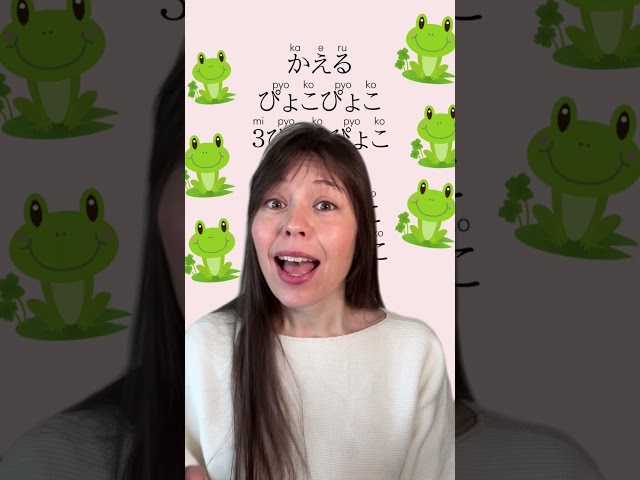
If you can say it clearly, it sounds cool—this is one of the classic tongue twisters.
“Pyoko-pyoko” is just so hard to say! Quite a few people end up turning “pyo” into “po.” To deliver this one quickly and stylishly, start by pronouncing it slowly and make sure “pyo” doesn’t become “po.” Even after you can say it slowly, don’t speed up all at once—gradually pick up the pace.
Practice until you can say it well enough to show off with confidence.
