

Masterpieces of classical piano that are too beautiful for words. A gathering of delicate tones that cleanse the soul.


The piano is a captivating instrument that transforms into a variety of expressions depending on the performer and the manner of interpretation.
Its delicate yet dynamic grace and its ineffable depth—paired with a vast palette of tones and rich resonance—are said to rival an entire orchestra with a single instrument.
This time, from among works that allow you to fully savor the piano’s timbre, we have selected pieces with a focus on “beauty.”
Whether you love to play the piano or to listen to it, we hope you will immerse yourself in its allure, savoring each delicate note one by one.
- Poignant and beautiful! A collection of recommended piano pieces
- It’s so cool if you can play these on the piano! A selection of irresistibly charming masterpieces.
- [Classical Piano Masterpieces] A carefully selected collection of moving pieces that will bring you to tears
- [For Adults] Recommended for Piano Recitals! A Curated Selection of Impressively Sounding Masterpieces
- Piano Masterpieces: Surprisingly Easy Despite Sounding Difficult!? A Curated Selection Perfect for Recitals
- [Masterpiece Classics] A special showcase of gem-like masterpieces so beautiful they’ll move you to tears
- [For Advanced Players] A Curated Selection of Classical Masterpieces to Tackle at Piano Recitals
- [Intermediate Level] A curated selection of piano masterpieces featuring strikingly brilliant melodies!
- [Calming Classics] Soothing masterpieces whose piano melodies gently touch the heart
- [Classical Music] All pieces under 3 minutes! A collection of short and cool piano pieces
- [Intermediate Level] Cool Piano Pieces You Can Play [Great for Recitals Too]
- Piano Masterpieces: Music you’ll want to listen to and play—beloved classic works
- Today's Piano: Masterpieces and Popular Pieces Woven with Delicate Tones
Masterpieces of Classical Piano That Are Simply Too Beautiful: A Gathering of Delicate, Soul-Cleansing Tones (11–20)
Suite bergamasque, No. 3: Clair de LuneClaude Debussy

The third piece from Claude Debussy’s Suite bergamasque, Clair de Lune, is considered his most famous work.
It is frequently featured in concerts and used as background music in visual media.
This exquisitely beautiful piano piece evokes a dreamlike scene where the moon’s gentle light emerges in the night sky.
In terms of tempo and note density, it isn’t particularly difficult, but conveying the piece’s unique atmosphere is a formidable challenge.
You could even say that real practice begins only after you’ve finished reading the score.
Be sure to focus on the beauty of the sound and the calm, flowing lines as you practice.

Film, Volume 2, No. 2: “The Moon Over the Ruined Temple”Claude Debussy

Images, Book 2, by Claude Debussy, a master of Impressionist music.
Its second piece, “Cloches à travers les feuilles” (The Moon over a Ruined Temple), depicts the mysterious scene of moonlight filtering into a desolate temple.
Inspired by East Asian painting, the work was composed in 1907.
Characterized by parallel chord sonorities, it is simple yet imbued with delicate shadings.
By skillfully exploiting the piano’s resonance, it beautifully conveys stillness and a mystical atmosphere.
This piece showcases Debussy’s refined musical sensitivity to the fullest and can be seen as an ambitious work that opened new possibilities for piano music.
It is recommended not only for those interested in classical music but also for anyone seeking calm through quiet sounds.
Piano Sonata No. 2, First MovementAlexander Scriabin

A piano sonata by the Russian composer Alexander Scriabin, published in 1897.
The first movement, which depicts a quiet night on a tropical shore, begins gently and gradually portrays the dark, tumultuous motion of the deep sea.
In the middle section, the soft glow of moonlight is beautifully expressed.
It is a work rich in emotion, blending Romantic sensibility with Impressionistic elements.
Scriabin possessed synesthesia, perceiving music in colors.
The passages in E major are said to symbolize the “pale blue radiance of moonlight,” making the tonal coloristic depiction especially captivating.
This piece is recommended for those who wish to savor delicate timbres and a resonant, richly colored sound.
Intermezzo, No. 2 from Six PiecesJohannes Brahms
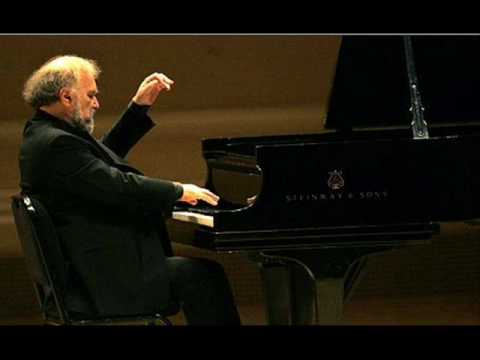
Johannes Brahms composed Six Pieces in his later years.
The second piece, Intermezzo, is marked to be played tenderly and with affection, and it exudes a benevolent, compassionate character.
Completed in 1893, it was dedicated to his close friend Clara Schumann.
The inner-voice melody is striking, and it is important to perform it at a singable tempo with heartfelt expression.
Brahms called this work a “monologue,” intending for performers and listeners to engage in a dialogue with their inner selves through the music.
With its long-breathed quality, like quiet respiration in solitude and silence, it possesses a timeless beauty suited both to contemplation before the performance and to the lingering afterglow that follows.
Etude in the Form of Variations, Op. 13 — Posthumous No. 5Robert Schumann

Symphonic Etudes by Robert Schumann, a leading composer of the 19th-century German Romantic movement.
Although written for solo piano, it is distinguished by a rich sonority reminiscent of an orchestra.
It consists of a theme with twelve variations, plus five pieces known as the “posthumous” variations.
The piece introduced here is the fifth of those posthumous pieces.
Its sparkling melody and beautiful resonance are truly captivating.
Listening to this piece alone can be very soothing, but hearing the entire work may give you a deeper sense of the richness of piano music.
If you’re intrigued, please give it a listen.
Liebesträume No. 3Franz Liszt

Franz Liszt’s Liebesträume No.
3, renowned for the beauty of its melody, is a widely beloved work that appears not only in concerts and recitals but also in films and TV dramas.
Originally composed as the song “O lieb, so lang du lieben kannst” (“Oh, love as long as you can”), it was later arranged by Liszt himself for solo piano, and today it is more often performed as a piano piece.
Its romantic character makes it perfect for relaxing on a pleasant autumn evening or for savoring its beautiful melody while playing.
Be sure to immerse yourself in its depth this arts-filled autumn.
Masterpieces of Classical Piano That Are Too Beautiful: A Gathering of Delicate, Soul-Cleansing Tones (21–30)
fir treeJean Sibelius

The Finnish composer Jean Sibelius wrote for a variety of instruments and ensembles, yet throughout his life he continued to compose small piano pieces.
The Spruce is beloved by many for its beautiful melody and its relatively easy performance demands.