

Masterpieces of classical piano that are too beautiful for words. A gathering of delicate tones that cleanse the soul.


The piano is a captivating instrument that transforms into a variety of expressions depending on the performer and the manner of interpretation.
Its delicate yet dynamic grace and its ineffable depth—paired with a vast palette of tones and rich resonance—are said to rival an entire orchestra with a single instrument.
This time, from among works that allow you to fully savor the piano’s timbre, we have selected pieces with a focus on “beauty.”
Whether you love to play the piano or to listen to it, we hope you will immerse yourself in its allure, savoring each delicate note one by one.
- Poignant and beautiful! A collection of recommended piano pieces
- It’s so cool if you can play these on the piano! A selection of irresistibly charming masterpieces.
- [Classical Piano Masterpieces] A carefully selected collection of moving pieces that will bring you to tears
- [For Adults] Recommended for Piano Recitals! A Curated Selection of Impressively Sounding Masterpieces
- Piano Masterpieces: Surprisingly Easy Despite Sounding Difficult!? A Curated Selection Perfect for Recitals
- [Masterpiece Classics] A special showcase of gem-like masterpieces so beautiful they’ll move you to tears
- [For Advanced Players] A Curated Selection of Classical Masterpieces to Tackle at Piano Recitals
- [Intermediate Level] A curated selection of piano masterpieces featuring strikingly brilliant melodies!
- [Calming Classics] Soothing masterpieces whose piano melodies gently touch the heart
- [Classical Music] All pieces under 3 minutes! A collection of short and cool piano pieces
- [Intermediate Level] Cool Piano Pieces You Can Play [Great for Recitals Too]
- Piano Masterpieces: Music you’ll want to listen to and play—beloved classic works
- Today's Piano: Masterpieces and Popular Pieces Woven with Delicate Tones
Masterpieces of Classical Piano That Are Too Beautiful: A Gathering of Delicate, Soul-Cleansing Tones (21–30)
Pavane for a Dead PrincessMaurice Ravel
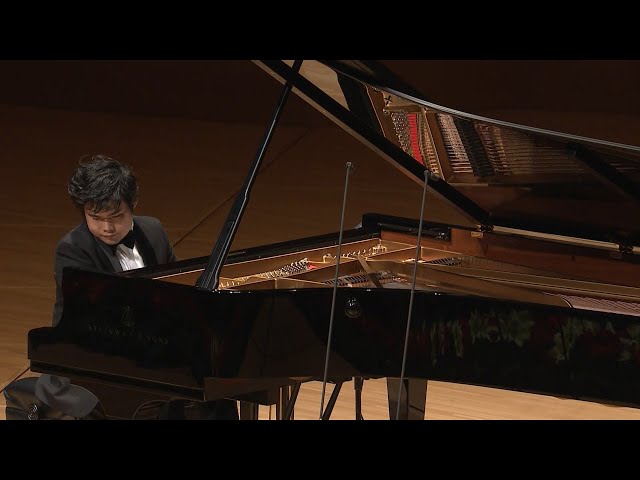
Used in TV commercials and as insert songs in films, Maurice Ravel’s Pavane for a Dead Princess is likely the most frequently heard of his piano works.
A pavane is a type of court dance that spread from the 16th to the 17th century.
Even first-time listeners can immerse themselves in its pleasant atmosphere and feel the beauty of Impressionism.
It’s also a popular piece for recitals and isn’t especially difficult.
However, careful practice is essential to convey its elegance and delicacy.
Aim for a refined mood by playing with a gentle, rounded tone, free of sharp edges.

“Dreams” from “Eight Concert Etudes”Nikolai Kapustin

Kapustin fuses jazz and classical music, forging a unique path distinct from Piazzolla.
Dream is a somewhat subdued piece, yet it is a highly demanding work with great performance impact.
The intricate combinations of notes in the right hand shape the melody and create a distinctive sense of weightless suspension.
Masterpieces of Classical Piano That Are Too Beautiful: A Gathering of Delicate, Soul-Cleansing Tones (31–40)
Ave MariaFranz Schubert

Schubert, a composer who represents Austria.
He is a very famous composer.
He created many masterpieces, but among them, this Ave Maria may be the piece that best suits the description “beautiful.” As one of Schubert’s very late works, it is an exceptionally refined composition in which not a single note is wasted.
On piano, you can savor that refined musicality even more.
Luciano Pavarotti’s operatic rendition of Ave Maria is also outstanding, so be sure to check it out.

La Campanella, No. 3 from Grandes études de PaganiniNiccolò Paganini
One of Niccolò Paganini’s signature works, La Campanella.
Needless to say, he was a violinist with one of the greatest performing techniques in human history.
He was also a great composer who left behind many masterpieces.
This piece is striking for its structure: it begins with an air of tragic solemnity and gradually shifts into a more comical, gothic atmosphere.
Although originally written as a violin concerto, it also pairs well with the piano, resulting in a rendition that feels even more surreal than the concerto.
Goldberg Variations, BWV 988J.S.Bach

J.S.
Bach is a great German composer who has been loved by many people for a long time—one of those famous composers everyone knows.
He had exceptional talent for composing violin and piano sonatas, and he left behind many masterpieces.
I would love to introduce one of Bach’s piano sonatas… but this time, I’d like to introduce a set of variations written specifically for the harpsichord: the Goldberg Variations, BWV 988.
Although it is often performed on the piano, the colors of the piece change greatly depending on the performer.
Nocturne No. 8 in D-flat major, Op. 27 No. 2Frederic Chopin

A piano piece composed in 1836 by Chopin, a representative composer of the Romantic era.
It is one of his most popular works, characterized by a structure that evolves from a single melody.
The main theme in the right hand overlays the left hand’s broken-chord harmonies, creating a delicate, melancholic atmosphere.
It builds beautifully toward a climax and concludes with ornamentation quintessentially Chopin.
Influences of Polish folk music can also be felt, and the piece portrays a romantic vision of the night.
Fully showcasing the piano’s appeal, it is recommended not only for pianists but also for anyone who enjoys listening to classical music.
Arabesque in C major, Op. 18Robert Schumann

Robert Schumann’s great masterpiece, Arabesque in C major, Op.
18.
The term “arabesque” means Arabic-style, and true to its name, an Arabian-sounding melody appears.
Although the difficulty of this piece varies depending on hand size, it can be performed without issue by, for example, sharing voices between both hands.
Its dotted-rhythm melody flows lightly yet remains delicate and romantic.
The piece is divided into six sections, presenting various scenes while returning to the opening theme.
Be sure to play it with an image of an Arabic style in mind.