

Masterpieces of classical piano that are too beautiful for words. A gathering of delicate tones that cleanse the soul.


The piano is a captivating instrument that transforms into a variety of expressions depending on the performer and the manner of interpretation.
Its delicate yet dynamic grace and its ineffable depth—paired with a vast palette of tones and rich resonance—are said to rival an entire orchestra with a single instrument.
This time, from among works that allow you to fully savor the piano’s timbre, we have selected pieces with a focus on “beauty.”
Whether you love to play the piano or to listen to it, we hope you will immerse yourself in its allure, savoring each delicate note one by one.
- Poignant and beautiful! A collection of recommended piano pieces
- It’s so cool if you can play these on the piano! A selection of irresistibly charming masterpieces.
- [Classical Piano Masterpieces] A carefully selected collection of moving pieces that will bring you to tears
- [For Adults] Recommended for Piano Recitals! A Curated Selection of Impressively Sounding Masterpieces
- Piano Masterpieces: Surprisingly Easy Despite Sounding Difficult!? A Curated Selection Perfect for Recitals
- [Masterpiece Classics] A special showcase of gem-like masterpieces so beautiful they’ll move you to tears
- [For Advanced Players] A Curated Selection of Classical Masterpieces to Tackle at Piano Recitals
- [Intermediate Level] A curated selection of piano masterpieces featuring strikingly brilliant melodies!
- [Calming Classics] Soothing masterpieces whose piano melodies gently touch the heart
- [Classical Music] All pieces under 3 minutes! A collection of short and cool piano pieces
- [Intermediate Level] Cool Piano Pieces You Can Play [Great for Recitals Too]
- Piano Masterpieces: Music you’ll want to listen to and play—beloved classic works
- Today's Piano: Masterpieces and Popular Pieces Woven with Delicate Tones
Masterpieces of Classical Piano That Are Too Beautiful: A Gathering of Delicate, Cleansing Tones (41–50)
Nocturne in D-flat major, Op. 37Aleksandr Glazunov

Glazunov is a composer who absorbed many of the best qualities of Russia’s great composers.
His Nocturne is not particularly famous, but it possesses a special beauty where robust, characteristically Russian sonorities blend with a Chopin-like melancholic melody.
Masterpieces of Classical Piano That Are Too Beautiful: A Gathering of Delicate, Soul-Cleansing Tones (51–60)
Piano Sonata No. 21 in B-flat major, D. 960Franz Schubert

A solo piano work composed by Franz Schubert in his final year.
It is his last piano sonata, written in 1828, two months before his death.
A large-scale piece in four movements, it encapsulates Schubert’s musical essence.
The expansive openness of the first movement, the meditative beauty of the second, the light, dance-like character of the third, and the power of the fourth are especially striking.
From its quiet opening and melodies tinged with deep melancholy, there is an intangible sense of the premonition of death.
This work conveys Schubert’s inner world and emotional depth.
Highly recommended for those who want to savor the piano’s delicate timbres and expressive range.
Siciliano, Op. 78Gabriel Fauré

Gabriel Fauré, a great French composer known for his mastery of Romantic music.
Like Debussy, he was often labeled as a composer of “salon music,” but that by no means implies he was inferior as a classical composer.
I believe his appeal lies in a musicality that resonates across eras.
His Sicilienne is a work that fully showcases Fauré’s charm.
It is extremely famous, so almost everyone has heard it at least once.
The introduction in particular is striking: while centered on short notes, it carries a distinctive atmosphere that never becomes overly dark.

Sorrow of LoveKreisler=Rachmaninov

Fritz Kreisler’s masterpiece Liebesleid (Love’s Sorrow).
This work, written for violin and piano, was composed as a counterpart to Liebesfreud (Love’s Joy).
While not especially difficult, it is renowned for its strong performance impact and continues to be frequently played by many performers today.
Together with Liebesfreud and Schön Rosmarin, it forms a trilogy, so please listen to them as a set.
Gnossienne No. 1Erik Satie
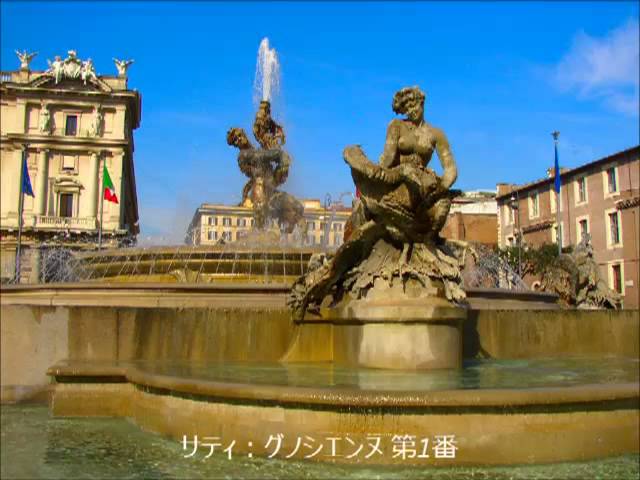
A song I want to listen to when I’m sad or troubled.
When my heart feels foggy over things I can’t control and I can’t get anything done, the melody of this piece slips gently into my heart.
Try stopping your thoughts for a moment and listen to the piano.
It won’t instantly lift the heaviness, but it will keep you from falling into a loop of negative thinking.
The steady, unhurried tempo of this piece loosens up thoughts that have become tightly bound.

Waltz No. 15 in A-flat major, Op. 39Johannes Brahms

Johannes Brahms, a great composer known for his meticulous and elegant style.
Because many of his pieces are calm, his works frequently appear on YouTube playlists for sleeping to classical music.
Among Brahms’s works, the one I especially recommend is the Waltz No.
15 in A-flat major, Op.
39.
Originally composed for piano four hands, it was later arranged for solo performance and has been played by many performers up to the present day.
This otherworldly Brahmsian waltz, bearing the imprint of Schumann, conveys a depth of artistry not found in other waltzes.
Years of Pilgrimage, Third Year, S.163/R.10, A283, No. 4: “The Fountains of the Villa d’Este”Franz Liszt

The piece we’re introducing today, Les jeux d’eau à la Villa d’Este (The Fountains of the Villa d’Este), is the fourth work in the Third Year of Franz Liszt’s Années de pèlerinage, a piano solo cycle by the Hungarian pianist-composer famed for his transcendental virtuosity, and it is regarded as one of his signature works.
This dazzling composition expresses the movement of water through delicate yet bold arpeggios, and it is said to have directly influenced Maurice Ravel’s Jeux d’eau and Claude Debussy’s Reflets dans l’eau.
Throughout the piece, the sonorities of arpeggios and tremolos are exquisitely beautiful and dramatic, yet never overwrought—remaining unfailingly delicate and romantic.
Do give it a listen while picturing glittering, dancing water.
