

Pick up Beethoven’s famous and representative works!

Ludwig van Beethoven created innovative music that served as a bridge from the Classical to the Romantic era, leaving a profound influence on later generations.
His music is passionate yet rich in beautiful melodies, and it conveys a sense of essential depth, as if pursuing things to their very core.
There are many masterpieces that everyone has heard at least once, such as “Fate” (Symphony No.
5) and “Für Elise.”
In this article, we’ve picked out some of Beethoven’s famous and representative works.
Why not immerse yourself in the music of Beethoven, one of the great composers?
- Mozart: An Introduction to His Signature and Popular Works
- Classical music by Japanese composers. Recommended classical music.
- Timelessly beautiful classical masterpieces. Recommended classical music.
- Cool classical masterpieces. Recommended classical music.
- [For Piano Recitals] Simple yet Cool Classical Pieces
- [Masterpiece Classics] A special showcase of gem-like masterpieces so beautiful they’ll move you to tears
- Debussy’s masterpiece. Popular classical music.
- Beethoven: A selection of gem-like masterpieces that are easy to play on the piano
- [Tchaikovsky] Pick up famous and representative pieces!
- Masterpieces by Franz Schubert: Sparkling classical works left by the King of Song. Recommended classical music.
- [Orchestra] Introducing famous and popular pieces
- J.S. Bach | Introducing Famous and Representative Works
- [Violin] A curated selection of beloved classic masterpieces and popular pieces that continue to be cherished across eras
[Beethoven] Pick Up Masterpieces and Signature Works! (181–190)
Symphony No. 9 “Choral”Ludwig van Beethoven

Beethoven’s Symphony No.
9—famously nicknamed “The Ninth”—is performed in many places at the end of the year.
Many people have probably heard the choral fourth movement at least once.
Its choral melody is also well known in Japan as the song “Ode to Joy” with Japanese lyrics.
Beyond Japanese, it has been translated into countless languages around the world and is sometimes sung in those versions.
Take this opportunity to experience “The Ninth” from beginning to end!

Symphony No. 9 “Choral,” Movement IIILudwig van Beethoven

When you think of the Ninth, it’s become a standard piece that’s always performed at the end of the year, but the famous Ode to Joy isn’t all there is to the Ninth.
In particular, the beauty of the third movement defies description and boasts an exceptionally high level of perfection.
From Symphony No. 9 in D minor, Op. 125 — Fourth Movement “Ode to Joy”Ludwig van Beethoven

In Japan, it is affectionately known as “the Ninth,” and as the year draws to a close, performances of the Ninth are held all over the country.
The lyrics of this piece are based on Schiller’s poem “Ode to Joy,” and in Japan the choral section is also called the “Song of Joy.” While there had been symphonic works that used voices before, this is considered the first work to employ vocal parts effectively.
In addition to voices, it also uses percussion instruments—such as cymbals and triangle—that had rarely been used in symphonies up to that point.
Symphony No. 9 “With Chorus”Ludwig van Beethoven
Affectionately known in Japan by the abbreviation “Daiku” (The Ninth), this piece is so beloved that events where everyone sings the Ninth together are held across the country at year’s end.
Symphony No.
9 is the ninth and final symphony Beethoven composed.
Because he included four vocal soloists and a mixed chorus in the final fourth movement, it is also called the “Choral” symphony.
The text uses Schiller’s poem “An die Freude” (Ode to Joy), and its main theme is widely known as the “Ode to Joy.” It premiered in 1824, though Beethoven is said to have aspired since around 1792 to set Schiller’s poem to his own music someday.

Symphony No. 5, First Movement “Fate”Ludwig van Beethoven
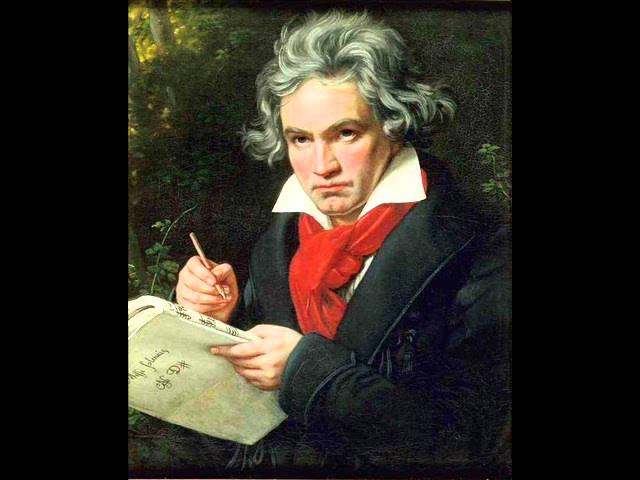
This piece is Beethoven’s Fifth Symphony, affectionately known in Japan as “Fate.” Listening as you follow the ingenious structure—from the striking opening, through the depths of darkness, step by step into a brighter world—is truly thrilling.
It feels almost like riding a roller coaster.
Even within the first movement there’s a shift from darkness to light, and across movements I through IV the music grows progressively brighter, so I recommend listening to all the movements straight through.
Symphony No. 6 “Pastoral”Ludwig van Beethoven

Known as the “Pastoral,” Symphony No.
6 is one of Beethoven’s most celebrated works, rivaling the fame of Symphony No.
5, the “Fate.” It is also a very rare example of a piece to which Beethoven himself gave programmatic titles.
Characterized by a gentle, expansive development that seems to convey the calm atmosphere of abundant nature, it offers a different side of Beethoven in contrast to the impassioned “Fate.” The composer himself stated that it is not a depiction of rural scenery, but rather an expression of the joyful feelings of people in the countryside.
In any case, let us immerse ourselves in the world of the “Pastoral” and savor the bountiful autumn.

Symphony No. 9 “Choral,” Fourth MovementLudwig van Beethoven
Beethoven’s Ninth Symphony is considered a year-end classic in Japan.
The piece consists of four movements, with the most famous being the fourth movement, which leads into the “Ode to Joy.” It begins with powerful orchestral tones and later features the familiar “Ode to Joy” chorus.
Many people in Japan even practice singing this section as the year draws to a close.
How about enjoying this classic, filled with the hope of spending joyful days through Christmas and from year’s end into the New Year?

I love you.Ludwig van Beethoven

Beethoven’s piece Ich liebe dich, also known as Tender Love, is a well-known solo song with piano accompaniment, commonly referred to as a German Lied, and is occasionally performed at piano recitals.
In terms of difficulty, it is very easy among Beethoven’s works, so even young children can complete it comfortably with practice.
The section where it modulates from G major to C major features the most beautiful melody, so when performing, pay attention to a gentle touch and clear contrasts.

Your love makes me at once the happiest and the unhappiest of men.Ludwig van Beethoven

Beethoven experienced a love that set his heart ablaze, yet he remained single throughout his life.
“Your love makes me the happiest man and at the same time the most miserable man.” Perhaps many of us have felt something similar.
Falling in love and riding its highs and lows may be a step toward growth.
If tears begin to swell and gather beneath your beautiful eyelashes, hold them back with steadfast courage so they do not overflow.Ludwig van Beethoven
He was a German composer.
Alongside J.
S.
Bach and others, he is an extremely important figure in music history and is known in Japan as the “Saint of Music.” While many of his famous quotes are positive and forward-looking, this one feels imbued with endurance, which struck me as very unusual.