

Recommended for rock fans too! — A classic album of modern blues

The birth of the blues, often called the root of rock ’n’ roll and jazz, dates back to the late 19th century.
Its forms are diverse and can’t be summed up in a single phrase: from Delta blues and country blues—often referred to as prewar blues—to Chicago blues and modern blues, which developed after the war in Chicago and incorporated electric instruments.
In this article, we introduce classic blues albums whose style and spirit continue to be carried on by many musicians even in the 2020s.
The lineup focuses mainly on modern blues that’s easy for beginners to enjoy, so even those who usually listen to rock will find it accessible.
- [2026] Masterpieces of Blues Rock: Recommended Albums You Should Listen to at Least Once
- [Western Music] Classic Blues Rock Songs: A Summary of Recommended Popular Tracks
- A roundup of classic Western jazz-funk albums—from staples to the latest releases
- Roundup of Famous Overseas Blues Guitarists
- [For Beginners] A Collection of Famous and Popular Delta Blues Songs
- A roundup of popular Western blues bands—also recommended for rock fans!
- Ranking of popular blues songs
- [Foreign Music] A Guide to Post-Rock: Essential Classics and a Recommended Pick
- The Appeal of Japanese Blues Rock: A Collection of Classic Japanese Blues Rock Albums
- The 1970s were the golden age of Western rock! Recommended classics and hit songs
- A classic of Japanese blues. Japanese blues that lets you get drunk on the sound and vocals.
- [A Must-See for Rock Beginners] KiYoshiro Imawano's Easy-to-Sing Songs
- The depth of guitar sound. A collection of songs with cool guitar.
Recommended for rock fans too! - Modern Blues Masterpieces (101–110)
Wang Dang DoodleKoko Taylor

Known as the “Queen of the Blues,” Koko Taylor is an iconic figure of Chicago blues, celebrated for her no-holds-barred vocal power.
Her 1969 debut album, Koko Taylor—produced by Willie Dixon—features 12 tracks, including her signature song, “Wang Dang Doodle.” Backed by a stellar lineup including Buddy Guy and Walter Horton, Taylor’s raw, powerhouse vocals explode throughout the record.
Though she went on to win numerous accolades such as the Grammy and Blues Music Awards, this album stands as the starting point of her illustrious career.
It’s a must-listen not only for those seeking the essence of the blues but also for rock and R&B fans alike.
Woman, You Don’t Have To Be So ColdLittle Milton

Despite his pure blues upbringing, Little Milton—a blues singer and guitarist—won widespread popularity with a musical style that brought in elements of soul, funk, and R&B.
Starting his music career in his teens, Milton signed with Checker Records, a subsidiary of the famed Chess Records, in 1960 and went on to release a string of hits.
In the 1970s, he scored success on Stax Records, a leading Southern soul label, with bluesy yet supremely soulful classics adorned with lavish horn sections and strings.
He is highly regarded as an important artist in both the blues and soul genres.
Although it’s hard to pick just one work from a long career that lasted until his passing in 2005, today I’d like to spotlight the 1973 album “Waiting For Little Milton,” a beloved classic from his Stax period.
From upbeat, irresistibly funky tracks to bluesy, mellow numbers, it’s a superb record that showcases Milton’s soulful vocals and the guitar work rooted in his blues background.

TrampLowell Fulson

When blues guitarist and singer Lowell Fulson released the song “Tramp” in 1967, plenty of hip-hop heads likely perked up the first time they heard it, thinking, “Wait a second…!” Blending funk elements into a soulful blues number, “Tramp” is known as a classic that Otis Redding covered as a duet with the Queen of Memphis Soul, Carla Thomas—and later became a foundational source, sampled in numerous tracks, most famously Cypress Hill’s “How I Could Just Kill A Man.” It’s a bona fide proto-funk blues classic.
The album released the same year under the title Tramp lines up track after track that, while rooted in the blues, throb with powerful funkiness—effectively bridging blues and soul.
If you’re curious about Lowell Fulson, a musician who even influenced B.B.
King, start with this one!
Season of the WitchMike Bloomfield, Al Kooper and Stephen Still
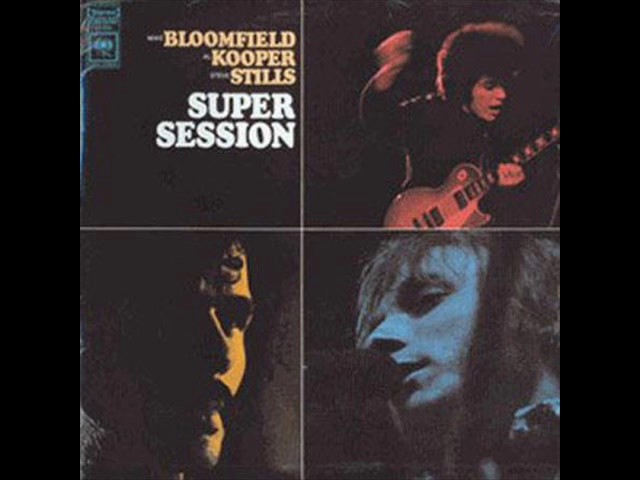
The album Super Session, released in 1968, brought together three heavyweight musicians: Mike Bloomfield, Al Kooper, and Stephen Stills.
Known as a landmark of blues rock, this work was a bold experiment centered on improvisation.
On the track Season of the Witch, Stills’s wah-wah guitar and Kooper’s organ engage in a brilliantly executed call-and-response.
Reaching No.
12 on the Billboard album chart and earning a Gold certification, the record has had a major impact on later musicians who carry on the spirit of the blues.
It’s a must-listen for rock fans as well.
Highway61Mississippi Fred McDowell

Fred McDowell, a leading figure in blues singing with guitar—the ultimate form of guitar expression.
Originally an ordinary farmer living in the Delta, he’s known for the story of being “discovered” by people in the music world while playing blues during breaks from farm work.
A track where earthy, raw blues pulses with powerful life.
Recommended for rock fans too! — Masterpieces of Modern Blues (111–120)
Straighten Up & Fly RightNat King Cole

This is a popular song by Nat King Cole, who had been active as a pianist since the 1930s.
Until then he only played piano, but in 1944 he also debuted as a singer with “Straighten Up and Fly Right,” which became a huge hit.
This track is included on “The Extraordinary & Unissued,” a collection of Nat King Cole’s works.
I`Cant Quit You BabyOtis Rush
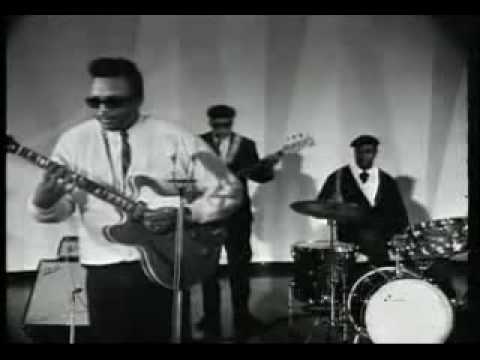
Band blues later had a major influence on white rock bands, and the song “I Can’t Quit You Baby,” often performed live by the hard rock band Led Zeppelin, was written by Otis Rush.
He was a bluesman outstanding in both guitar and vocals.