

For Seniors: Effective Recreation for Preventing Care Needs—Have Fun While Staying Healthy


For the physical and mental well-being of older adults, rehabilitation that involves moving the arms and legs is ideal.
However, simply following a set rehabilitation routine doesn’t always lead to motivation.
In this article, we introduce enjoyable recreational activities that contribute to arm and leg rehabilitation for older adults.
From group activities that everyone can get excited about to options you can focus on individually, you’ll surely find fun ways to work on functional improvement.
Choose according to each person’s physical and mental condition.
We hope you find this helpful.
- [For Seniors] Enjoy safely even during the COVID-19 pandemic: Seated activities
- [For Seniors] Refresh Your Mood! Lively, Get-Moving Games
- [For Seniors] Recreational activities and games that let you have fun while strengthening your legs
- [For Seniors] Simple Recreational Activities You Can Enjoy While Seated
- For Seniors: Fun and Lively Exercise Recreation
- [For Seniors] Guaranteed to Liven Things Up! A Collection of Brain Training Activities That Will Spark Laughter
- [For Seniors] Fun Recreational Activities Without Equipment
- [For Seniors] Core Training: Recommended Simple Rehabilitation
- [For Seniors] Easy and fun seated activities you can do in your room
- [For Seniors] Introducing Recreational Activities Anyone Can Enjoy at Geriatric Health Facilities!
- [For Seniors] Leg and lower-back training: Fall prevention
- For seniors: Leg-strengthening exercises you can do without overexertion.
- Recreation Activities Effective for Long-Term Care Prevention for Seniors
For Seniors: Effective Care-Prevention! Fun Recreational Activities (161–170)
Beanbag Tower

Many older adults may have played with beanbags when they were young.
Some may have also played beanbag games with their own children or grandchildren.
Here’s a game that uses those beanbags to build a tower.
The rules are simple: compete to see how many beanbags you can stack on top of an upside-down paper cup.
By holding and stacking the beanbags, you can expect to improve or maintain fine motor balance and concentration.
You can focus and play on your own, or make it a team competition for extra excitement.
If you like, please give it a try.

Beanbag Block

Let’s train our legs while having fun with a beanbag game.
Pair up and sit facing each other.
One person throws a beanbag so that it reaches the other person’s feet.
The other person blocks the incoming beanbag with their feet.
Each chair has a designated territory around it, and the person who gets more beanbags into the opponent’s territory wins.
Because you use your feet to block the beanbags, you can train your legs while seated.
Successfully blocking will make older adults feel happy, too.
It also creates opportunities to chat with those around you, which can lead to more social interaction.
Otedama Hoi

Here’s a simple recreation activity using a large bath towel and beanbags.
Two people sit facing each other on chairs and each holds an end of the bath towel.
Place several beanbags in the center of the towel.
Working together, the two people shake the towel to build momentum and toss the beanbags toward a target.
It gets exciting when many beanbags land in the target.
Another key point of this activity is cooperation between the two participants.
Older adults can naturally create opportunities for interaction by calling out to each other and working together.
Through this recreation, it’s likely to bring more smiles to older adults.
karuta (traditional Japanese playing cards)

Karuta is a game where you listen to the reading cards and compete to grab the picture cards.
It’s recommended for people with dementia because it stimulates hearing and sight.
When playing with a large group, commercially available karuta sets may be a bit small, so it could be fun to make your own sets together, such as a “Popular Songs Karuta” or a “National Travel Karuta.” Karuta used to be a classic New Year’s pastime, and many older adults likely have one or two memories connected to it.
It would be wonderful to enjoy karuta along with those memories and the conversations they bring.
Simple Temari
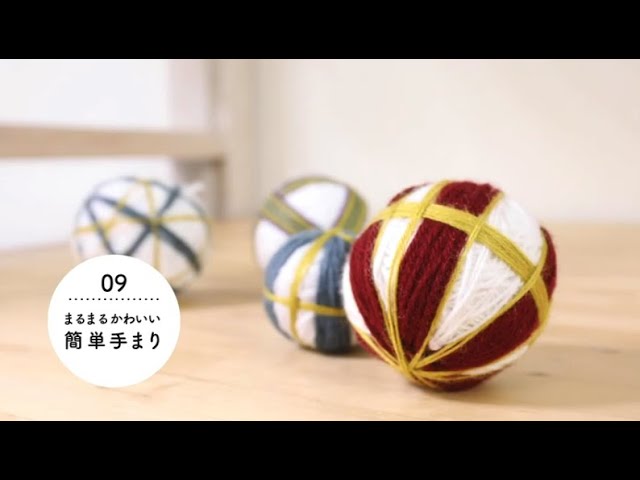
Let’s try making a temari with a soft, colorful look using yarn.
It’s a simple process: roll up old newspaper or other scrap paper into a ball, secure it with cellophane tape, and then wrap yarn around it.
To finish it beautifully, it’s important to shape the paper core into a firm sphere and wrap the yarn thoroughly so the base doesn’t show.
You’re free to combine yarns as you like, so experiment with color choices and wrapping techniques to create your own unique temari.
It’s also important to wrap the yarn tightly so it doesn’t loosen, which will naturally make you pay close attention to the movements and pressure of your fingertips.

Fox Dance

Let me introduce the Fox Dance that you can enjoy together with older adults.
It’s recommended because you can move your body while sitting in a chair.
After making a fox shape with your hands, use your arms and hands to dance.
The song has a quick tempo, but move within a comfortable range.
Once you get used to the moves, it could be fun to add some marching steps from the second round.
When it’s time to turn your neck, be careful to avoid falls.
The Fox Dance might be a great opportunity to spark new communication!

Goldfish Game

At festival stalls, there’s usually a goldfish scooping game, right? Besides scooping, here’s a fun game that uses goldfish as the theme.
Two people hold the ends of a face towel, and place a goldfish plushie or a crafted goldfish on the towel.
While shaking the towel, they toss the goldfish into a basket that’s been set up in advance.
Assign points based on the size of the basket and the distance to the basket.
This innovative goldfish game should be enjoyable for older adults as well.
It also seems like it would be exciting to play as teams.