

For Seniors: Effective Recreation for Preventing Care Needs—Have Fun While Staying Healthy


For the physical and mental well-being of older adults, rehabilitation that involves moving the arms and legs is ideal.
However, simply following a set rehabilitation routine doesn’t always lead to motivation.
In this article, we introduce enjoyable recreational activities that contribute to arm and leg rehabilitation for older adults.
From group activities that everyone can get excited about to options you can focus on individually, you’ll surely find fun ways to work on functional improvement.
Choose according to each person’s physical and mental condition.
We hope you find this helpful.
- [For Seniors] Enjoy safely even during the COVID-19 pandemic: Seated activities
- [For Seniors] Refresh Your Mood! Lively, Get-Moving Games
- [For Seniors] Recreational activities and games that let you have fun while strengthening your legs
- [For Seniors] Simple Recreational Activities You Can Enjoy While Seated
- For Seniors: Fun and Lively Exercise Recreation
- [For Seniors] Guaranteed to Liven Things Up! A Collection of Brain Training Activities That Will Spark Laughter
- [For Seniors] Fun Recreational Activities Without Equipment
- [For Seniors] Core Training: Recommended Simple Rehabilitation
- [For Seniors] Easy and fun seated activities you can do in your room
- [For Seniors] Introducing Recreational Activities Anyone Can Enjoy at Geriatric Health Facilities!
- [For Seniors] Leg and lower-back training: Fall prevention
- For seniors: Leg-strengthening exercises you can do without overexertion.
- Recreation Activities Effective for Long-Term Care Prevention for Seniors
[For Seniors] Effective for Preventing the Need for Long-Term Care! Fun Recreational Activities (381–390)
Disposable Chopstick Relay
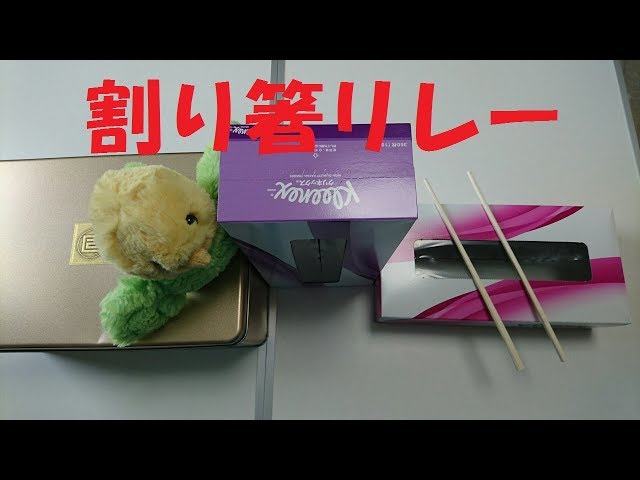
It’s a game where pairs carry a chopstick using only their index fingers, relaying it while dodging obstacles made from empty boxes.
Working together fosters interaction with others and has very positive effects.
After leaving a job, people often end up doing things alone, so being able to experience cooperating with others through a game is really important, isn’t it?

origami

Recreation with origami is great for finger dexterity and stimulating the brain.
Starting with simple pieces gives you a sense of accomplishment, too.
A Japanese-style wreath can serve as home decor and would likely be appreciated as a gift.
The round shape is considered lucky, making it perfect for birthdays, Respect-for-the-Aged Day events, and other occasions.
Just prepare two colors of origami paper you like and fold them according to the steps—it’s very easy.
Try making various wreaths while enjoying arrangements like changing the colors.
Crumple up the newspaper and toss it.
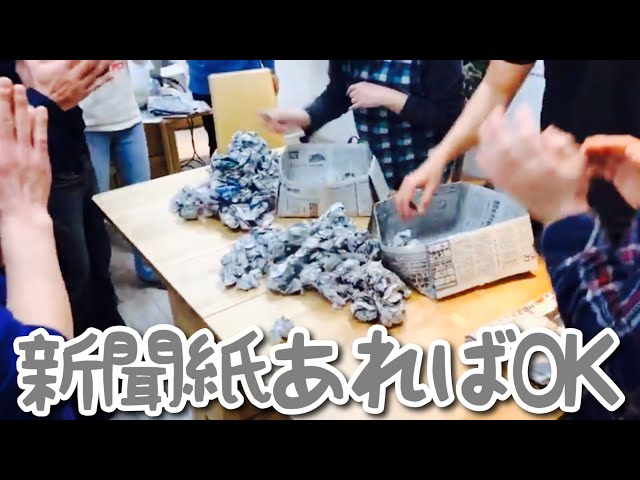
Here’s a game that’s very helpful for finger rehabilitation, and all you need is a newspaper.
First, fold the newspaper into a box.
This step already makes good use of your fingers.
Then tear the newspaper into pieces, roll them into balls, and keep putting them into the box.
After a set amount of time, stop and count how many you put in, like a beanbag toss.
The person with the most wins.
Tearing and rolling use your fingers quite a lot.
Balance game with clothespins

This is a game where you clip clothespins one after another onto the mouth of a plastic bottle.
Once the mouth is completely covered with clothespins, you keep clipping more on top of them.
You must not touch the plastic bottle when attaching a clothespin.
Players compete to see how many clothespins they can attach within the time limit.
Each clothespin makes the bottle less stable, so be careful not to tip it over.
If it does fall, you can start over as many times as you like as long as you’re still within the time limit!

Box gymnastics

This is an exercise you can do while seated, perfect for older adults.
Simply moving your feet right, left, up, and down can be very effective.
Trying not to tip over the box makes it fun, like a game.
If you level up by closing your eyes or changing the height of the box, you’ll feel more motivated and gain a sense of accomplishment when you succeed.
You’ll also get just the right amount of stimulation on the soles and toes, which helps improve circulation.

[For Seniors] Effective for Preventing the Need for Care! Fun Recreational Activities (391–400)
Paper Plate Ping-Pong Game

When you flip over round paper plates and line them up, gaps form between the plates, right? In the “Paper Plate Ping-Pong Game,” those gaps become scoring zones, and you throw ping-pong balls into them.
Since ping-pong balls pass through easily, set higher points for the zones closer to you and lower points for the ones farther away.
If the spaces between the plates shift open, be sure to fix them.
sewing

Many seniors likely used to make various things by sewing in the past.
Whether you were good at sewing or not, how about a sewing game that brings back those memories? Start by poking a series of small holes in cardboard and threading yarn through a yarn needle.
Compete to see how long you can sew within the time limit.
Threading the yarn and inserting it into the holes also makes it perfect for rehabilitation.