

For Seniors: Effective Recreation for Preventing Care Needs—Have Fun While Staying Healthy

For the physical and mental well-being of older adults, rehabilitation that involves moving the arms and legs is ideal.
However, simply following a set rehabilitation routine doesn’t always lead to motivation.
In this article, we introduce enjoyable recreational activities that contribute to arm and leg rehabilitation for older adults.
From group activities that everyone can get excited about to options you can focus on individually, you’ll surely find fun ways to work on functional improvement.
Choose according to each person’s physical and mental condition.
We hope you find this helpful.
- [For Seniors] Enjoy safely even during the COVID-19 pandemic: Seated activities
- [For Seniors] Refresh Your Mood! Lively, Get-Moving Games
- [For Seniors] Recreational activities and games that let you have fun while strengthening your legs
- [For Seniors] Simple Recreational Activities You Can Enjoy While Seated
- For Seniors: Fun and Lively Exercise Recreation
- [For Seniors] Guaranteed to Liven Things Up! A Collection of Brain Training Activities That Will Spark Laughter
- [For Seniors] Fun Recreational Activities Without Equipment
- [For Seniors] Core Training: Recommended Simple Rehabilitation
- [For Seniors] Easy and fun seated activities you can do in your room
- [For Seniors] Introducing Recreational Activities Anyone Can Enjoy at Geriatric Health Facilities!
- [For Seniors] Leg and lower-back training: Fall prevention
- For seniors: Leg-strengthening exercises you can do without overexertion.
- Recreation Activities Effective for Long-Term Care Prevention for Seniors
[For Seniors] Effective for Preventing the Need for Care! Fun Recreational Activities (391–400)
Foot Ball Toss

Here are a few beanbag-toss style activities to help strengthen your legs.
All you need are a cardboard box and some balls, so it’s easy to set up.
In the second half, as more balls accumulate in the box, they start flowing back out through the hole, which makes it exciting.
If you make two holes, you’ll increase the amount of exercise.
For those who feel that walking or running puts too much strain on the legs and lower back, this kind of seated exercise is a great option.

Length comparison showdown
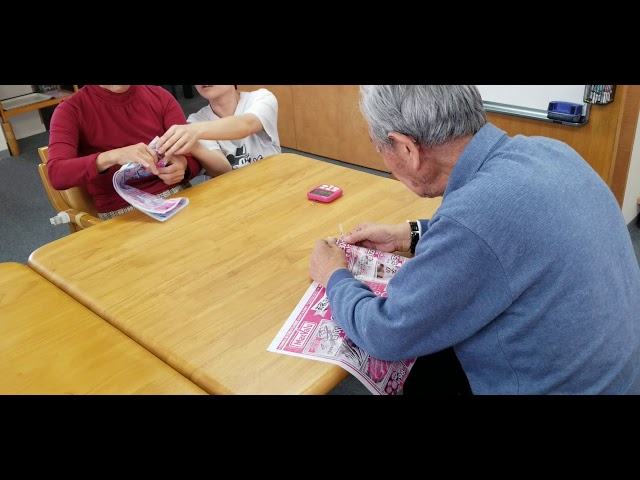
Tear sheets of the same size starting from the edge, splitting them without completely ripping them off so they form one long continuous strip.
Compete to see how long a strip you can make within the time limit.
You can play one-on-one or in teams for extra excitement.
You’re free to choose the direction you tear, but if the strip breaks apart, you’ll have to start over, so be careful!

Towel Catch

“Towel Catch” is a game where you prepare two sticks and use only the sticks—without using your hands—to catch a falling towel.
You play in pairs, with one person dropping the towel and the other catching it.
It’s a recreation activity with a focus on functional training, suitable for exercises involving the hands and similar movements.
Putt Cup Golf
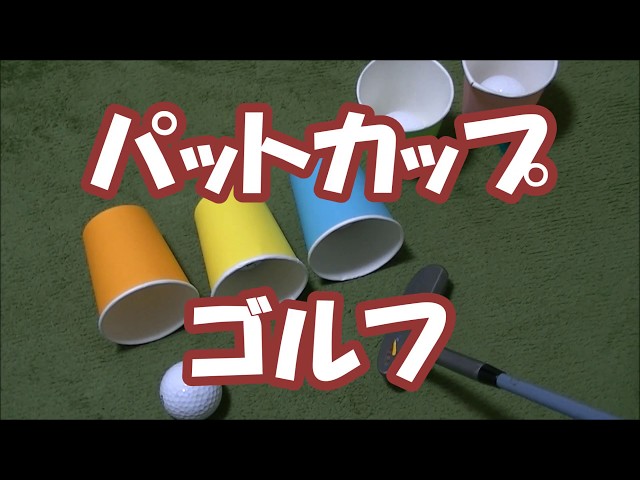
Lay paper cups on their sides and tape them to the floor with duct tape.
The rims should be facing sideways.
Line up about five cups.
Then, just like putting in golf, aim for the cups and putt.
Make sure to tape the cups so that when the ball goes in, the cup can pop upright.
The satisfaction of the cup popping up and the sound when the ball goes in are really delightful!
Pull with your feet! Snail race

This recreation is a game that gives you a strong sense of fulfillment.
You start by creating a snail to your liking—and cute drawings are perfectly fine! The gameplay is simple: you pull without knocking over the plastic bottle.
However, adjusting the strength in your legs is tricky, and it even helps train your muscles.
If you do it in a competitive format with the person next to you, you can enjoy it with a sporty feel!

Postman ‘Here you go!’ game
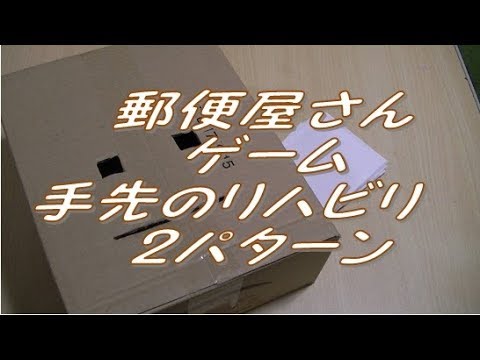
Create a mail slot in the cardboard box that’s slightly smaller than a letter.
You’ll insert prepared sheets of paper into it, but since they won’t fit at their original size, you’ll need to fold them before inserting.
This is effective for hand rehabilitation.
You can also make the slot larger and roll the paper into a tube before inserting it—that works well too!
In conclusion
We introduced a variety of recreational activities that let you move your body while having fun. From games that improve fine motor skills to full-body exercises, all of them are easy to start with familiar, everyday items. Spending time smiling together with friends is very important for both mental and physical health. We hope these activities help you enjoy vibrant, energetic days.