

Classical masterpieces. Recommended classical music.


Classical music created by various musicians over a long history.
From pieces whose beautiful melodies bring peace of mind to those whose grandeur overwhelms you, the range is truly diverse.
With so much out there, many people may feel, “I want to listen, but I don’t know where to start.”
For you, we’ve picked out some recommendations to get you started—“Begin with these!”
Please take a moment to enjoy the world of classical music that continues to be loved across the ages.
- [Orchestra] Introducing famous and popular pieces
- Cool classical masterpieces. Recommended classical music.
- Classical Masterpieces: Recommended Works You Should Hear at Least Once
- Timelessly beautiful classical masterpieces. Recommended classical music.
- Mozart: An Introduction to His Signature and Popular Works
- Brahms's masterpieces. Popular classical music.
- Classical music by Japanese composers. Recommended classical music.
- Debussy’s masterpiece. Popular classical music.
- [Violin] A curated selection of beloved classic masterpieces and popular pieces that continue to be cherished across eras
- [Masterpiece Classics] A special showcase of gem-like masterpieces so beautiful they’ll move you to tears
- A poignant classic masterpiece. Recommended classical music.
- [François Couperin] Introducing famous and popular pieces by the composer who loved the harpsichord
- Classic masterpieces recommended for women
Classical Masterpieces: Recommended Classical Music (11–20)
From Eight Concert Etudes: 3. ToccatinaNikolai Kapustin

Kapustin, a Ukrainian composer active in the 20th century.
His Eight Concert Etudes were designed as a cohesive set, with considerations such as the arrangement of keys, and each piece was given a Russian title.
“Toccatina” means a small toccata—essentially an improvisatory piece—and it’s crisp and rhythmically incisive.
Incorporating elements uncommon in traditional classical music—such as jazz idioms like swing and boogie-woogie, as well as rock and Latin rhythms—it’s a stylish piece that keeps listeners engaged from start to finish!

‘Jupiter’ from the suite ‘The Planets’Gustav Holst

The suite The Planets, a signature work by British composer Holst, consists of seven movements, each named after a planet based on Western astrology.
The melody familiar from Ayaka Hirahara’s “Jupiter” is the most famous in the entire piece.
Its mysterious and majestic theme is beloved by many around the world, and in the United Kingdom it is sung as a patriotic song and hymn.
Unaccompanied Partita “Chaconne”J.S.Bach

The “Chaconne,” the fifth piece of the Sonata and Partita No.
2 for Solo Violin.
A “chaconne” is the name of a dance-form piece in which a brief, set melodic and harmonic pattern appears at the outset and is then repeated persistently while developing in various ways.
In this piece as well, the theme is presented in the opening eight measures, and over the course of 30 repetitions of that structure, music of a grandeur scarcely believable for an unaccompanied violin unfolds.
Piano Concerto No. 2Sergei Rachmaninov
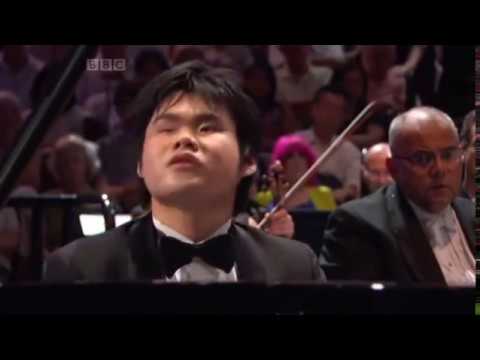
This piece is also famous for being used by Mao Asada in figure skating.
Rachmaninoff wrote a total of four piano concertos, and this Second Concerto is the most popular and the work that brought him widespread recognition.
Amid the weight and grandeur that evoke the vast Russian landscape, it features sweet, heartrendingly beautiful melodies, making it a piece beloved by everyone from classical music beginners to devoted enthusiasts.
Ballade No. 1 in G minorFrederic Chopin

“Ballade” is a title that Frédéric Chopin was the first to apply to a piano work, and it is said to have been directly inspired by the “ballads” of the Polish poet Adam Mickiewicz.
Characterized by emotive melodies that seem to transpose feelings directly into music, each piece conveys a narrative arc of beginning, development, twist, and conclusion.
It is a sweet yet daring work that showcases the wide range of expressive techniques unique to Chopin—the “Poet of the Piano.” Be sure to check it out.
March from The Love for Three OrangesSergei Prokofiev

It was originally an opera, but the composer later arranged it for piano.
It’s the most famous piece among the “Three …”.
It has a somewhat comical feel, with sparkling glissandos, but the final chord progression is so distinctive that it makes you a bit nervous until it resolves.
Classical masterpieces. Recommended classical music (21–30)
Siegfried IdyllRichard Wagner

Recommended for when you want to be wrapped in a calm, intimate atmosphere.
This piece was composed by Richard Wagner, known as the “King of Music Drama.” It was performed in December 1870 as a birthday gift for his wife, Cosima, and is accompanied by a heartwarming story: it was played on the staircase of their home solely for his family.
While Wagner is often associated with grand, monumental operas, this work is characterized by the delicate and gentle timbre of a small orchestra.
It is also cherished as a classic of the Christmas season, and its pastoral melodies—evoking birdsong and the light of morning—can bring a pleasant sense of focus without interrupting your work as background music.
A perfect classical number for those who want to study or work quietly.