

Cool classical masterpieces. Recommended classical music.


A showcase of awesome classical masterpieces, all in one place!
From super-cool staples to slightly lesser-known, stylish pieces, we’ve picked a wide range.
We’re featuring not only piano solo works from the classics to more recent pieces, but also orchestral masterpieces performed by large ensembles.
We’ve selected classical works that are thrilling to listen to and make performances look cool too—from film-score-like pieces and RPG battle-scene vibes to avant-garde sounds reminiscent of progressive rock!
Be sure to read to the end!
- [Orchestra] Introducing famous and popular pieces
- [Masterpiece Classics] A special showcase of gem-like masterpieces so beautiful they’ll move you to tears
- Timelessly beautiful classical masterpieces. Recommended classical music.
- [Violin] A curated selection of beloved classic masterpieces and popular pieces that continue to be cherished across eras
- Classical masterpieces. Recommended classical music.
- A poignant classic masterpiece. Recommended classical music.
- Classical Masterpieces: Recommended Works You Should Hear at Least Once
- [For Piano Recitals] Simple yet Cool Classical Pieces
- Today's Classics: Recommended classical music and great performances to listen to today
- Masterpieces of the bolero. Recommended popular pieces in bolero form and outstanding performances.
- Dvořák’s masterpiece. Popular classical music.
- Popular classical piano pieces. A collection of masterful performances by Japanese pianists.
- Disney classics to enjoy in a classical arrangement: recommended popular songs
Cool classical masterpieces. Recommended classical music (41–50)
Play of WaterMaurice Ravel

Maurice Ravel is one of the leading composers of Impressionist music, a style that emerged in early 20th-century France and placed emphasis on the expression of moods and atmosphere.
At the beginning of the score appears a line from Henri de Régnier’s poem Fêtes de l’eau: “The river god smiles, tickled by the water…,” and in this piece Ravel depicts the colors and sonorities of water as they shift with the play of light.
The steady motion of eighth notes and the principles of sonata form evoke the regulated rhythm and formal structure of a fountain that governs the water’s play, while harmonies that diverge from strict tonal progression brilliantly capture the protean colors and sounds of water.

Cool classical masterpieces. Recommended classical music (51–60)
Ride of the Valkyries from the music drama The ValkyrieRichard Wagner

This piece is the prelude to Act III of the music drama Die Walküre, the First Day of the cycle The Ring of the Nibelung.
It is a rousing, heroic work, and it was used in the film Apocalypse Now, which depicts the Vietnam War, during the scene of U.S.
military helicopters in flight.
In that scene, the music is not merely background score; it is portrayed as being blasted at high volume from the helicopters to boost the soldiers’ morale and instill fear in the Vietnamese being attacked.
From Carmina Burana: “O Fortuna”Carl Orff

This piece begins with a powerful and striking melody that calls upon the goddess of fate.
Since it’s used in films, commercials, and many other contexts, you’ve likely heard it at least once.
Carmina Burana is a collection of medieval songs and poems discovered in the 19th century at the Benediktbeuern Abbey in Germany; the German composer Orff selected 24 of them and set them as a cantata.
The work is sung in Latin and addresses Fortuna, the Roman goddess of fate—also famous as a motif in tarot cards.
Etude Op. 10 No. 1 in C majorFrederic Chopin
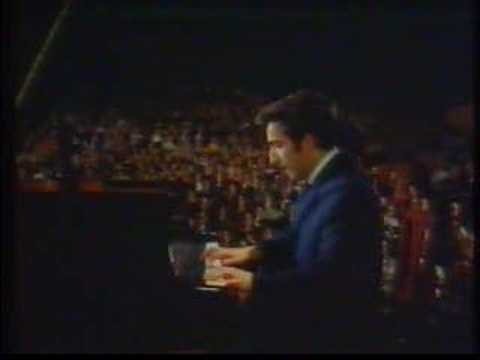
An etude completed in 1830 by Chopin, the poet of the piano.
It is said to be one of the most difficult pieces to perform among Chopin’s études, and it places tremendous pressure on the pianist.
The Ashkenazy performance introduced here is by a pianist renowned for his virtuosity.
It has an incredible sense of speed, and the dramatic contrasts in tone are overwhelming.
Piano Sonata in D minorFranz Liszt

Franz Liszt left an enormous number of works for the piano and gained renown as an outstanding pianist himself.
This piece is composed by applying his method of compressing the three movements he used in his symphonic poems into a single movement.
It employs the technique of “thematic transformation,” in which elements of a theme are transformed in various ways to generate new themes.
The principal theme introduced at the beginning reappears throughout the piece in many different guises, shaping the overall structure.
Enjoy listening as the theme evolves!
Etude Op. 10 No. 4 in C-sharp minorFrederic Chopin

Starting at a sudden, incredible speed, Chopin’s Etude Op.
10 No.
4 in C-sharp minor exemplifies how his etudes are all far more demanding than the term “study piece” suggests.
This work’s blend of ferocity and velocity is masterful, overwhelming the listener.
Though it’s a short etude that ends in a flash, it is dense and superb in substance.
Often performed in competitions, it is highly challenging and captivates audiences.

Symphonic Poem “Night on Bald Mountain” (arr. by Rimsky-Korsakov)Modest Mussorgsky

The nine minutes of intensity and tension never let up in Symphonic Poem “Night on Bald Mountain” (arr.
Rimsky-Korsakov), which was published in 1886 by Nikolai Rimsky-Korsakov.
The piece was originally composed by Modest Mussorgsky, but since it had remained unpublished, Rimsky-Korsakov arranged it out of a desire to bring it to the world.
The theme depicts earth spirits throwing a wild revel with sprites and ghosts on the eve of St.
John’s Day.
Its bold and stylish arrangement is highly recommended even for those who don’t usually listen to classical music.
In fact, it was used in Disney’s Fantasia and has been covered by numerous bands, so you may have heard it at least once.
