

Recommended recreational activities for older adults with dementia
In senior care facilities and day service centers, there are people with a wide range of needs.
Therefore, it’s important to plan recreational activities that match each older adult’s condition.
This time, we’ll introduce recommended recreational activities for seniors with dementia.
For older adults with dementia, emotional support—such as helping them “feel enjoyment” and “find their place”—is essential.
Activities that are easy to try and encourage interaction among participants are also recommended.
Use this article as a reference when planning recreation for seniors with dementia.
- [For Seniors] Recommended Even for People with Dementia! Simple Recreational Activities
- [For Seniors] Easy and fun seated activities you can do in your room
- Recommended recreational activities to help seniors enjoy their time in care facilities
- [For Seniors] Enjoyable Indoor Activities! Recreations and Games That Engage the Mind and Body
- Recreation Activities Effective for Long-Term Care Prevention for Seniors
- [Elderly Day Service] Let’s all have fun! Games and recreational activities
- [For Seniors] Simple Recreational Activities You Can Enjoy While Seated
- [For Seniors] Recommended! Seasonal Recreational Activities
- What does the “a.k.a.” you often see in artist names mean?
- [For Seniors] A Collection of Fun Classic Caregiving Activities
- [For Seniors] Recommended for older adults: enjoyable recreational activities
- [For Seniors] Introducing Recreational Activities Anyone Can Enjoy at Geriatric Health Facilities!
- For Seniors: Enjoy Every Day! A Collection of Senior Recreation Ideas
Recommended Recreational Activities for Elderly People with Dementia (21–30)
Reminiscence Session: Nostalgic Tools from Early Showa Era

Reminiscence therapy is a type of psychotherapy in which you choose a theme, recall past memories, and reflect on the scenery, environment, and your own self from that time.
To help you remember, it’s good to prepare photos or videos of tools you used in the past—or the actual items if possible.
By recalling details such as how the tool was used (“I used it like this”), when and under what circumstances (“I used it at night after finishing farm work”), or specific experiences (“I was scolded because I couldn’t use it well”), you can evoke a wide range of memories.
You may learn related episodes and even remember things the person themselves had forgotten.
When continued, this approach is considered to have beneficial effects on improving cognitive function.

Word search with lyrics about Mt. Fuji

Let’s enjoy some brain training using familiar children’s songs! This time, we’ll use the lyrics of “Mount Fuji.” We’ll make a fill-in-the-blank activity with parts of the lyrics missing, and have participants think about what words go there.
Instead of just recalling the lyrics, they will search for words from prepared letter cards and assemble them.
Finding the correct answer gives a real sense of accomplishment.
Using well-known songs familiar to seniors makes the activity approachable and can also lead into singing.
It’s a fun way to help prevent cognitive decline, so it’s recommended as a recreation activity in senior care facilities.
Word Search: Fruits Edition

Amid the letters scattered across a 6-by-6 grid, there are hidden names of fruits.
The names can be arranged in three ways—vertically, horizontally, and diagonally—and some words must be read from right to left or bottom to top, so read carefully to find the correct combinations.
Each puzzle has a time limit, which can make you feel rushed, but it’s important to stay calm.
The difficulty is a bit high, but you can try as many times as you need until you find them.
In addition to concentration, this also develops thinking skills and word retrieval, and may help prevent cognitive decline.
This kid had a hard time writing katakana, didn’t they? I wonder if they didn’t cry?
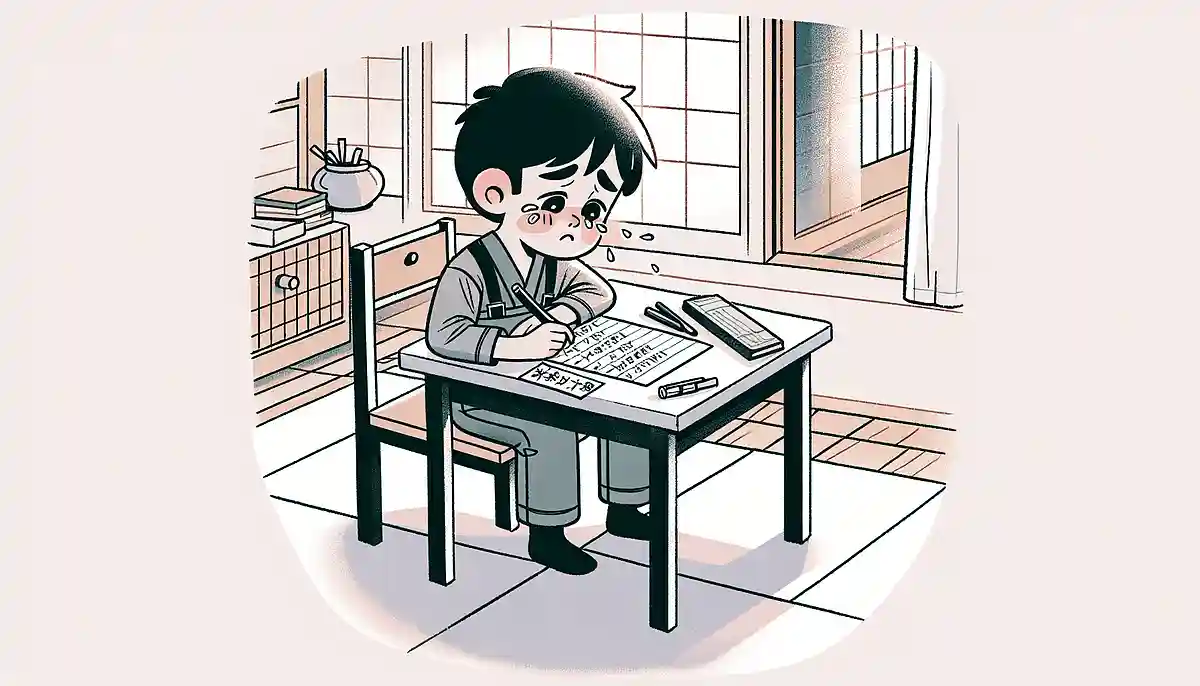
“Kono ko nakanaka katakana kakenakatta na, nakakanakatta kana?” is quite a long tongue twister.
Are they worried that the child who couldn’t write katakana didn’t end up crying? Words with similar sounds like nakanaka and katakana run together almost like a reverse reading.
Plus, the repeated ka sounds create a string of identical syllables, which adds to the difficulty of reading.
Tongue twisters can make you rush, but the key is to stay calm and read through without hurrying.

Make vine, hang dayflower

One tongue twister used as a brain-training recreation.
You train your brain by reading awkward sentences that rarely appear in everyday life.
“Tsukuru tsurukusa tsurusu tsuyukusa” is also one of the tongue twisters for older adults.
Various images come to mind from the tongue twister.
You might imagine weaving baskets with climbing vines, and hanging spiderwort as decoration.
In hiragana, it’s “tsukuru,” “tsurukusa,” “tsurusu,” and “tsuyukusa.” They all start with “tsu.” In fact, it’s said that many people—not just older adults—find the ta-row sounds that include “tsu” difficult to pronounce.
Ultimate luxury aircraft at a deserted Kyushu airport

The tongue twister “kuukyo na Kyushu kuukou no kyuukyoku koukyuu koukuuki” (empty Kyushu airport’s ultimate luxury aircraft) feels difficult just by looking at it written down.
The sentence is also on the longer side for a tongue twister, and it’s characterized by a mix of hard k sounds and kya-kyu-kyo clusters.
Because of that, it’s said to be hard to say without tripping up.
To be able to say tongue twisters, the key is to be conscious of each word and pronounce every one clearly and distinctly.
By the way, there is no actual airport called “Kyushu Airport.” If you were to use a real airport in a tongue twister, it would be one of the airports in the Kyushu region, such as Kitakyushu Airport.
red paper roll, blue paper roll, yellow paper roll

Tongue twisters often consist of strings of hard-to-pronounce words.
“Aka-makigami ao-makigami ki-makigami” (red scroll paper, blue scroll paper, yellow scroll paper) is also a sequence of tricky words.
By the way, makigami refers to paper made by joining together sheets of hansetsu paper (a tall, narrow paper) side by side to make a long roll.
It’s sold in scroll form.
This tongue twister lines up red, blue, and yellow scroll paper.
It looks easy at first glance, but when you try to say it repeatedly, it becomes hard to pronounce.
As a tip, if you pause slightly between the color names—like red or blue—and the word “makigami,” it should be a bit easier to say.
Try it together with older adults.