

Conversations Made Easy! A Collection of Topics That Elderly People Enjoy


Some caregiving staff may find it difficult to hold conversations with older adults.
You might think, “I don’t know what to talk about, so the conversation doesn’t continue,” or “I don’t have any funny, laugh-worthy stories.” The key to communicating with older adults is attentive listening—taking a genuine interest and carefully listening to what they say.
Try shifting your approach from “talking yourself” to “listening to the other person.” In this article, we’ll introduce conversation topics that older adults tend to enjoy and that help keep the conversation flowing.
If you know in advance some easy, enjoyable themes that older adults can talk about comfortably, you’ll be able to chat with more confidence.
Please use this as a reference for communicating with older adults.
- [For Seniors] Perfect Brain Training! Fun Trivia
- [For Seniors] Hilarious! A Collection of Funny Questions
- Fun, engaging topics for conversations with older adults!
- [For Seniors] Uplifting Words That Comfort the Heart
- [For Seniors] Today’s Recommended Activity: Fun and Engaging
- For seniors: Fun shiritori—enjoyable and easy to play
- [For Seniors] Fun and Lively! Recommended Quiz Questions
- Words useful for conversations with elderly people. Words that were used in the past.
- [For Seniors] Brain Training! Recall Quiz Collection!
- [For Seniors] Fun and Informative! Health Trivia Quiz
- [For seniors] Dice talk: engaging prompts
- Introducing words that will delight elderly people
- [For Staff at Elderly Care Facilities] Simple Performances to Liven Up a Year-End Party
Never run out of things to say! A roundup of conversation topics that resonate with seniors (21–30)
A conversation with humor

One way to help prevent dementia is through laughter.
In fact, there are data showing that laughing can make you less prone to developing dementia.
The breathing power used when you laugh also provides a training effect that moves the diaphragm and facial muscles.
As we age, we tend to laugh less in our daily lives.
However, with yoga or exercises that incorporate laughter, it’s easier to laugh naturally.
In particular, Laughter Yoga, which originated in India, is recommended because it combines breathing through laughter with physical movement.
It’s said that key elements in dementia prevention are strengthening the brain, internal organs, muscles, and the heart.
Laughter Yoga can train all of these, so give it a try in recreational activities.

Topics about local neighborhood shops
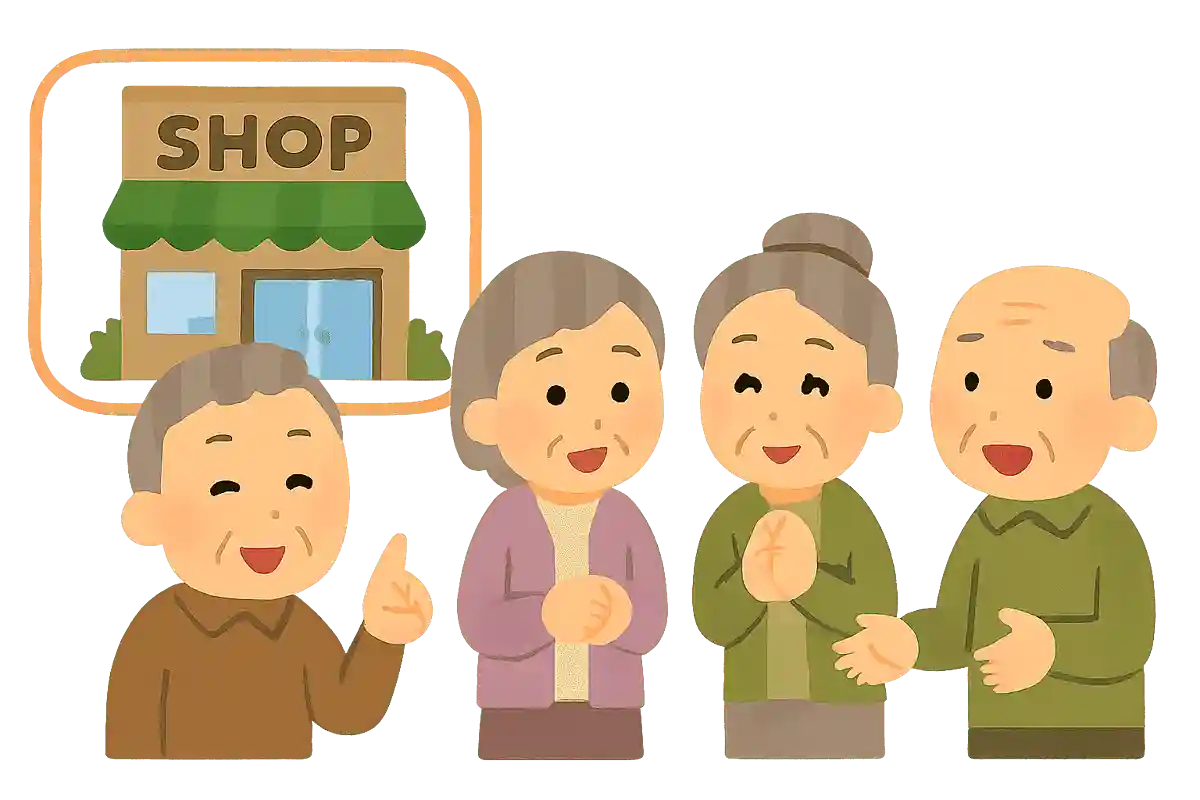
It’s also a good idea to ask older adults about the shops near where they used to live or where they live now.
These days, supermarkets have become more common and people buy less from small independent stores, but asking about the shops they liked in the shopping arcades when they were children is recommended.
Ask in detail—what products they liked, what the shopkeepers were like—and help them recall various memories; it’s great brain training.
It also provides clues to understanding that person’s lifestyle.

In conclusion
It seems that topics that spark interest and make conversation easier are well received by older adults. Of course, it’s important to listen carefully to what they have to say, but caregivers should also speak slowly and calmly, adjust their eye level to match the person they’re talking to, and use backchanneling cues—these listening attitudes are key points. By understanding a person’s life history and personal background, and offering topics tailored to each individual, conversations will expand even more. Why not use the topics introduced here as a reference, relax, and enjoy the conversation?