

For seniors: Leg-strengthening exercises you can do without overexertion.

Strengthening the muscles in your legs increases the ability to support daily activities and helps prevent falls.
However, overexertion can cause injuries, so it’s important to start with low-impact exercises.
Here, we introduce simple and effective leg-strengthening exercises that older adults can do without strain.
These safe methods use items like chairs and walls, making them easy to perform at home.
Begin little by little, keep it enjoyable, and aim to maintain healthy daily habits!
- [For Seniors] Recreational activities and games that let you have fun while strengthening your legs
- [For Seniors] Strengthen Your Legs! Recommended Training Items
- [For Seniors] Fun Exercises You Can Do While Seated
- [For Seniors] Core Training: Recommended Simple Rehabilitation
- [With Video] Lower-limb strength training for seniors that can be done in bed
- [For Seniors] Exercises to Walk Again. Fall Prevention
- [For Seniors] Fun and Easy! Fall-Prevention Exercises for Older Adults
- [For Seniors] Balance-Training Exercises: Preventing Falls
- [For Seniors] Stretching Exercises: Easy and Safe to Do
- [For Seniors] Leg and lower-back training: Fall prevention
- [For Seniors] Recommended exercises to relieve constipation.
- For seniors: Enjoyable stick exercises. Easy workouts.
- [Recommended for seniors] Rejuvenating Rock-Paper-Scissors Exercise
[For Seniors] Leg-strengthening exercises you can do without overexertion (21–30)
An exercise where you use a towel and grasp it with your toes

Let’s exercise using everyday items! Here’s an idea for a toe-gripping exercise using a towel.
Some people may find it difficult to purchase the items needed when trying new workouts or exercises.
This time, let’s try a foot exercise using a towel you already have at home! Place the towel in a zigzag pattern between your toes and train by flexing and extending your toes.
This exercise can help improve standing balance and walking stability—great for supporting a healthy daily life!
Towel Sumo Game

Recommended for events and recreational activities! Here’s an idea for a towel sumo game.
It’s great if you can train your legs and lower back while having fun at events and rec time.
This time, let’s try a sumo game using towels! You’ll need chairs and two face towels.
Sit facing each other on chairs.
Tuck one end of the towel under your opponent’s foot, and hold the other end in your hand.
Coordinating the two actions—bracing with your legs and pulling the towel with your hand—can be a bit challenging, but it makes for an exciting activity!
Lower limb towel exercises

Learn from a certified health fitness instructor! Here are ideas for lower-limb towel exercises.
Try this training to help your feet move smoothly when walking.
All you need is a long face towel.
First, sit in a chair and fold the towel in half, then place the ends between your knees.
With both hands, pull the remaining part of the towel upward with strength.
Finally, as if lightly kicking a soccer ball, alternately move your lower legs from the knees down.
Try incorporating this into your daily routine.
Toe exercises

Let’s try training your toes! Here are some ideas for toe exercises.
Have you ever focused on training your toes? Strengthening your toes can make it easier to maintain balance, which may help prevent falls and improve stability when walking.
This time, let’s take on some training with a focus on the toes.
Start with stretches—extend your ankles and slowly flex and extend your toes—so you can relax as you try.
Give it a go and incorporate it into your routine!
Stomp-and-pop balloon launch
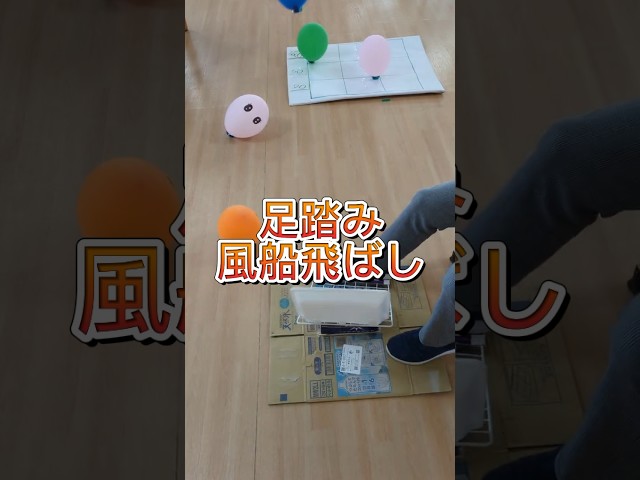
Let’s pop a balloon into the air with a boing! Here’s an idea for a foot-powered balloon-launch game—perfect if you’re looking for a unique activity that uses the feet.
You’ll need items like cardboard, a low platform, a board or mesh, a tray, balloons with weights attached, and a score chart drawn on poster paper.
While seated in a chair, place your feet on the board; using the lever principle, the balloon will launch with a fun “pop!” It’s an easy activity to try and also a good way to move the hip joints.
Give it a go and incorporate it into your sessions!
Behind-the-knee exercise with a ball

Even if you’re not very confident with exercise, the “behind-the-knee ball exercise” is highly recommended.
It’s simple: while sitting in a chair, place a ball behind your knee, and just lift and lower your thigh.
This motion alone gently warms the thighs and hips, and can help boost circulation and reduce swelling.
Because it doesn’t require large movements of the legs and lower back, it’s safe even for older adults who aren’t confident in their stamina.
All you need is a soft ball from a 100-yen shop (dollar store).
With consistency, your posture will improve and your steps will gradually become smoother.
Try making it part of your daily routine and enjoy a refreshing break while seated.

Easy Pedal

As muscle strength declines, walking can become more difficult, and many people may find themselves tripping more often.
Focusing on the movement of your feet while walking, this Easy Pedal can help promote smoother motion and improve muscle strength.
All you need to do is place your feet on it and switch it on; it moves your feet as if you’re walking, helping to loosen the joints, especially around the ankles.
How about using this for foot exercises while also paying attention to how your feet move when you walk?
