

[For Seniors] Brain-Training Recreation Using a Whiteboard

In many day-service facilities, it’s common to include recreational activities designed with brain training in mind.
No matter the senior, it’s easy to get absorbed in these activities.
In this article, we’ll introduce brain-training recreations that use a whiteboard.
Whiteboard-based activities are appealing because they’re easy to understand and enjoyable regardless of group size.
They’re especially lively with larger groups and can help deepen interactions among participants.
- [For Seniors] Fun Brain Training! Lively Whiteboard Activities
- [For Seniors] Play Long and Have Fun! A Whiteboard Activity with Brain-Training Elements
- [For Seniors] Test Your Memory!? Ideas for Whiteboard Games
- [For Seniors] Introducing Whiteboard Activities to Enjoy in Winter!
- Recommended for brain training: a proverb quiz using a whiteboard
- [Brain Training] Lively Word Quiz for Seniors
- [For Seniors] Brain Training with a Whiteboard! Fill-in-the-Blank Exercises & Quizzes
- [For Seniors] Simple Recreational Activities You Can Enjoy While Seated
- [For Seniors] Lively Wordplay Game: Fun Recreation for Elderly Care
- Hand games that liven things up for seniors—also great brain training
- [For Seniors] Fun! Games and Ideas to Boost Memory
- [For Seniors] Enjoyment at Day Care: A Roundup of Games and Recreational Activities
- [For Seniors] Brain Training! Recall Quiz Collection!
[For Seniors] Brain-Training Recreational Activities Using a Whiteboard (21–30)
Autumn Word Collection Brain Training

This is a brain-training activity where participants freely write words related to the season on a whiteboard under the theme “What comes to mind when you think of autumn?” Participants say as many words as they can think of, and staff write them on the board.
Once a certain number has been collected, the board is hidden, and participants are asked to recall and say as many of the words as they remember.
This activity stimulates memory while naturally developing creativity and vocabulary.
Talking about seasonal topics helps evoke shared memories and emotions, encouraging the enjoyment of speaking and broadening conversation.
Because it focuses on enjoyment rather than right or wrong answers, it allows older adults to use their brains without strain, making it a suitable and enjoyable recreation.

Autumn Letter Rearrangement Quiz
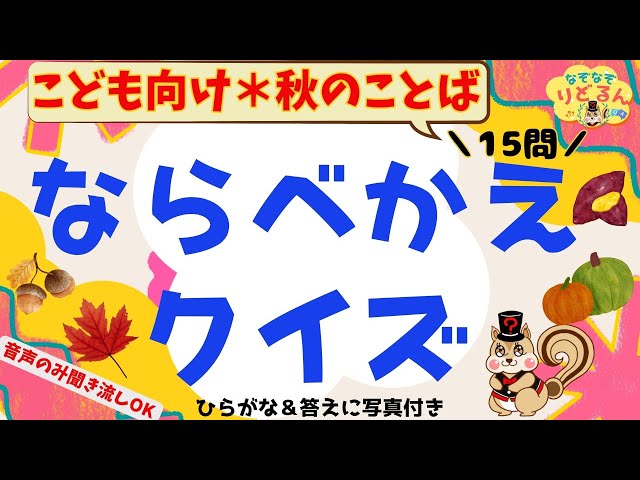
It’s a quiz where you write scrambled letters of autumn-related words on a whiteboard and guess what the word is.
Choosing themes like seasonal foods and traditional autumn scenes makes it easier for older adults to participate.
When someone gets the right answer, there’s applause and cheers, which naturally encourages conversation.
By offering hints and thinking together, you can stimulate the brain and improve concentration.
It also sparks stories about past memories and discussions of seasonal flavors, helping deepen connections among older adults.
It’s an activity that’s easy for anyone to join and can be enjoyed repeatedly.
Speaking of July

When you think of summer vacation, fireworks festivals, and Marine Day, does July come to mind? A whiteboard activity themed around July can help older adults recall the season.
Summer days spent feeling the heat—like eating watermelon with family or seeing sunflowers blooming in the garden.
Through a whiteboard activity, it may prompt older adults to look back on their memories of July.
As they share stories from past Julys, it’s likely to spark lively conversations with those around them.

Word Search: Fruits Edition

Amid the letters scattered across a 6-by-6 grid, there are hidden names of fruits.
The names can be arranged in three ways—vertically, horizontally, and diagonally—and some words must be read from right to left or bottom to top, so read carefully to find the correct combinations.
Each puzzle has a time limit, which can make you feel rushed, but it’s important to stay calm.
The difficulty is a bit high, but you can try as many times as you need until you find them.
In addition to concentration, this also develops thinking skills and word retrieval, and may help prevent cognitive decline.

A quiz where you guess what the initials stand for

It might have been the most popular variety show of the 1990s.
Even if you don’t know the show itself, you’ve probably heard the phrase “Magical Banana.” Yes, this brain-training game was a big hit on “Magical Zunō Power!” It uses only hiragana to depict illustrations—a quiz where intuition and flashes of insight are key.
You express faces or animals using only initial letters, targeting that sweet spot of “almost obvious but not quite,” making it a truly addictive brain workout.
No drawing skills required, so even people who aren’t good at drawing are totally fine!
Autumn Delicacies Ranking

Here’s an idea for a seasonal recreation activity perfect for seniors: “Autumn Flavors Ranking.” Using real popular-vote sites as references, pose questions themed around the top five most popular autumn foods.
If you have participants guess without hints, differences in knowledge, experience, and personal preferences become conversation starters, and the discussion naturally expands.
The answer reveal is also a big highlight.
You can compete on the number of correct answers, or simply enjoy chatting about “This is my number one!” It’s an appealing activity because anyone can join without physical movement, and it also stimulates the brain—highly recommended.
Color Game

How about a color game as a whiteboard activity? For this game, prepare papers with color words written on them.
The key is to make the kanji different from the actual color of the text.
Instead of reading the words on the papers attached to the whiteboard, ask the participating seniors to say the color of the letters.
It may seem easy, but it actually trips people up and often leads to lots of laughs.
Because you see with your eyes and think with your head, it’s effective for reflexes and brain training.
Start by letting them answer slowly and thoughtfully, then gradually pick up the pace.
