

[Japanese Children's Songs] Carefully selected timeless masterpieces loved across generations!
Japanese shoka—songs everyone has hummed at least once—include classics like “Furusato,” “Haru no Ogawa,” and “Momiji.” The nostalgic melodies we learned in music class or sang with friends in childhood stay with us no matter how much time passes.
These works, which sing of seasonal landscapes and everyday scenes, are filled with the sensibilities of the Japanese people.
In this article, we introduce a selection of shoka that have been sung across generations.
Just seeing the titles will make you want to start singing—be sure to check out these beloved Japanese classics.
Playlist
| [Japanese Children's Songs] Carefully selected timeless masterpieces loved across generations! | |||
|---|---|---|---|
| show_chart | Title | Playlist | Review |
| 1 | Counting Song |  play_arrow play_arrow | A traditional Japanese counting song, a song for learning |
| 2 | Village Festival |  play_arrow play_arrow | A classic Japanese song that sings of the autumn harvest festival. |
| 3 | A Hazy Moonlit NightSakushi: Takano Tatsuyuki / Sakkyoku: Okano Teiichi |  play_arrow play_arrow | An emotionally rich Japanese classic song that resonates with the heart. |
| 4 | autumn leaves (momiji)Sakushi: Takano Tatsuyuki / Sakkyoku: Okano Teiichi |  | A masterpiece that beautifully depicts an autumn scene |
| 5 | We Look Up to You with Respect |  play_arrow play_arrow | Songs of gratitude and memories, the heart of our alma mater |
| 6 | Spring has come. |  play_arrow play_arrow | Spring Song, selected as one of Japan’s 100 Selected Songs |
| 7 | chick |  play_arrow play_arrow | A song that conveys the importance of getting along and helping one another |
| 8 | Winter night |  play_arrow play_arrow | A winter ballad of warming by the hearth with family |
| 9 | Rain of the Four Seasons |  play_arrow play_arrow | A heartwarming Japanese children’s song depicting the rains of the four seasons |
| 10 | The Clock Song |  play_arrow play_arrow | A long-loved children's song that sings the movement of a clock |
| 11 | morning glory |  play_arrow play_arrow | A child’s heart that counts the growth of a morning glory |
| 12 | The Village Blacksmith |  play_arrow play_arrow | A song that sings of a blacksmith’s pride and the joy of working |
| 13 | Koi in the pond |  play_arrow play_arrow | The Appeal of the Ministry of Education’s Meiji-era School Song: “Song of the Carp” |
| 14 | The Four Seasons in the Countryside |  play_arrow play_arrow | A song describing the workings of rural life through the four seasons |
| 15 | Snowball fight |  play_arrow play_arrow | A school song that sings about children’s snowball fights in winter |
| 16 | We are children of the sea. |  play_arrow play_arrow | The history of Japan’s beloved songs as revised after the war |
| 17 | snail |  play_arrow play_arrow | The name popularized by the snail nursery song |
| 18 | hometownSakushi: Takano Tatsuyuki / Sakkyoku: Okano Teiichi |  play_arrow play_arrow | Hometowns are landscapes of the heart, songs that move people. |
| 19 | tea picking |  play_arrow play_arrow | A traditional classic depicting the scene of tea picking |
| 20 | koinobori (carp streamers) |  play_arrow play_arrow | A classic song imbued with wishes like carp streamers |
| 21 | Summer Memorieshaida shouko |  play_arrow play_arrow | A memorable classic that sings of the beauty of Oze |
| 22 | hazy moonlit night |  play_arrow play_arrow | A song depicting a spring dusk scene with a field of rapeseed blossoms and the moon. |
| 23 | Ninomiya Kinjiro |  play_arrow play_arrow | The figure and aspiration of a boy devoted to household duties and scholarship |
| 24 | Konoha (tree leaves / leaves of a tree) |  play_arrow play_arrow | A song that portrays the journey of fallen leaves carried by the wind |
| 25 | Ushiwakamaru |  play_arrow play_arrow | A famous song that sings of the encounter between Benkei and Ushiwakamaru |
| 26 | scarecrow |  play_arrow play_arrow | A nursery song about a one-legged doll standing in a rice field |
| 27 | Adorable foalSakushi: Satō Hachirō / Sakkyoku: Niki Takio |  play_arrow play_arrow | A classic that warmly portrays a scene of a foal and a child |
| 28 | puff |  play_arrow play_arrow | A gentle kaiju song, a timeless piece that resonates with the heart |
| 29 | BELIEVE |  play_arrow play_arrow | A moving song that sings of the beauty of life |
| 30 | Born on this planet |  play_arrow play_arrow | A masterpiece of beautiful melodies and hope that never abandons its dreams |
| 31 | Dona Dona |  play_arrow play_arrow | A sad song of a calf, a masterpiece that resonates with the heart |
| 32 | Momotaro |  play_arrow play_arrow | A song about demon-slaying that sings the story of Momotaro |
| 33 | Morning on the Ranch |  play_arrow play_arrow | Morning Song Born from Iwase Farm |
| 34 | Ride a hot air balloon to the ends of the earthSumida Shonen Shojo Gasshodan |  play_arrow play_arrow | 1974 NHK School Music Competition required piece |
| 35 | The Hill Where Mandarin Orange Blossoms BloomKawada Masako |  play_arrow play_arrow | Shizuoka mandarin orchards, a sad and beautiful song from the postwar era |
| 36 | The Mountain Hut’s LightŌmi Toshirō |  play_arrow play_arrow | A beautiful song inspired by Mount Hotaka |
| 37 | Spring Stream |  play_arrow play_arrow | A school song depicting a spring brook scene |
| 38 | sand hillAtsumi Kiyoshi |  play_arrow play_arrow | The loneliness as Tora-san gazes at the Sea of Sado |
| 39 | Mount Fuji |  play_arrow play_arrow | A famous song that sings of the beauty of Mount Fuji, selected among Japan’s 100 Best Songs |
| 40 | Ballad of the MonstersSumida Shonen Shojo Gasshodan |  play_arrow play_arrow | Popular as a choral piece from “Young 101” |
| 41 | OompapaSuginami Jidō Gasshōdan |  play_arrow play_arrow | An adorable children's song, loved around the world |
| 42 | Where does the morning begin?Okamoto Atsurō · Anzai Aiko |  play_arrow play_arrow | A bright, forward-looking song created right after the end of the war to bring hope and vitality. |
| 43 | teru teru bozu (a traditional Japanese handmade doll hung to wish for good weather)Hirayama Miyoko, Nakayama Kajiko, Omura Masako |  play_arrow play_arrow | As a child, I thought it was a straightforward song about wishes, but the third verse surprised me. |
| 44 | Raja MaharajaTogawa Jun |  play_arrow play_arrow | Luxurious life of an Indian-style Maharaja |
| 45 | I want to become the wind.Sapporo Kitano Shounen Shoujo Gasshoudan |  play_arrow play_arrow | A Latin-style masterpiece, a work by Kazufumi Miyazawa. |
| 46 | Osaka City Streetcar Song |  play_arrow play_arrow | PR Song for the Old Trams of Osaka |
| 47 | Whispers of HopeTōkyō Konsei Gasshōdan |  play_arrow play_arrow | A beautiful choral piece sung since before the war |
| 48 | Harmony Traveling the Future |  play_arrow play_arrow | The set piece for the All-Japan School Music Competition is moving. |
| 49 | rabbit |  play_arrow play_arrow | A children's folk song is certified as a Ministry of Education shoka (school song). |
| 50 | Doll Festival (Hinamatsuri/Girls’ Day) |  play_arrow play_arrow | The graceful song of Hinamatsuri, with its beautiful lyrics, is enchanting. |
| 51 | winter scenery |  play_arrow play_arrow | A beautiful song that depicts Japan’s four seasons |
| 52 | Evening Glow (Yuyake Koyake) |  play_arrow play_arrow | Countryside dusk, a beautiful Japanese song |
| 53 | the Hinomaru flag |  play_arrow play_arrow | The History of the Rising Sun and the National Anthem |
| 54 | sea |  play_arrow play_arrow | A beautiful children's song depicting the seascape |
| 55 | Flower |  play_arrow play_arrow | Taki Rentarō’s spring song, Scenes of the Sumida River |
| 56 | snow |  play_arrow play_arrow | A traditional Japanese song with unknown lyrics |
| 57 | pigeon |  play_arrow play_arrow | A fun nursery rhyme about feeding beans to pigeons |
| 58 | COSMOS |  play_arrow play_arrow | Cosmos is the harmony of the universe and music. |
| 59 | The Bell of Peace |  play_arrow play_arrow | A peace song about the war in Okinawa |
| 60 | Let’s search for Tomorrow |  play_arrow play_arrow | A graduation song written and composed by Toru Osawa |
| 61 | Tomorrow |  play_arrow play_arrow | Graduation song from Journey of Life on Earth |
| 62 | There’s no such thing as ghosts. |  play_arrow play_arrow | Expressing children’s emotions through ghost songs |
| 63 | Sugarcane field |  play_arrow play_arrow | The famous song that reflects on Okinawa’s war dead, “Sugarcane Field.” |
| 64 | Green Green |  play_arrow play_arrow | A folk song classic with sad lyrics and a refreshing melody |
| 65 | My Ballad |  play_arrow play_arrow | Takao Matsui’s choral piece, characterized by triplets. |
| 66 | I found the first star |  play_arrow play_arrow | A monument inscribed with the lyrics of a nostalgic children’s song |
| 67 | Kantarō the North Wind Kid |  play_arrow play_arrow | Enka for children: Kantaro’s captivating song |
| 68 | Harvest Moon |  play_arrow play_arrow | A sorrowful song, speaking to the moon of a mother and sister’s feelings |
| 69 | King Kamehameha of the Southern Islands |  play_arrow play_arrow | A fun song with the same name on a southern island |
| 70 | foal |  play_arrow play_arrow | A song about the scene of a foal walking while carrying a person |
| 71 | Sing, Bam-Bam! |  play_arrow play_arrow | The theme song is fun, and you can sing it with your mouth wide open. |
| 72 | Choo-choo train |  play_arrow play_arrow | A song reflecting memories of steam locomotives and wartime |
| 73 | Urashima Taro |  play_arrow play_arrow | Urashima Tarō, a rhythmic classic |
| 74 | Blue-Eyed Doll |  play_arrow play_arrow | Singing about Japan–U.S. friendship, cultural differences, and anxieties |
| 75 | A gentle green breezehibari jidō gasshōdan |  play_arrow play_arrow | The comfort of being enveloped in the spring sunlight. |
| 76 | Summer has comeZa · Pīnattsu |  play_arrow play_arrow | Nostalgic music that sings of the seasons resonates in my heart. |
| 77 | I found a little sign of autumn.bonījakkusu |  play_arrow play_arrow | A song that expresses a rich, personal sentiment of suddenly sensing autumn in everyday life. |
| 78 | Watermill in the ForestNamiki Michiko |  play_arrow play_arrow | Work happily, and someday you'll be rewarded. |
| 79 | That Town, This TownKuboki Sachiko |  play_arrow play_arrow | Reflecting on children's play and dreams |
| 80 | Plover on the BeachSakushi: Kashima Naruaki / Sakkyoku: Hirota Ryūtarō |  play_arrow play_arrow | The Sad Tale of the Beach Plover Crossing the Sea |
| 81 | Height comparisonSatoko Koga |  play_arrow play_arrow | Family bonds and nostalgic Japanese landscapes |
| 82 | This roadOhnuki Taeko |  play_arrow play_arrow | A mature woman walks alone along an old path, calmly recounting her life. |
| 83 | Desert of the MoonYamazaki Hako |  play_arrow play_arrow | I felt a deep drama in the song—moving. |
| 84 | Tsutomu from the Yamaguchi FamilySaitō Kozue |  play_arrow play_arrow | Minna no Uta, classic hits |
| 85 | Sakura, sakuraSuginami Jidō Gasshōdan |  play_arrow play_arrow | The allure of cherry blossoms: diverse expressions and unadorned beauty |
| 86 | Flower TownToukyou Tama Shounen Shoujo Gasshoudan |  play_arrow play_arrow | A postwar masterpiece, a song of hope and loneliness |
| 87 | The dolphin goes splish-splash.Tōkyō Hōsō Jidō Gasshōdan |  play_arrow play_arrow | A 3/4-time song with puns that children enjoy |
| 88 | Early Spring OdeYuki Saori, Yasuda Shoko |  play_arrow play_arrow | A song of the four seasons that feels the beauty of Japan |
| 89 | maple leaves |  | A Hundred Select Autumn Songs, a Beautiful Choral Piece |
| 90 | young fox (kit) |  | Children's songs, from the original German to the Japanese version |
| 91 | Happy HinamatsuriSatoko Yamano · Mori no Ki Children’s Choir |  | Fun songs that color Japan’s seasonal events |
| 92 | black kite |  play_arrow play_arrow | A children’s song that sings of a black kite’s freedom |
| 93 | On the Day of Departure | 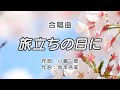 play_arrow play_arrow | The graduation song spread from the local community to the entire country. |
| 94 | Moon |  play_arrow play_arrow | It is a heartwarming song that sings about the moon’s rising and setting. |
| 95 | To the future |  play_arrow play_arrow | Kiroro’s famous song that sings about steps toward the future |
| 96 | Voices of Insects |  play_arrow play_arrow | A fun children's song that imitates the sounds of insects |
| 97 | red dragonfly |  play_arrow play_arrow | Autumn song of the red dragonfly, longing for my hometown |
| 98 | waiting in vainMiyamoto Tomoko |  play_arrow play_arrow | A Taisho-era folk song that warns against making easy money |
| 99 | Village AutumnBaishō Chieko |  | The essence and gentleness of a song imbued with prayers of wartime |
| 100 | Moon over the Ruined CastleAkiyama Masashi |  | I feel the scenery of the ruined castle through Akikawa’s singing. |