




Introducing recreational activities for middle schoolers to enjoy during breaks, after school, or in free periods! We’ve gathered games that get everyone excited with friends and group activities that strengthen class bonds.
From games that test your ability to read the room to ones that challenge memory and reaction speed, there are lots of genres to enjoy.
They can even be a great chance to get closer to your friends! All the activities have simple rules and can be started right away, so invite your classmates and give them a try!
- Indoor games and recreational activities recommended for junior high school students
- Recreation popularity rankings for junior high school students
- No worries even in the rain! Fun recreational activities you can do in the gym
- Ideas for Grade-Level Activities That Will Make Middle Schoolers Go Wild with Excitement!
- Get the Fun Going! Easy Classroom Games You Can Play at School: Recreational Activities for the Whole Class
- Recommended outdoor recreation for junior high school students: A roundup of fun outdoor activities
- Recreation Ideas That Truly Excite High School Students! A Fun Collection of Activities
- [Elementary School] Indoor Games and Recreational Activities Recommended for Upper Primary Grades
- Recommended for upper elementary grades! Exciting indoor recreation and games
- A collection of simple indoor recreational games
- [Easy] Punishments that will get middle schoolers excited
- [For University Students] A Roundup of Fun Games and Recreational Activities
- Games and activities everyone can enjoy together. A collection of fun play ideas.
Psychological battle games that will get the class excited (1–10)
Word Wolf

It’s the word-based werewolf game “Word Wolf.” For example, let’s say you play with four people.
Everyone draws a card with a word on it and talks about that topic, but one person has a different word.
It’s a psychological game where you try to identify the one person who’s different; if they aren’t detected, that person wins.
It’s thrilling, yet easy to play and guaranteed to liven things up.
With larger groups, it’s also fun to split into a majority and a minority.

Who am I? game

The “Who Am I?” game is a guessing game where you figure out your own identity.
You’re the only one who doesn’t know who you are.
Ask questions to the people around you and compete to see how quickly you can guess your identity.
Ask questions like “Am I food?” or “Am I a living thing?” to narrow it down and find the answer!
Werewolf game

Originally released in 2001 by the American game maker Looney Labs, Werewolf? is a party game that unfolds around conversation and deduction.
Players are divided into Villagers and Werewolves: the Villager team wins if they identify the Werewolves, while the Werewolf team wins if they avoid detection until their numbers become equal to the Villagers.
The Villager side also includes various roles, which introduce new dynamics depending on the number of participants.
It’s a game where you spot inconsistencies in conversation, and achieving victory brings a refreshing sense of accomplishment.

NG word game
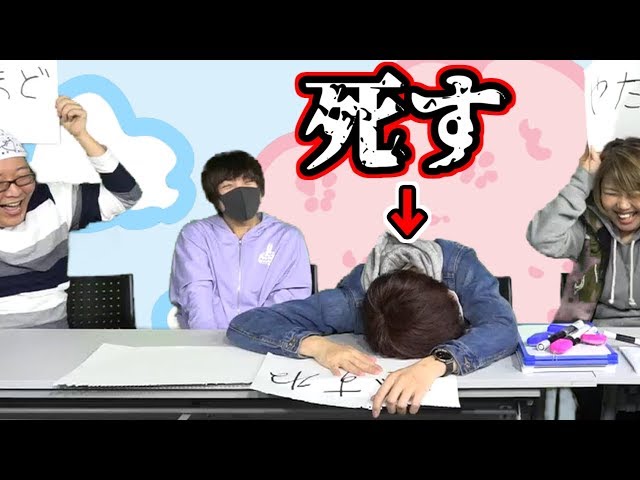
This is an NG-word game where only you don’t know your forbidden word, and if you say it, you’re out.
Place the NG word where you can’t see it—like stuck on your forehead or held above your head.
Everyone else can see it, so they steer the conversation to make you say that word.
It can be a noun, but using a phrase you tend to say, like a catchphrase, is fun too.
Dream Door Game

It’s a game where you gain mysterious powers, called the “Dream Door Game.” The rules are a bit complicated: you draw a slip of paper listing one of seven abilities to determine your own power.
You then cast that ability on someone, and the person affected must perform that action.
If the person does something different from the ability cast on them, they’re out—they lose.
Once someone is out, draw abilities again and try another round.
Don’t Overlap Game

A teamwork-based “Don’t Overlap!” game! Multiple players answer a single prompt, and if any answers overlap, it’s a fail.
For example, with the prompt “Characters from the Sazae-san family,” if multiple people answer “Katsuo,” that’s a fail.
Conversely, if everyone gives different names like “Katsuo,” “Sazae,” and “Wakame,” it’s a success.
Make sure your answers fit the prompt, so keep that in mind as you play.

Nanjamonja

Nanjamonja Game is a game where you give names to monsters called Nanjamonja that don’t have names.
Draw a card, and if it’s a Nanjamonja you haven’t seen before, give it a name.
Place the drawn cards in a single pile.
If a Nanjamonja that already has a name appears, call out its name.
The first person to say it gets all the cards in the pile.
The player with the most cards wins.