

Recommended for middle school students! A collection of quick science project ideas you can do in a short time.


Are you struggling to choose a topic for your middle school independent research project? In fact, with a small twist, you can easily do interesting experiments using everyday items like smartphones, mouthwash, and even bread! In this article, we’ll share tips for independent research—from original ideas to classic experiments—that will make everyone say “Wow!” All of these experiments let you experience the wonders of science, such as programming and chromatography.
Through your summer vacation project, you’re sure to make exciting new discoveries!
- Stand out with your junior high school independent research! A collection of fun experiment and craft ideas
- [Middle School Students] Easy One-Day Science Projects and Crafts Ideas
- Recommended for high school students! A collection of easy one-day science project ideas
- Recommended for middle school students! A collection of quick science project ideas you can do in a short time.
- For 6th Graders: Unique and Fun Ideas for Independent Research Projects
- [For Middle Grades] Simple Magic Tricks for Elementary School Students: Fun Magic Everyone Will Love!
- [For Middle School Students] Recommended Ways to Spend Your Free Time
- For summer vacation homework! Simple and amazing crafts for elementary school students that you’ll want to make after seeing them
- Amazing discoveries with everyday materials! Fun summer vacation independent research ideas
- Recommended for elementary school students' independent research! Experiment and observation ideas using everyday materials
- [For Upper Elementary Students] Simple but Awesome! A Collection of Summer Vacation Craft Ideas
- Elementary School Students: Simple One-Day Science Project and Craft Ideas
- [I don't want to be like everyone else!] Recommended independent research topics for high school students
Recommended for junior high school students! A collection of quick science project ideas (71–80)
Binchotan charcoal battery

This is a power-generation experiment using binchotan charcoal.
Wrap the charcoal in tissue paper and soak it in salt water.
Then wrap it in aluminum foil, and you’re ready.
If you connect it to a sound-emitting device like in the video or to a small light bulb, you can see that electricity is flowing.
It’s an easy science experiment.

Cardboard projector

Why not try making your own projector? It’s simple: all you need is a cardboard box, a magnifying glass, and a smartphone.
Cut a circular hole in the side of the cardboard and mount the magnifying glass lens, then just play a video on your smartphone.
That’s all it takes to complete your original homemade projector.
Grow microorganisms

Have you ever wondered what microorganisms really are? Let’s try raising a plankton called Artemia—also known as sea monkeys—using an easy microorganism-growing kit.
Artemia are often called living fossils because they haven’t changed for 100 million years.
Their eggs can withstand long periods of desiccation, so they can even be sold in capsule toy machines.
Just watching the newly hatched Artemia swim around is soothing, and before you know it, you might grow quite fond of them.

Survey on universal design
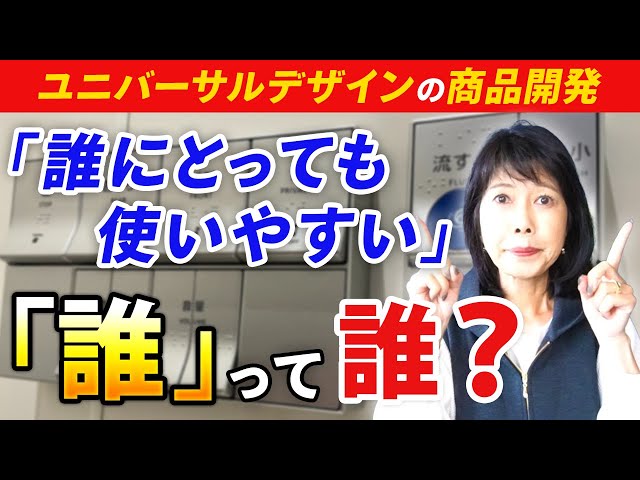
Facilities and products that can be used regardless of culture, nationality, age, or gender are called universal design.
Scissors are one example.
Scissors are basically made for right-handed people.
You’ll notice if you try: when you use them with your left hand, they don’t cut well.
Recognizing this, scissors designed with universal design principles are now available.
Try looking around and see what universal design items you can find in your daily life.
Heron’s fountain

Heron’s fountain, which produces water without using any external power, is a popular topic for independent research projects.
It’s also appealing because you can make it with just plastic bottles and straws.
Before starting the experiment, let’s build a Heron’s fountain.
It’s easy to make by stacking plastic bottles vertically and connecting them with straws.
However, since the process involves drilling holes and gluing with a hot glue gun, be sure to work with an adult for those steps.
Once it’s built, add water and check that it actually functions as a fountain.
Water pressure is involved in why it becomes a fountain, so be sure to look into that as well.

Making a tourist map

How about creating a tourist map of your own town? Using information from the city hall and the tourism association as references, go out and explore to discover what makes your town special.
You might stumble upon some unexpected finds.
You could even publish it on the internet.
Observation of stray cats

A must-see for cat lovers! There are probably stray cats near you as well.
But you might not know what kind of lives they lead, right? So try observing how the stray cats live.
Just be careful—narrow alleys and high places can be dangerous.