

Recommended for middle school students! A collection of quick science project ideas you can do in a short time.


Are you struggling to choose a topic for your middle school independent research project? In fact, with a small twist, you can easily do interesting experiments using everyday items like smartphones, mouthwash, and even bread! In this article, we’ll share tips for independent research—from original ideas to classic experiments—that will make everyone say “Wow!” All of these experiments let you experience the wonders of science, such as programming and chromatography.
Through your summer vacation project, you’re sure to make exciting new discoveries!
- Stand out with your junior high school independent research! A collection of fun experiment and craft ideas
- [Middle School Students] Easy One-Day Science Projects and Crafts Ideas
- Recommended for high school students! A collection of easy one-day science project ideas
- Recommended for middle school students! A collection of quick science project ideas you can do in a short time.
- For 6th Graders: Unique and Fun Ideas for Independent Research Projects
- [For Middle Grades] Simple Magic Tricks for Elementary School Students: Fun Magic Everyone Will Love!
- [For Middle School Students] Recommended Ways to Spend Your Free Time
- For summer vacation homework! Simple and amazing crafts for elementary school students that you’ll want to make after seeing them
- Amazing discoveries with everyday materials! Fun summer vacation independent research ideas
- Recommended for elementary school students' independent research! Experiment and observation ideas using everyday materials
- [For Upper Elementary Students] Simple but Awesome! A Collection of Summer Vacation Craft Ideas
- Elementary School Students: Simple One-Day Science Project and Craft Ideas
- [I don't want to be like everyone else!] Recommended independent research topics for high school students
Recommended for middle school students! A collection of quick independent research project ideas (1–10)
Bread fermentation experiment

This is an experiment to understand how fluffy, soft-textured bread is made and to test whether changing the ingredient ratios affects how much the dough rises.
We’ll use essential bread ingredients—bread flour, salt, dry yeast, and water—and examine whether different amounts of sugar change the fermentation.
Differences in fermentation can be seen by the height in the cup, so it’s important to keep conditions consistent, such as the type of cup used and the waiting time.
In addition to observing how much the dough rises, it’s also recommended to bake the dough after fermentation to compare the differences in flavor.

Elucidation of the lemon battery

This is an experiment to understand how the batteries we casually use in daily life work and to recreate that mechanism using familiar items.
We’ll use a lemon: simply insert a copper plate and a zinc plate, and electricity is generated through a process called the electrochemical series (ionization tendency).
Because it’s weaker than commercially sold batteries, let’s also investigate how many lemons need to be connected to achieve the same performance as a battery.
There are other fruits besides lemons that can serve as batteries, so exploring which ones can act as batteries could be interesting as well.
Thinking about space food

This is research related to space.
Perhaps, within our lifetimes, it will become easy to travel to space.
With that hope in mind, why not start studying now? Since it’s an experiment full of possibilities, you might make unexpected discoveries.
Recommended for junior high school students! A collection of quick-and-easy independent research project ideas (11–20)
Skeleton Egg

How about making an egg that looks like a transparent rubber ball? You can make it with a raw egg and vinegar.
Put the egg in a container and soak it in vinegar for about two days… the shell will dissolve, leaving you with a “skeleton egg.” It’s a fun experiment both to look at and to touch.

Volcanic eruption

This is an experiment using flour, vinegar, detergent, and other materials.
By harnessing a chemical reaction, you can recreate a phenomenon that looks like lava erupting from a volcano.
Try changing the ratio of the powders and observe how each mixture erupts and how it solidifies afterward.
Make disposable hand warmers

This is an experiment in which you investigate how disposable hand warmers are made while creating your own.
With the unique angle of conducting an experiment that could make the hot summer vacation even hotter, why not stand out from the crowd? The materials are simple—charcoal, iron powder, salt, and water.
Carefully measure the quantities and place them into a heat-resistant bag.
You can adjust the temperature by changing the amount of iron powder, but it’s important to consider the risk of burns and make adjustments with safety in mind.
Also check how long the heat lasts by varying the proportions.
Snowflakes made from plastic bottles
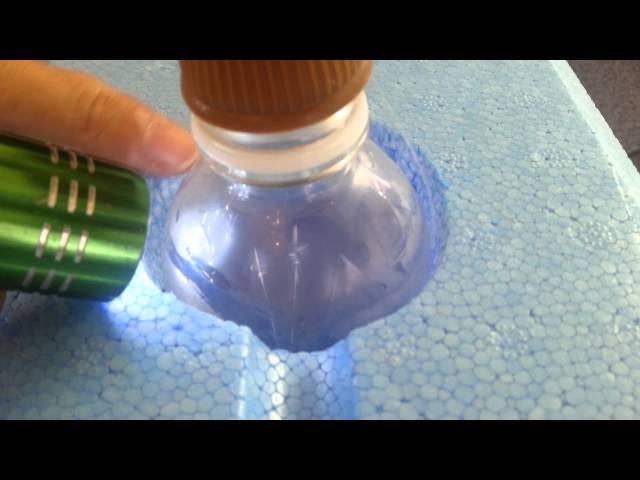
Here we introduce an experiment for creating snow crystals inside a plastic bottle.
This experimental setup is called the Hiramatsu-style artificial snow generator, and with a rubber stopper, a plastic bottle, fishing line, a Styrofoam box, and dry ice, you can produce snow crystals.
The shape of the crystals changes depending on the set temperature, and you can also observe how the crystals grow over time, making it a very engaging and enjoyable experiment.
Please give it a try.
It might also be fun to make them with friends and show each other your results.
