



Are you struggling to choose a topic for your middle school independent research project? In fact, with a small twist, you can easily do interesting experiments using everyday items like smartphones, mouthwash, and even bread! In this article, we’ll share tips for independent research—from original ideas to classic experiments—that will make everyone say “Wow!” All of these experiments let you experience the wonders of science, such as programming and chromatography.
Through your summer vacation project, you’re sure to make exciting new discoveries!
- Stand out with your junior high school independent research! A collection of fun experiment and craft ideas
- [Middle School Students] Easy One-Day Science Projects and Crafts Ideas
- Recommended for high school students! A collection of easy one-day science project ideas
- Recommended for middle school students! A collection of quick science project ideas you can do in a short time.
- For 6th Graders: Unique and Fun Ideas for Independent Research Projects
- [For Middle Grades] Simple Magic Tricks for Elementary School Students: Fun Magic Everyone Will Love!
- [For Middle School Students] Recommended Ways to Spend Your Free Time
- For summer vacation homework! Simple and amazing crafts for elementary school students that you’ll want to make after seeing them
- Amazing discoveries with everyday materials! Fun summer vacation independent research ideas
- Recommended for elementary school students' independent research! Experiment and observation ideas using everyday materials
- [For Upper Elementary Students] Simple but Awesome! A Collection of Summer Vacation Craft Ideas
- Elementary School Students: Simple One-Day Science Project and Craft Ideas
- [I don't want to be like everyone else!] Recommended independent research topics for high school students
Recommended for middle school students! A collection of quick independent research project ideas (1–10)
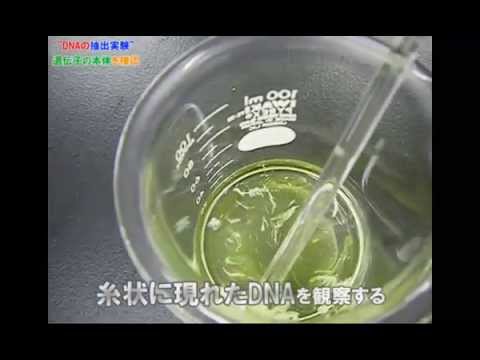
Extract the DNA of vegetables
This is an experiment to extract DNA from familiar vegetables we eat every day.
All you need are vegetables, neutral dish soap, and saline solution.
It’s great because you can do it easily with just these.
DNA is a topic covered in junior high school science, so this activity is recommended.
storm glass

If you’re looking for a chemistry-themed independent research project, a handmade storm glass is highly recommended.
A storm glass is an objet modeled after the weather forecasters used by sailors in the 19th century.
When you put a solution of chemicals such as potassium nitrate and ethanol into a bottle, the crystals that form will change depending on the weather.
The relationship between the crystal shapes and the weather still doesn’t seem to be fully understood, so keeping an observation journal could be a good idea.

Supercooling experiment

It’s an experiment where water turns into ice the instant you pour it—almost like magic.
The materials are simple and easy to get, but the conditions and steps are tricky, so it often fails.
Don’t give up and keep trying.
It’s also a good idea to keep track of how many times you failed.
impossible object

Shall we try actually building an impossible structure where the pillars interlock in unbelievable ways? Of course, space isn’t really warped—it’s a perspective-based optical illusion where the viewing angle is crucial.
With the right ideas, it seems like you could recreate all sorts of things.

Liquefaction Experiment

Liquefaction has become a social issue in areas such as land reclaimed from the sea.
It’s a phenomenon where, when the ground shakes during an earthquake, the soil changes to behave like a liquid.
How about making an experiment that reproduces this phenomenon the subject of your independent research? The appeal is that it can be easily done using just sand and water.
Generate lightning on the palm of your hand

In the hot summer, the weather can change suddenly, and it’s a season when you’re more likely to see lightning.
This experiment helps you understand how lightning occurs while creating a small spark in your own hands.
You’ll use a piezoelectric element—the kind found in lighter components—and connect it to an incandescent bulb.
Then, in a darkened room, press the piezoelectric element to generate a brief flash like lightning.
Take appropriate safety precautions and record what it looks like.
It’s also recommended to compare the difference between the lightning you generate by hand and naturally occurring lightning.

Vitamin C research using a gargling solution

This is an experiment to find out which liquids contain vitamin C using a gargling solution.
It’s important to use a mouthwash that contains iodine; the iodine reacts with vitamin C and turns the solution clear.
Prepare a mixture of water and the mouthwash, then use a dropper to add liquids such as lemon juice or barley tea, and observe the color change.
Even liquids not typically associated with vitamin C may contain it, so it’s recommended to prepare a variety of liquids and test them.
Adjust the amount of iodine as needed and pay attention to the magnitude of the changes as you investigate.