

Mozart: An Introduction to His Signature and Popular Works

Wolfgang Amadeus Mozart, who had a profound impact on classical music.
He began composing at the age of five, displayed his talents from an early age by performing before European royalty, and left behind more than 800 works during his 35-year life.
He also produced masterpieces in every musical genre of his time and excelled not only as a composer but also as a conductor, pianist, organist, and violinist, earning him the title of a musical genius.
In this article, we introduce some of Mozart’s signature and most popular pieces.
Please enjoy his music—melodies that are catchy and familiar, yet of high quality and imbued with a charm that defies simple description.
- Pick up Beethoven’s famous and representative works!
- [Masterpiece Classics] A special showcase of gem-like masterpieces so beautiful they’ll move you to tears
- Classical masterpieces. Recommended classical music.
- Classical piano masterpieces: legendary performances from around the world you should hear at least once
- Timelessly beautiful classical masterpieces. Recommended classical music.
- Brahms's masterpieces. Popular classical music.
- Cool classical masterpieces. Recommended classical music.
- Today's Classics: Recommended classical music and great performances to listen to today
- [Tchaikovsky] Pick up famous and representative pieces!
- Jacques Ibert Popular Song Ranking [2026]
- Famous pieces recommended for opera beginners. Recommended opera songs.
- J.S. Bach | Introducing Famous and Representative Works
- Masterpieces of Ballet Music: Introducing Classic Favorites
[Mozart] Introducing Representative and Popular Works (71–80)
Horn Concerto No. 1 in D major, K. 412/514Wolfgang Amadeus Mozart
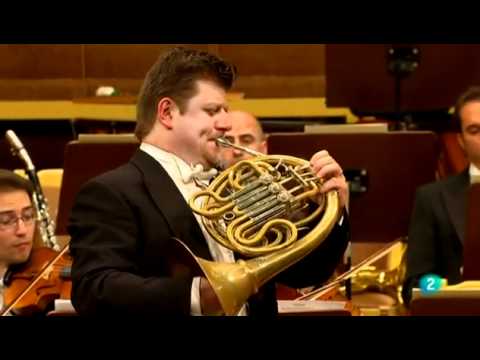
A master of Classical music who displayed extraordinary talent from childhood and composed over 800 works across a wide range of genres, Wolfgang Amadeus Mozart.
His Horn Concerto No.
1 in D major, K.412/514—written for his close friend and exceptional horn player Joseph Leutgeb—captivates with its technical difficulty and Mozart’s characteristically refined melodies.
In particular, the encouragements and jokes written in the score for the performer reveal the intimacy of their relationship.
It’s a highly recommended piece not only as an introduction to classical music but also for anyone who wants to savor a masterpiece.
Motet ‘Ave verum corpus’ K. 618Wolfgang Amadeus Mozart

Mozart’s “Ave verum corpus” is an enchanting piece with a relaxed, flowing character.
This time, I’d like to introduce the motet “Ave verum corpus,” K.
618.
Although “Ave verum corpus” is often considered intermediate in difficulty, K.
618 could reasonably be regarded as suitable for beginners.
As long as you manage the pedal work and rhythm carefully, even a novice can deliver a convincing performance.
There are no particularly difficult passages, so if you’ve completed basic training, I encourage you to give it a try.

Mozart’s LullabyWolfgang Amadeus Mozart

Alongside works by Brahms and Schubert, Mozart’s “Lullaby” is counted among the world’s three greatest lullabies.
It’s a classic masterpiece that most people would recognize as soon as they hear a snippet of the melody and think, “I’ve heard this somewhere.” Although it was long believed to have been composed by Mozart, research has revealed that the piece is actually a lullaby composed by the Austrian composer Bernhard Flies.
Symphony No. 40 in G minor, K. 550Wolfgang Amadeus Mozart

Symphony No.
40 in G minor, K.
550 is one of the most popular among Wolfgang Amadeus Mozart’s many symphonies.
Despite the financial instability and personal difficulties he faced at the time, Mozart’s music was, artistically speaking, entering a period of true maturity.
This work—striking for its poignant melody introduced by the violas and its firmly constructed sonata form—is profound yet refined.
Its richly expressive themes, as if interweaving life and death, light and darkness, speak powerfully to the listener’s heart.
It is an imperishable masterpiece that both newcomers to classical music and seasoned listeners should hear at least once.
Symphony No. 41 in C major, K. 551 “Jupiter”Wolfgang Amadeus Mozart

A quintessential composer of the Viennese Classical period, Wolfgang Amadeus Mozart wrote his final symphony, the majestic and grandly scaled Symphony No.
41 in C major, K.
551, which stands out prominently within the classical repertoire.
The work opens with an elegant melody, and the motif known as the “Jupiter theme” appears in various instruments, lending the piece a rich variety of expression.
The fugue in the finale is especially breathtaking, vividly showcasing Mozart’s genius.
Praised by later musical giants such as Richard Strauss and Karl Böhm, this masterpiece brilliantly fuses beautiful melodies with a complex and refined structure.
Symphony No. 39Wolfgang Amadeus Mozart

A symphony without oboes—something considered rare in Mozart’s works.
At first, it draws close as if wrapping your heart.
Then it grows a little suspicious and pulls away.
The doubts clear, and it comes near again.
After that, the tones pour over your head like rain.
You know how some people are hard to pin down? This music brings such a person to mind.

Symphony No. 40Wolfgang Amadeus Mozart

One of Mozart’s “Three Great Symphonies.” Most of the symphonies he composed are in major keys, and only two, including this one, are in a minor key.
Around 1788, when he wrote this work, Mozart was leaving behind a number of masterpieces and was in a musically fruitful period.
However, his private life was marked by misfortune, including the deaths of his father Leopold and his eldest daughter Theresia.
Such hardships may have given rise to works in minor keys.
This symphony, which combines Mozart’s characteristic lightness with powerful emotion and a sense of tragedy, possesses a captivating allure that continues to grip the hearts of many.
