

Mozart: An Introduction to His Signature and Popular Works

Wolfgang Amadeus Mozart, who had a profound impact on classical music.
He began composing at the age of five, displayed his talents from an early age by performing before European royalty, and left behind more than 800 works during his 35-year life.
He also produced masterpieces in every musical genre of his time and excelled not only as a composer but also as a conductor, pianist, organist, and violinist, earning him the title of a musical genius.
In this article, we introduce some of Mozart’s signature and most popular pieces.
Please enjoy his music—melodies that are catchy and familiar, yet of high quality and imbued with a charm that defies simple description.
- Pick up Beethoven’s famous and representative works!
- [Masterpiece Classics] A special showcase of gem-like masterpieces so beautiful they’ll move you to tears
- Classical masterpieces. Recommended classical music.
- Classical piano masterpieces: legendary performances from around the world you should hear at least once
- Timelessly beautiful classical masterpieces. Recommended classical music.
- Brahms's masterpieces. Popular classical music.
- Cool classical masterpieces. Recommended classical music.
- Today's Classics: Recommended classical music and great performances to listen to today
- [Tchaikovsky] Pick up famous and representative pieces!
- Jacques Ibert Popular Song Ranking [2026]
- Famous pieces recommended for opera beginners. Recommended opera songs.
- J.S. Bach | Introducing Famous and Representative Works
- Masterpieces of Ballet Music: Introducing Classic Favorites
[Mozart] Introducing Representative and Popular Works (11–20)
Clarinet Quintet in A major, K. 581Wolfgang Amadeus Mozart

Composed in September 1789, this work is a masterpiece that brings out the full allure of the clarinet.
Consisting of four movements—the bright and lucid first movement, the beautifully serene second, a third movement featuring two contrasting trios, and a fourth in theme-and-variations form—it offers a rich variety of expression.
It skillfully exploits the clarinet’s wide range and lyrical capabilities, achieving exquisite balance with the string quartet that captivates listeners.
Through this piece, Mozart made a significant contribution to the development of the clarinet, which was still a relatively new instrument at the time.
A must-hear for chamber music enthusiasts.
Concerto for Flute and Harp, K. 299Wolfgang Amadeus Mozart

Completed in Paris in April 1778, the Concerto for Flute and Harp is a work with a rare combination, composed for a French nobleman and his daughter.
At the time, it made the most of the then-developing characteristics of the flute and harp, resulting in an elegant, well-balanced three-movement structure.
The brilliance of the first movement’s themes, the calm and graceful melody of the second, and the light, vibrant finale of the third each distill their own distinct charm.
Enjoy the harmonious blend of the flute’s and harp’s beautiful timbres.
Symphony No. 40, K. 550Wolfgang Amadeus Mozart

His representative work, Symphony No.
40, is a masterpiece completed in July 1788.
Consisting of four movements, it is a celebrated piece that fuses Mozart’s mature compositional technique with profound emotional expression.
The opening theme of the first movement is particularly famous and widely beloved.
As one of his few symphonies written in a minor key, it conveys a range of emotions, including sorrow, passion, and tension.
It is recommended not only for classical music enthusiasts but also for those encountering Mozart’s music for the first time.
Symphony No. 25, K. 183Wolfgang Amadeus Mozart

In Japan, this piece was once used in a TV commercial for a certain hamburger chain.
Among Mozart’s 68 symphonies, only this one and No.
40 are in a minor key.
The oboe solo melody is somewhat melancholy, yet the rest is highly intense and passionate—a youthful symphony.
Piano Sonata No. 16, K. 545Wolfgang Amadeus Mozart
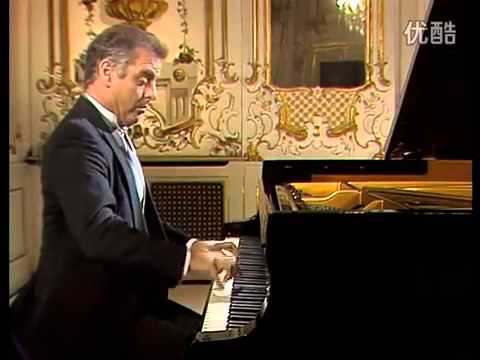
This work is the piece Mozart labeled as “a little sonata for beginners.” It consists of three movements, and the first movement features a melody you may have heard even if you’re not familiar with classical music.
Its hallmark is a friendly, bright theme; despite its simplicity, it offers harmonies that resonate with the heart and a beautiful sonic tapestry woven by the interplay of the left and right hands.
It’s an ideal piece for learning the basics of classical music and for savoring the joy of performing.
Piano Sonata No. 11 in A major, K. 331Wolfgang Amadeus Mozart


This commercial is inspired by a painting of the Mozart family, depicting Mozart and his sister playing a piano duet, their father holding a violin, and a portrait of their mother hanging on the wall.
It introduces “Docomo mini,” which allows you to use a smartphone starting from 880 yen the following month by setting the specified payment method and choosing designated internet and electricity services.
The surreal and striking touch is that everyone in the Mozart household has a smartphone.
The background music is a parody of one of Mozart’s signature works, Piano Sonata No.
11 in A major, K.
331.

[Mozart] Introducing Signature and Popular Pieces (21–30)
Symphony No. 36 “Linz,” K. 425Wolfgang Amadeus Mozart

This work is a symphony that premiered in Linz, Austria, in November 1783.
Structured in four movements, it begins with a solemn introduction, unfolds into graceful melodies and lively rhythms, and culminates in a vibrant, energetic finale.
Remarkably, Mozart is said to have completed the piece in just four days.
Despite being composed in such a short time, it stands as one of his masterpieces and remains highly popular and frequently performed today.
It’s a perfect recommendation for anyone who wants to fully savor the charms of classical music.