

Mozart: An Introduction to His Signature and Popular Works

Wolfgang Amadeus Mozart, who had a profound impact on classical music.
He began composing at the age of five, displayed his talents from an early age by performing before European royalty, and left behind more than 800 works during his 35-year life.
He also produced masterpieces in every musical genre of his time and excelled not only as a composer but also as a conductor, pianist, organist, and violinist, earning him the title of a musical genius.
In this article, we introduce some of Mozart’s signature and most popular pieces.
Please enjoy his music—melodies that are catchy and familiar, yet of high quality and imbued with a charm that defies simple description.
- Pick up Beethoven’s famous and representative works!
- [Masterpiece Classics] A special showcase of gem-like masterpieces so beautiful they’ll move you to tears
- Classical masterpieces. Recommended classical music.
- Classical piano masterpieces: legendary performances from around the world you should hear at least once
- Timelessly beautiful classical masterpieces. Recommended classical music.
- Brahms's masterpieces. Popular classical music.
- Cool classical masterpieces. Recommended classical music.
- Today's Classics: Recommended classical music and great performances to listen to today
- [Tchaikovsky] Pick up famous and representative pieces!
- Jacques Ibert Popular Song Ranking [2026]
- Famous pieces recommended for opera beginners. Recommended opera songs.
- J.S. Bach | Introducing Famous and Representative Works
- Masterpieces of Ballet Music: Introducing Classic Favorites
[Mozart] Introduction to Representative and Popular Works (1–10)
Piano Sonata No. 8, K. 310Wolfgang Amadeus Mozart

It’s not as famous as No.
15, but it’s one of Mozart’s well-known piano sonatas.
For many young pianists, the standard progression is to play No.
15 first and then this No.
8.
It’s also an excellent piece for developing finger independence and fundamental technique.
Piano Concerto No. 23, K. 488Wolfgang Amadeus Mozart

Piano Concerto No.
23 was completed in the spring of 1786.
Composed in A major, Mozart’s favorite key, it is an exceptionally popular masterpiece even among Classical piano concertos by other composers.
Consisting of three movements, it captivates with its variety: the bright sonorities of the first movement, the melancholic melody of the second, and the lively finale of the third.
It also includes cadenzas written by Mozart himself, showcasing the full extent of his mature virtuosity.
Twelve Variations on “Ah, vous dirai-je, Maman” (Variations on the French song), Kira-Kira Star VariationsWolfgang Amadeus Mozart

Among Mozart’s piano pieces, this is a famous and frequently performed favorite at concerts.
Its official title is “12 Variations on the French Song ‘Ah, vous dirai-je, Maman’,” but because it uses the familiar children’s song “Twinkle, Twinkle, Little Star” as its theme, it has come to be known in Japan as the “Twinkle, Twinkle Little Star Variations.” The theme is transformed through successive variations, shifting to minor keys, becoming grand and expansive, and displaying a wide range of expressions.
[Mozart] Introducing Representative and Popular Works (11–20)
Clarinet Concerto, K. 622Wolfgang Amadeus Mozart

Mozart is famous for his piano concertos, but he also composed concertos for many other instruments.
Among his wind concertos, this Clarinet Concerto is relatively well known.
Its beautiful, delicate melodies and harmonies bring out the charm of the clarinet.
It is one of Mozart’s greatest masterpieces and an indispensable piece in the repertoire of clarinetists.
Piano Sonata No. 11, K. 311, Movement 3 “Turkish March”Wolfgang Amadeus Mozart

The third movement of Mozart’s Piano Sonata No.
11, widely known as “Turkish March,” is a popular piece often performed on its own.
Its distinctive Turkish-style rhythms and melodies give it a lively, invigorating character.
Composed around 1783, the work also shows an innovative side by embracing the Orientalism that was fashionable at the time.
With its brilliant ornamentation and dramatic rhythms, it captivates listeners and is a piece many piano students aspire to play.
Be sure to listen to the sonata as a whole as well—Movements I and II are also well worth hearing.
Piano Concerto No. 20, K. 466Wolfgang Amadeus Mozart
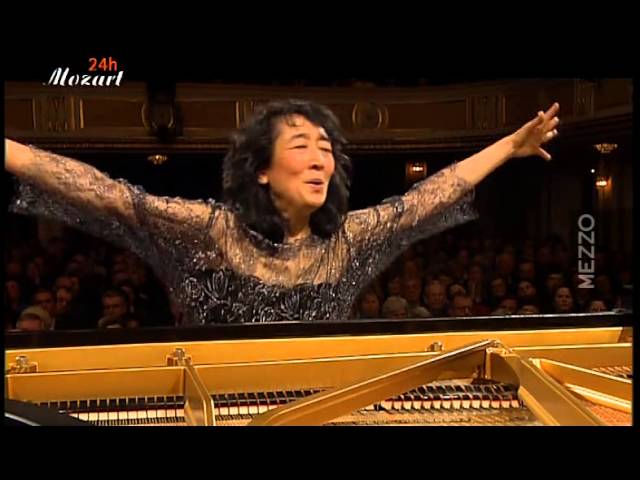
Among Mozart’s piano concertos, this work is one of the most popular, vying for first or second place.
Although it is one of his few minor-key pieces, it is so deeply compelling that some critics even proclaim, “Mozart’s true allure lies in his minor works.” It’s said that Beethoven was also very fond of this concerto.
Sonata for Two Pianos, K. 448Wolfgang Amadeus Mozart
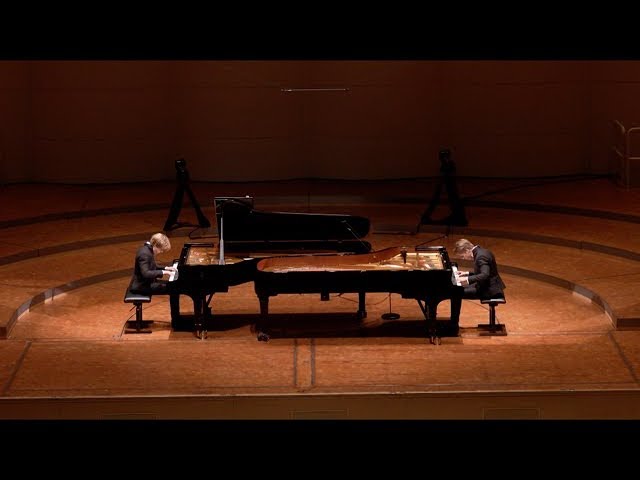
Composed in 1781, this work is brilliant and highly effective in performance.
It is said that Mozart wrote it specifically to play together with his pupil.
In Japan, it became widely known when the protagonists Chiaki and Nodame performed it in the manga series Nodame Cantabile.
The first movement opens with a powerful, march-like theme; the second movement is characterized by a lyrical, singing melody; and the third movement features a lively, memorable subject.
The light, skillful interplay between the two pianos and the rich sonic effects are particularly appealing.
Its bright, expansive character leaves listeners with a refreshing impression.