

Mozart: An Introduction to His Signature and Popular Works

Wolfgang Amadeus Mozart, who had a profound impact on classical music.
He began composing at the age of five, displayed his talents from an early age by performing before European royalty, and left behind more than 800 works during his 35-year life.
He also produced masterpieces in every musical genre of his time and excelled not only as a composer but also as a conductor, pianist, organist, and violinist, earning him the title of a musical genius.
In this article, we introduce some of Mozart’s signature and most popular pieces.
Please enjoy his music—melodies that are catchy and familiar, yet of high quality and imbued with a charm that defies simple description.
- Pick up Beethoven’s famous and representative works!
- [Masterpiece Classics] A special showcase of gem-like masterpieces so beautiful they’ll move you to tears
- Classical masterpieces. Recommended classical music.
- Classical piano masterpieces: legendary performances from around the world you should hear at least once
- Timelessly beautiful classical masterpieces. Recommended classical music.
- Brahms's masterpieces. Popular classical music.
- Cool classical masterpieces. Recommended classical music.
- Today's Classics: Recommended classical music and great performances to listen to today
- [Tchaikovsky] Pick up famous and representative pieces!
- Jacques Ibert Popular Song Ranking [2026]
- Famous pieces recommended for opera beginners. Recommended opera songs.
- J.S. Bach | Introducing Famous and Representative Works
- Masterpieces of Ballet Music: Introducing Classic Favorites
[Mozart] Introducing Representative and Popular Works (41–50)
Motet “Rejoice, be glad, O blessed souls,” HallelujahWolfgang Amadeus Mozart

The third movement “Alleluia” from the motet Exsultate, jubilate (“Rejoice, be glad, O blessed soul”), composed by Mozart in 1773, is a celebrated vocal piece whose bright, pure character evokes angels dancing and playing in the clear blue sky.
Although originally written for a castrato, it is now performed as an important repertoire piece by female lyric sopranos capable of producing high tessitura.
Praise the LordWolfgang Amadeus Mozart

Amid the silence, a beautiful melody flows, and the soothing vocal piece is “Laudate Dominum.” Composed by Mozart, it is the fifth movement of the Vespers “Vesperae solennes de confessore, K.
339” (Solemn Vespers for a Confessor).
“Catalogue Aria” from the opera Don GiovanniWolfgang Amadeus Mozart

A baritone singer from Uruguay in South America, he has gained popularity for his exotic, richly resonant voice and strikingly handsome appearance.
This piece is sung in the scene where the servant Leporello tries to calm the indignant Elvira as he reads from a notebook and tallies up his master’s womanizing.
‘What Is This Thing Called Love?’ from the opera The Marriage of FigaroWolfgang Amadeus Mozart
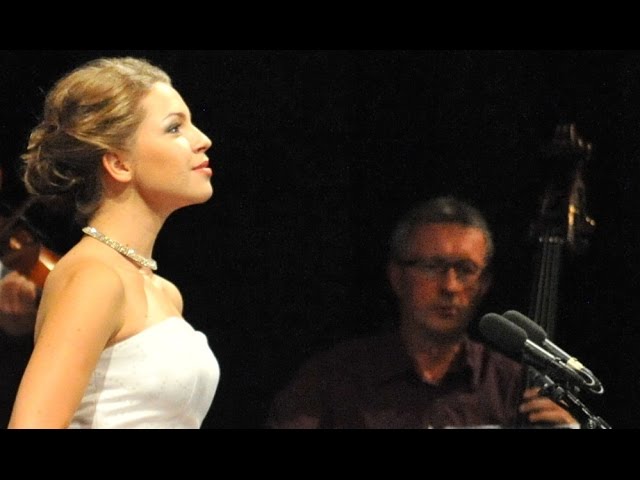
“Voi che sapete che cosa è amor” (“What is love?”) is a celebrated aria from Mozart’s masterpiece opera The Marriage of Figaro.
It shares its popularity with “Non più andrai” (“No more will you fly, little butterfly”) and is beloved for its gently sweet, beautiful melody.
Duet of Papageno and Papagena from the opera The Magic FluteWolfgang Amadeus Mozart

Wolfgang Amadeus Mozart left behind a vast number of compositions.
Among them, the duet “Papageno and Papagena” from the opera The Magic Flute features a rather unusual melody.
While it isn’t a composition designed to showcase the vocalist, it is a piece that demands a high level of vocal skill.

Overture from The Marriage of FigaroWolfgang Amadeus Mozart

Mozart’s opera The Marriage of Figaro—anyone with even a slight interest in opera will know this piece.
This time, I’d like to introduce the Overture from The Marriage of Figaro.
Although it’s from an opera, it also stands well on its own as a solo piano piece and is frequently performed at piano recitals.
The difficulty is suited to intermediate players, and it’s notably faster than it looks on the score.
If you want to develop your fast passagework, it makes an excellent study piece.
Eine kleine Nachtmusik, K. 525Wolfgang Amadeus Mozart

In late 18th-century Vienna, Mozart was one of the composers who led the golden age of Classical music.
His works are highly regarded for their graceful melodies and intricate structures, and they remain widely beloved today.
Eine kleine Nachtmusik, K.
525, is a chamber work written in the serenade form, a light genre intended for social occasions.
Its movements captivate listeners in turn: a bright and lively first movement, a beautifully lyrical second, an elegant minuet for the third, and a spirited finale.
In particular, the Romance of the second movement is notable for its sweet, memorable melody.
This piece is well-suited to enrich various everyday moments, such as a leisurely afternoon or a cherished conversation with someone special.