

Let's get excited with a New Year quiz! General questions about the Japanese New Year


How much do you know about New Year’s in Japan? Even customs we repeat every year without much thought can be surprising once you learn their background—you’ll find yourself thinking, “So that’s what it means!” In this article, we present general knowledge and trivia about the New Year in a quiz format! It’s packed with facts you might think you know but don’t, such as the meaning of otoshidama envelopes, the sentiments behind osechi cuisine and traditional New Year’s games, and things you shouldn’t do during the New Year period.
Try it out and have fun with family and relatives when you gather together!
- [For Elementary School Kids] A New Year’s Quiz Everyone Can Enjoy! Learn surprising fun facts with multiple-choice questions
- Fun facts you’ll want to share! January trivia and tidbits special
- [For Kids] January Trivia Quiz & Fun Facts: Learn About the New Year in a Fun Way
- So interesting you’ll want to tell someone! December Trivia & Fun Facts Special
- Fun quizzes to liven up New Year’s parties: a collection of questions everyone can enjoy
- [Year-end and New Year Parties] A look back at this year and a psychology test for the New Year
- [For Kids] December Trivia Quiz & Fun Facts! Learn about seasonal events and traditions!
- [For Seniors] Brain-training quizzes for January: Let’s have fun with New Year and winter trivia
- [Perfect for New Year Parties] Recommended Psychology Test for January
- [Battle of Wits] Stimulate your intellectual curiosity! Quiz questions that get adults excited
- Let's take on a four-choice quiz that everyone can enjoy together!
- New Year party games that get everyone excited: a fun collection of ideas from classics to DIY
- [For Kids] Today’s Quiz Roundup: Let’s play quizzes about today! [March 2026]
Let's get excited with a New Year's quiz! General questions about Japanese New Year (41–50)
When did the Hakone Ekiden, a New Year’s tradition, first begin?
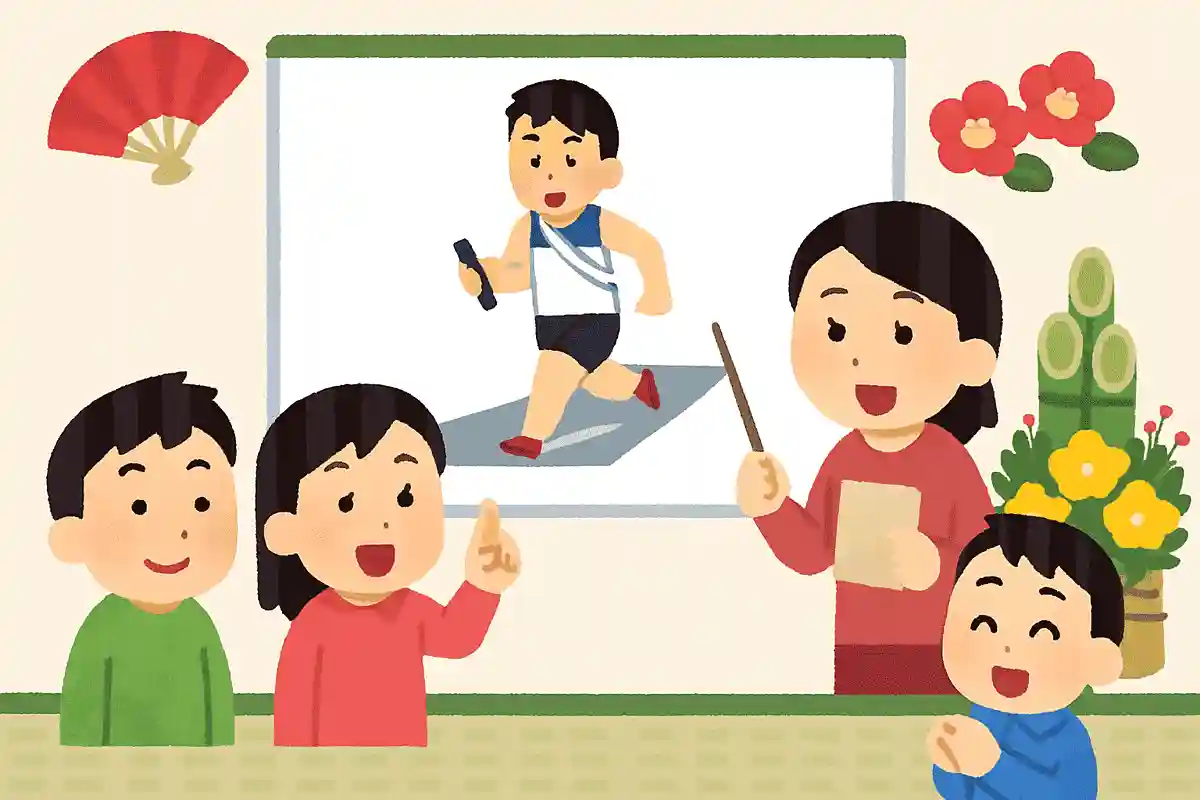
- the year 1920
- the year 1924
- the year 1930
See the answer
the year 1920
The Hakone Ekiden was first held in 1920. It is one of the most historic relay races in Japan and a New Year’s tradition in which many universities participate.

What is the name of the first water drawn early on New Year’s Day?
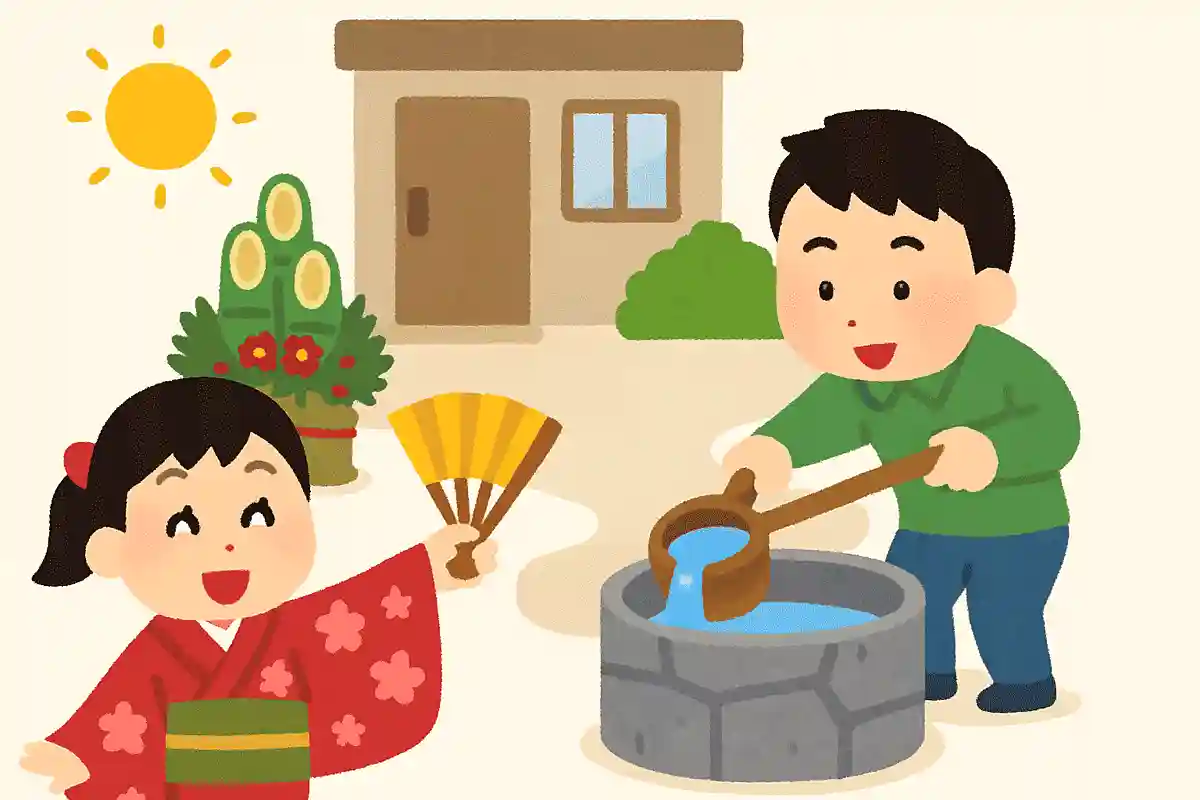
- first water drawn on New Year’s Day
- Fukumizu
- First Spring
See the answer
first water drawn on New Year’s Day
The water drawn for the first time in the early morning of New Year’s Day is called “wakamizu.” Since ancient times, there has been a custom of drawing wakamizu at the start of the new year to pray for safety and good health throughout the year. Incidentally, depending on the region, it is also called “hatsumizu,” “fukumizu,” or “ichiban-mizu.”
Which university has the most wins in the Hakone Ekiden?
- Waseda University
- Juntendo University
- Chuo University
See the answer
Chuo University
As of 2024, Chuo University has achieved 14 championships. In recent years, Aoyama Gakuin University has also been attracting attention, having won seven times since 2015.
Why is sea bream eaten as a classic New Year’s dish?
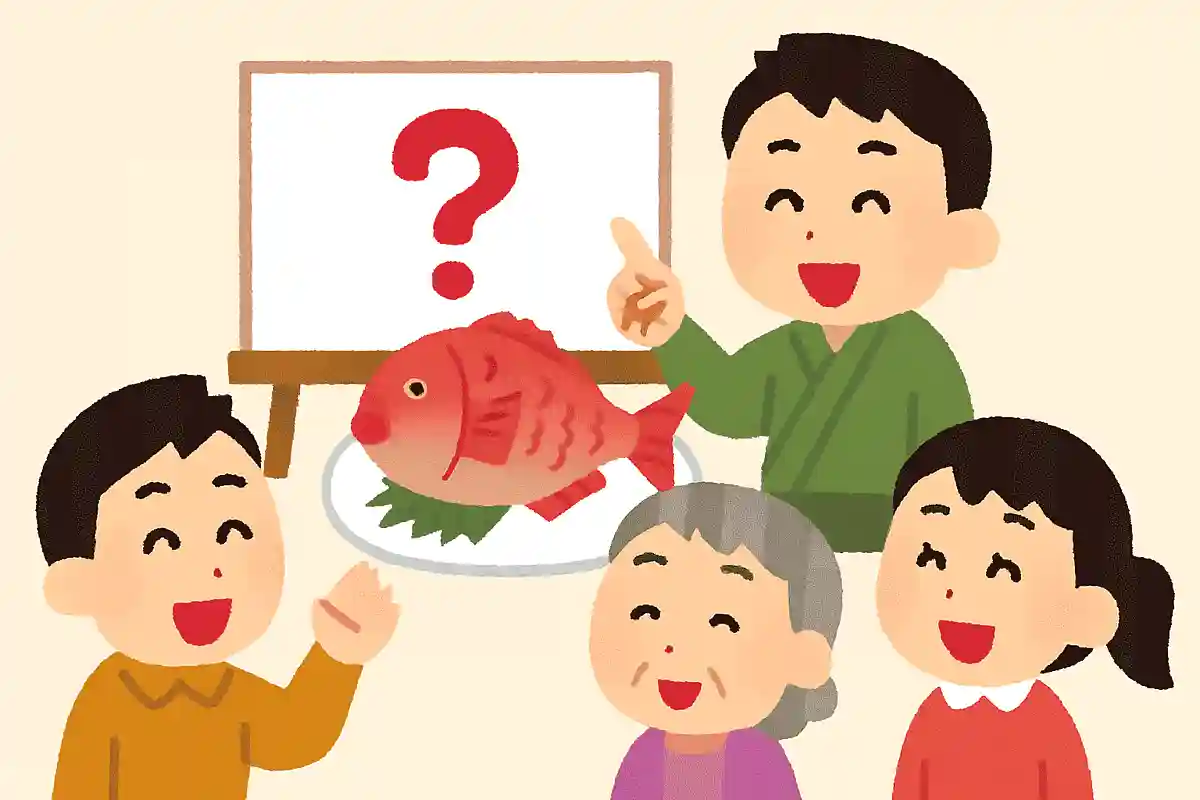
- Because sea bream (tai) is considered an auspicious fish
- Because many sea bream are caught during the winter season
- Because sea bream is easy to digest.
See the answer
Because sea bream (tai) is considered an auspicious fish
Sea bream are used in celebratory occasions as a prayer for longevity because they have a long lifespan among fish. In addition, since ancient times in Japan, they have been cherished as lucky charms at milestones and celebrations, playing on the word “medetai” (auspicious). For this reason, they are also considered suitable for New Year’s dishes.
Which of the following is the correct etiquette before passing through a torii gate?
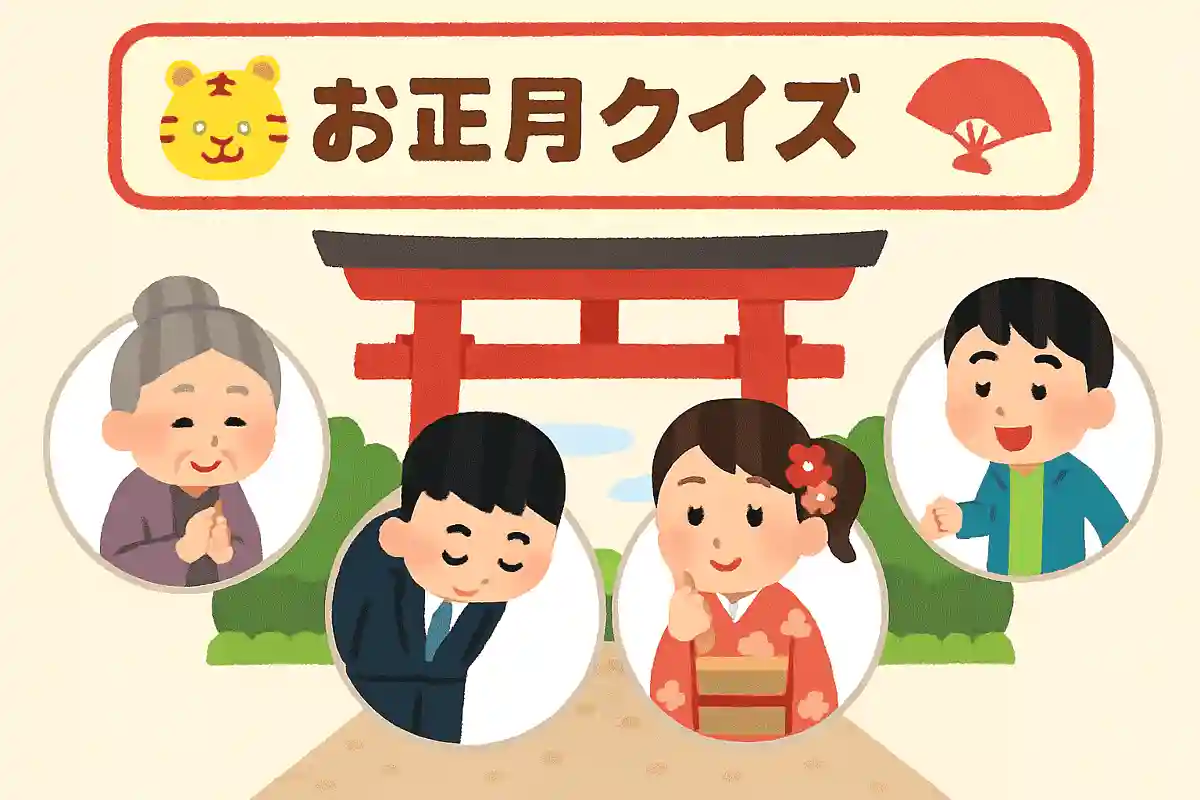
- Give a slight bow.
- to clap
- ring a bell
See the answer
Give a slight bow.
During the New Year’s first shrine visit, many people go to Shinto shrines, and the torii gate is said to serve as a boundary between the world we live in and the sacred realm. Therefore, it is customary to give a slight bow when passing through a torii.
In conclusion
Through the New Year–themed quiz, you were probably able to enjoyably learn about Japan’s traditions and customs! You also realized that even the habits we do without much thought actually have deep meanings.
If you bring up this kind of general knowledge when family and relatives gather, the New Year holiday will become an even richer time.