

Kenta Otani’s original tongue twisters: a collection that’ll have you tripping over words and bursting into laughter

Tongue twisters used for play and enunciation training.
If you’re going to take on the challenge, you want to enjoy it with uniquely funny phrases that make you laugh, right? In this article, we’ve carefully selected and introduced original tongue twisters created by comedian Kenta Otani.
Each one weaves together a whimsical world that makes you imagine the scene, and a tricky difficulty that skillfully exploits mouth movements.
They’re perfect for a quick bit of fun, so be sure to say them out loud and give them a try with your friends and family!
- Tongue Twisters So Fun and Cute You’ll Want to Say Them Out Loud!
- Challenging tongue twisters: Introducing high-difficulty phrases and sentences!
- Tongue twisters that will make you laugh out loud! Super funny
- Get hyped! Tongue twisters that sound cool if you can say them—wordplay that makes you want to take on the challenge
- Take on the world’s hardest tongue twisters! A roundup of ultra-tough prompts that’ll tie your tongue
- [Recreation] Challenge! A roundup of tongue twisters recommended for elementary school students
- [Diction Training] A Collection of Tongue Twisters to Improve Articulation
- A collection of long tongue twisters. Also recommended for practicing announcements and narration.
- Perfect for pronunciation practice! A collection of English tongue twisters.
- Chinese tongue twisters: A collection of rao kou ling helpful for learning Chinese
- Nagoya dialect tongue twisters are exquisite! A fun collection where your tongue gets tied in knots with regional dialects
- Irresistibly tempting to try! Have fun practicing pronunciation with Korean tongue twisters
- Bursting into laughter! A roundup of Hakata dialect tongue twisters
Kenta Otani’s original tongue twisters: a collection that’ll make you stumble and laugh (1–10)
The principal of this agricultural high school is fairly ferocious; the vice-principal has fled.Kenta Otani

This is a tongue twister that depicts a unique situation: the principal of an agricultural high school is so ferocious that the vice-principal runs away.
It makes you wonder how ferocious he really is, and whether that has anything to do with it being an agricultural high school.
With a structure that lines up kanji ending in the “u” sound, like for “agriculture” and “industry,” it tests precise pronunciation while distinguishing similar character sequences.
Since the mouth moves distinctly when producing the “u” sound, how your mouth transitions before and after it is also a key point.

Monkeys stabbing bamboo leaves, monkeys getting stabbed by bamboo leaves, monkeys getting stabbed by bamboo leaves, monkeys rubbing.Kenta Otani
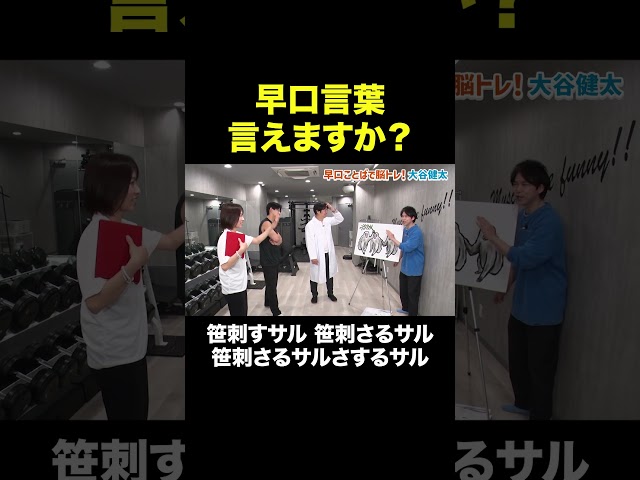
It’s a tongue twister depicting three monkeys: one monkey stabbing bamboo leaves, one monkey being stabbed with bamboo leaves, and one monkey rubbing them.
Part of the fun is that you can’t really tell why anyone would be stabbing bamboo leaves in the first place—the background is a mystery.
In any case, it’s a tongue twister packed with consecutive sa sounds, so proceed while figuring out where other characters slip in.
Be careful not to stumble on the intervening r sounds when you’re too focused on sa.
It’s important to check your mouth shape and airflow as you pronounce it.
Knit cap big dog knapsack super kickKenta Otani
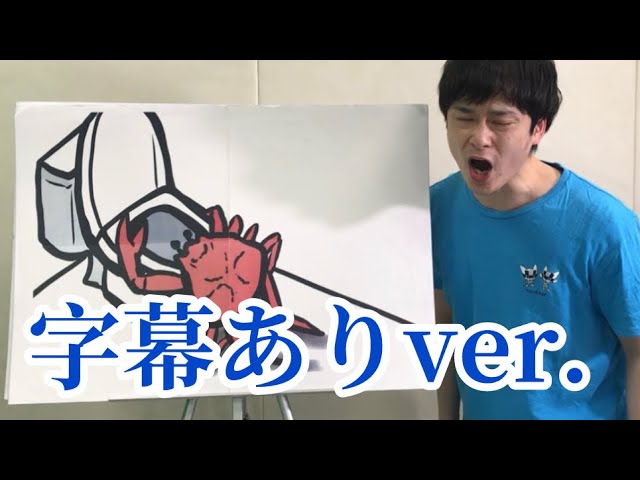
This is a tongue twister that vividly and oddly depicts a big dog in a knit cap kicking a knapsack.
It leaves many questions, like why the knapsack is being kicked and why the dog is wearing a knit cap.
It’s built from words that include a small glottal stop, such as “knit” and “dog” (similar to the small ッ in Japanese), to test smooth pronunciation and correct word sequencing.
Because the situation is so unrealistic, even if you mix up the word order, it might go unnoticed.
Kenta Otani’s original tongue twisters. A collection of works that will make you stumble and laugh (11–20)
Seeing a bus gas explosion, a white-haired person hugs a pug.Kenta Otani
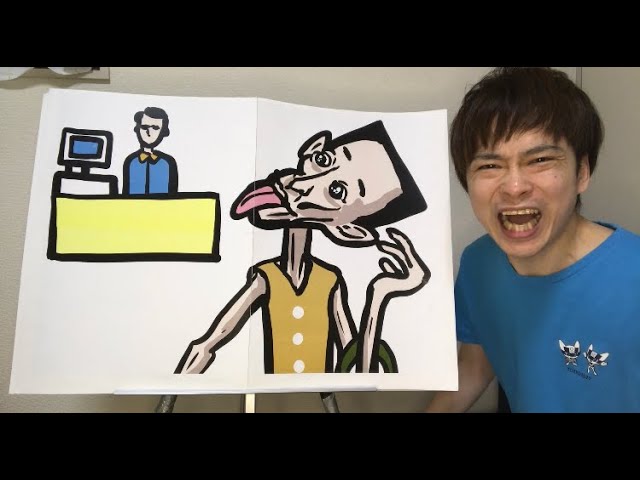
This is a tongue twister in a strange situation: a white-haired person holding a pug watches a bus that has had a gas explosion.
The contrast between the violently exploding bus and the white-haired person calmly observing while holding the pug creates a sense of oddness.
Because the structure lines up various words like “gas” and “pug,” which sound similar to “bus,” it tests your ability to discern subtle differences.
It’s important to proceed while checking how the shape of your mouth and your breath differ, and how to pronounce things smoothly.
warm snailKenta Otani
It’s a tongue twister with a peaceful vibe, depicting a snail wearing warm-looking clothes.
Because it’s simple, the range of situations you can imagine is broad, so keep a clear image in mind as you work on your pronunciation.
The key sounds are “ta” and “ka.” Since they share the same vowel, it’s important to focus on mouth shape and breath control for clear pronunciation.
Check how your mouth forms the sounds and how you use your breath and tongue, then gradually increase your speed.
That’s the recommended approach.
A caterpillar capybara came from the north!Kenta Otani
@otanikenta Tongue twistertranslationTo the south
♬ Original song – Kenta Otani – Kenta Otani
It’s a tongue twister so lively you’ll blurt it out without thinking.
Did what came from the north have caterpillar tracks—or was it a capybara? A playful phrase that tangles your thoughts.
The rhythm of “ki,” “ka,” “pi,” and “ba” keeps rolling, and the more you say it, the choppier your mouth gets.
Its charm is that even mistakes will have everyone in stitches.
Nail the upbeat tempo and you can brag a little; slip up and it still brings the house down.
Kids can enjoy it as wordplay, and adults can use it for articulation practice—so go ahead and try this humor-packed line!

Sudden surge in kids eating nine cucumbersKenta Otani
@otanikenta Tongue twister#cucumberAlmost all water
♬ Original song – Kenta Otani – Kenta Otani
You can’t really say there are many children who like cucumbers, but this tongue twister claims there’s a sudden surge of kids eating as many as nine! Just imagining children clutching cucumbers in both hands and devouring them is kind of funny, isn’t it? This tongue twister contains “kyu” four times, so try to be mindful of that when you say it.
Also, the word kuu (to eat), which starts with something other than “kyu,” is especially tricky and easy to stumble over.
Practice carefully so it doesn’t turn into “kyu.”
