

Kenta Otani’s original tongue twisters: a collection that’ll have you tripping over words and bursting into laughter

Tongue twisters used for play and enunciation training.
If you’re going to take on the challenge, you want to enjoy it with uniquely funny phrases that make you laugh, right? In this article, we’ve carefully selected and introduced original tongue twisters created by comedian Kenta Otani.
Each one weaves together a whimsical world that makes you imagine the scene, and a tricky difficulty that skillfully exploits mouth movements.
They’re perfect for a quick bit of fun, so be sure to say them out loud and give them a try with your friends and family!
- Tongue Twisters So Fun and Cute You’ll Want to Say Them Out Loud!
- Challenging tongue twisters: Introducing high-difficulty phrases and sentences!
- Tongue twisters that will make you laugh out loud! Super funny
- Get hyped! Tongue twisters that sound cool if you can say them—wordplay that makes you want to take on the challenge
- Take on the world’s hardest tongue twisters! A roundup of ultra-tough prompts that’ll tie your tongue
- [Recreation] Challenge! A roundup of tongue twisters recommended for elementary school students
- [Diction Training] A Collection of Tongue Twisters to Improve Articulation
- A collection of long tongue twisters. Also recommended for practicing announcements and narration.
- Perfect for pronunciation practice! A collection of English tongue twisters.
- Chinese tongue twisters: A collection of rao kou ling helpful for learning Chinese
- Nagoya dialect tongue twisters are exquisite! A fun collection where your tongue gets tied in knots with regional dialects
- Irresistibly tempting to try! Have fun practicing pronunciation with Korean tongue twisters
- Bursting into laughter! A roundup of Hakata dialect tongue twisters
Kenta Otani’s original tongue twisters. A collection of works that will make you stumble and laugh (11–20)
Oily Lovey-Dovey Mole AlbumKenta Otani
@otanikenta Tongue twisterMoleHard to flip
♬ Original song – Kenta Otani – Kenta Otani
I’m curious about what’s inside the lovey-dovey mole’s album, but if it’s covered in oil, it seems hard to look at.
The fun of this tongue twister is that it lets you enjoy imagining things like that.
The first half, “abura-mamire raburabu” (oil-covered lovey-dovey), is still manageable to say, but the second half, “mogura arubamu” (mole album), feels like it’ll make you bite your tongue.
The transition between ra and a is especially tricky.
As for practice, it might help to imagine breaks like abura-mamire / raburabu mogura / arubamu.
If you want to raise the difficulty, try seeing how many times you can say it in a row.

KappapapakappaKenta Otani

This is a tongue twister with a peaceful vibe, where only the father in a kappa family is wearing a kappa—that is, a raincoat.
Since kappas are supposed to be creatures of the water, it does make you wonder whether they really need raincoats.
The key to the tongue twister is the repeated “pa” sounds and how they connect to the “ka” sounds before and after them; controlling your breath is important.
It may also help to pronounce it energetically so you can link smoothly to the next sound.

A field mouse that dreams only of teacupsKenta Otani

This is a tongue twister that vividly depicts a subtly agonizing situation where a field mouse always dreams only of teacups.
You can’t help but wonder what teacup dreams are like and what it feels like to be able to dream of nothing else.
The structure lines up words that differ just slightly in character count or arrangement, such as “yunomi” (teacup) and “yume-nomi” (only dreams).
Keep each word and its connections in mind as you say it.
It’s recommended to separate it into words to check each pronunciation, then link the words together and gradually increase your speed.
Pair-look helmet guinea pig slim-muscular full beatdownKenta Otani
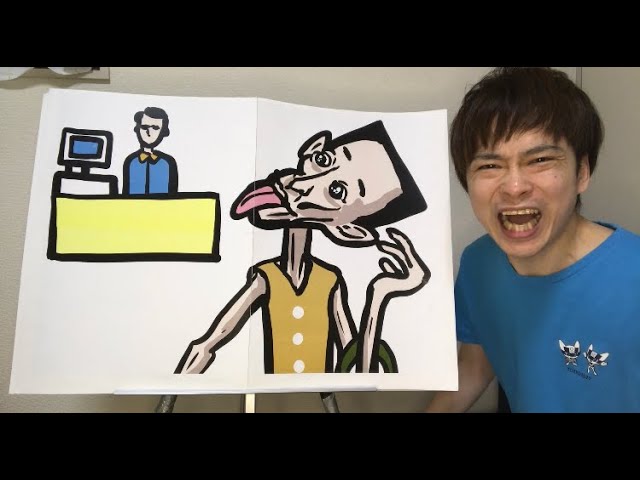
This tongue twister describes a curious scene: two guinea pigs wearing matching helmets punching a lean, muscular person.
The fact that the matching helmets are called a “pair look,” and that the slim macho guy is somehow getting hit, all add to the humor.
It strings together words with similar sounds—like “guinea pig” and “helmet”—so the key is to catch the subtle differences as you say it.
There are also small glottal stops, so keeping a lively, rapid rhythm throughout is an important point.
Super-duper drippy catcherKenta Otani

It’s a tongue twister that depicts a curious situation where a baseball catcher is somehow completely drenched but still doing his best.
The word “mechamecha” (super/very) is a key point, as it conjures an image of being so soaked that it could affect the game.
What makes it notable as a tongue twister is the frequent appearance of the “cha” sound; be mindful of how your mouth shape changes before and after those sounds as you practice.
Start by separating the words and pronouncing them slowly, check your mouth shape, and then gradually increase your speed—that’s the recommended approach.
Satsu shatsu shachiKenta Otani
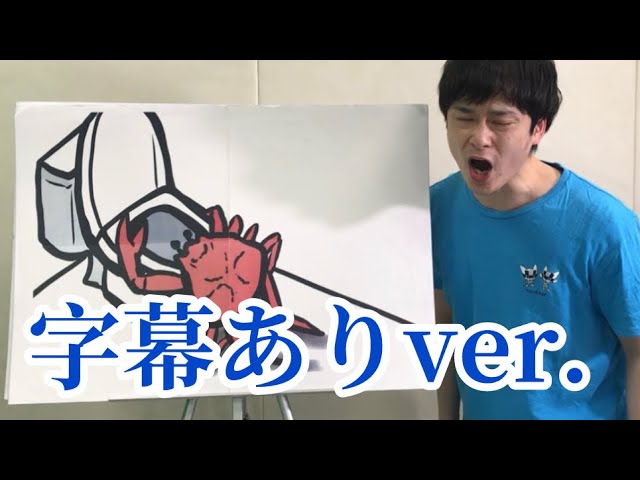
It’s a tongue twister that conveys a somewhat playful vibe: a police officer wearing a shirt with an orca on it.
Since it’s a casual shirt rather than a uniform, it also suggests a sense of approachability.
As a tongue twister, the key is the cluster of similar sounds—“satsu,” “shatsu,” and “shachi.” Because they’re so close, pay attention to fine details like breath control.
It’s short overall, so you can focus on strong articulation; powering through with momentum is also a good strategy.
Kenta Otani’s Original Tongue Twisters: A Collection of Works That Make You Trip Up and Laugh (21–30)
A scrawny, crew-cut, totally blasted customer just came in.Kenta Otani
This tongue twister has such an extraordinary impact that it’ll make you laugh without thinking.
With sounds like gari-gari, kaku-gari, gangimari, kyaku kita… the repeated “ga” and “ka” keep coming, and if you try to read it in rhythm, your tongue will be working overtime.
The words sound strong, but it’s just wordplay, so the trick is not to overthink it—say it out loud and enjoy.
It feels great when you nail it, and if you stumble, it’s hilarious.
Kids can enjoy the fun of the sounds, and adults can use it as a diction exercise—perfect for getting everyone fired up, so why not use it in recreational activities?
