

Rachmaninoff’s masterpieces. Recommended pieces by Rachmaninoff.

Sergei Rachmaninoff is one of the composers who represent Russia.
Although his talent was recognized by fellow Russian composer Tchaikovsky, Rachmaninoff once experienced a setback in his musical career.
Perhaps because his works were born from that state of mind and environment, they resonate with people today as well—their wistful, fleeting, and at times passionate style captivates everyone who listens.
This time, I’ve selected pieces ranging from symphonies performed by orchestra to vocal works and piano pieces.
Even when you hear a piece you don’t know, you might find yourself thinking, “Ah, this is Rachmaninoff.”
Please give them a listen.
- [Ultra-Advanced] Even challenging for advanced players! A curated selection of highly difficult piano pieces
- [Beginner-Friendly] Rachmaninoff’s Piano Pieces | A Curated Selection of Accessible Works!
- Sibelius’s famous piece. Popular classical music.
- [Advanced] Super cool if you can play it! Selection of famous piano pieces
- For Advanced Players: Showstopping Classics to Play at a Piano Recital
- [Masterpiece Classics] A special showcase of gem-like masterpieces so beautiful they’ll move you to tears
- Robert Schumann | Introduction to his famous and representative works
- Masterpieces of the bolero. Recommended popular pieces in bolero form and outstanding performances.
- [Violin] A curated selection of beloved classic masterpieces and popular pieces that continue to be cherished across eras
- Piano Masterpieces: Surprisingly Easy Despite Sounding Difficult!? A Curated Selection Perfect for Recitals
- [Orchestra] Introducing famous and popular pieces
- [For Advanced Players] A Curated Selection of Classical Masterpieces to Tackle at Piano Recitals
- A masterpiece by Alexander Borodin. Popular classical music.
Rachmaninoff’s masterpieces. Recommended Rachmaninoff pieces (71–80)
Symphony No. 2, Movement 3Sergei Rachmaninov

As a musician, the Russian composer Sergei Rachmaninoff suffered a disastrous premiere of his Symphony No.
1, in which he had great confidence, leading to a nervous breakdown and a complete loss of self-confidence.
The work that helped him recover from that psychological pain was the successful Symphony No.
3.
From the gentle clarinet and flute in the opening to the majestic string writing in the middle, it is thoroughly compelling.
Around this time, Rachmaninoff married and had children, and his private life was fulfilling—good circumstances truly do nurture talent.
With its striking contrasts, it would make excellent background music for scenes in nature that evoke the vitality of wild animals.
Symphony No. 2, Movement IIISergei Rachmaninov
A symphony composed by the Russian composer Sergei Rachmaninoff between 1906 and 1907.
This third movement is the most widely known of the four movements, a beautifully lyrical slow movement that is quintessentially Rachmaninoff.
Its flowing, Slavic-tinged melody sings as if imbued with a fleeting sense of longing.
Please enjoy the smooth, sensuous world of Rachmaninoff.

Prelude, Op. 3 No. 2 “The Bells”Sergei Rachmaninov

This work is the second piece in the set Morceaux de fantaisie, composed by Sergei Rachmaninoff when he was 19.
The weighty chords at the opening evoke the pealing of Russian church bells.
Because of this sonority, it is affectionately known as “The Bells” or “The Bells of Moscow.” Premiered in September 1892 at the Moscow Electrical Exhibition, it became the most famous of Rachmaninoff’s early compositions.
In the middle section, the music shifts to rapid figurations, said to have been inspired by a dream Rachmaninoff had.
With an uncanny yet beautiful balance of eeriness and elegance, it makes a perfect listen for Halloween night.
Rachmaninoff’s masterpieces. Recommended Rachmaninoff pieces (81–90)
Prelude Op. 23 No. 5 in G minorSergei Rachmaninov

Rachmaninoff, a Russian pianist and composer who represents the 20th century.
His works are characterized by simple yet beautiful and valiant melodies, leaving a powerful impression as if raw emotion is being expressed through music.
Among his 24 preludes, this piece is one of the most well-known.
From the outset, the bold yet freely played, march-like rhythm is striking, and the romantic melody heard in the middle section possesses a beauty uniquely Rachmaninoff’s.
It is a captivating piece brimming with the rich, folkloric sentiment of Russia!
Fantasiestücke, Op. 3 No. 4: The JesterSergei Rachmaninov

Fantasiestücke Op.
3 is a set of five short pieces, each with its own distinct character.
The fourth piece, Harlequin, is a varied work in which repeated modulations seem to depict the whimsical movements of a jester.
Because it requires expressive changes at a very fast tempo, it is by no means easy.
However, since the piece itself is compact and contains many repetitions, careful sectional practice will allow you to bring it to completion relatively smoothly.
If you enjoy lively pieces full of variety, definitely give it a try!

Fantasy Pieces: Prelude in C-sharp minor, Op. 3 No. 2 “The Bell”Sergei Rachmaninov
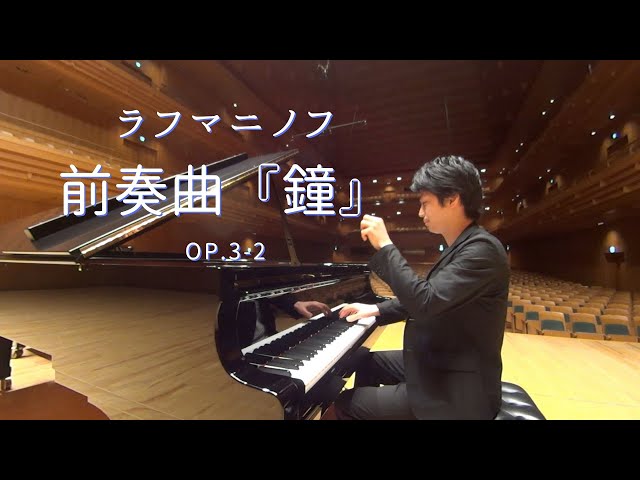
Sergei Rachmaninoff, a Russian composer who was hugely active in the 1890s.
His Prelude in C-sharp minor, Op.
3 No.
2 from the Morceaux de fantaisie, known as “The Bells,” is among his most famous works.
Its difficulty is on the higher end of the intermediate level, though for some players it can rise to an advanced level.
Rachmaninoff had very large hands, and this piece requires the ability to play tenths comfortably.
Conveying the sound of bells on the piano is also challenging, and with its abundance of octaves, the piece is difficult overall.
For those well-versed in piano, however, it makes for a highly impressive listen.

ElegySergei Rachmaninov

Sergei Rachmaninoff, a composer who was forced to flee Russia and take asylum in the United States.
Many of his works have a dark, melancholic character, revealing how deeply they were written with his homeland in mind.
In the latter half of the piece, a powerful swell brings forth a wave of sorrowful melody.
It’s a magnificent work that makes you want to listen again.