


Sergei Rachmaninoff is one of the composers who represent Russia.
Although his talent was recognized by fellow Russian composer Tchaikovsky, Rachmaninoff once experienced a setback in his musical career.
Perhaps because his works were born from that state of mind and environment, they resonate with people today as well—their wistful, fleeting, and at times passionate style captivates everyone who listens.
This time, I’ve selected pieces ranging from symphonies performed by orchestra to vocal works and piano pieces.
Even when you hear a piece you don’t know, you might find yourself thinking, “Ah, this is Rachmaninoff.”
Please give them a listen.
- [Ultra-Advanced] Even challenging for advanced players! A curated selection of highly difficult piano pieces
- [Beginner-Friendly] Rachmaninoff’s Piano Pieces | A Curated Selection of Accessible Works!
- Sibelius’s famous piece. Popular classical music.
- [Advanced] Super cool if you can play it! Selection of famous piano pieces
- For Advanced Players: Showstopping Classics to Play at a Piano Recital
- [Masterpiece Classics] A special showcase of gem-like masterpieces so beautiful they’ll move you to tears
- Robert Schumann | Introduction to his famous and representative works
- Masterpieces of the bolero. Recommended popular pieces in bolero form and outstanding performances.
- [Violin] A curated selection of beloved classic masterpieces and popular pieces that continue to be cherished across eras
- Piano Masterpieces: Surprisingly Easy Despite Sounding Difficult!? A Curated Selection Perfect for Recitals
- [Orchestra] Introducing famous and popular pieces
- Recommended for advanced players: Classical masterpieces to challenge at a piano recital
- A masterpiece by Alexander Borodin. Popular classical music.
Rachmaninoff’s masterpieces. Recommended Rachmaninoff pieces (1–10).
Symphony No. 2 in E minor, Op. 27Sergei Rachmaninov

A symphony that Rachmaninoff premiered with his own conducting at the Mariinsky Theatre in Saint Petersburg.
Rather than foregrounding a single distinctive theme, it flows with an incessant interweaving of sounds from various instruments.
Recommended as background music when you want to focus on studying or work.
Piano Concerto No. 2 in C minor, Op. 18Sergei Rachmaninov
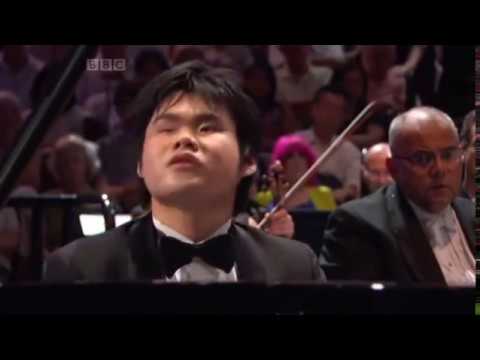
A famous piece often cited as a leading example of a piano symphony.
It opens with solemn chords, followed by a sweeping romantic melody.
The second movement is a sparkling, lyrical section.
The third movement begins with a rhythmically vibrant theme and concludes in a brilliant, overwhelming tutti.
Although the performance lasts about 30 minutes, it’s a work that invites you to focus intently on each and every note.
Vocalise, Op. 34 No. 14Sergei Rachmaninov

A wordless song composed in 1915 by Sergei Rachmaninoff, one of the quintessential Russian composers of the 20th century.
Originally written for voice and piano, it later inspired various arrangements, including an orchestral version.
Its beautiful, textless melody resonates deeply with listeners.
Perfectly aligned with the piano’s graceful timbre, it is a piece that tests the performer’s expressive abilities.
The subtly woven, wistful lines leave a powerful impression.
A must-hear highlight is the scene where the melody sings smoothly over chordal accompaniment.
Conveying emotion and imagery through music, this work is recommended for listeners of all ages.
Piano Concerto No. 3 in D minor, Op. 30Sergei Rachmaninov

A piece said to have been first performed by Rachmaninoff during his concert tour in America.
The opening melody, reminiscent of an autumn twilight, evokes a sense of nostalgia.
As it moves from somber chords to glittering ornamental passages, the main theme occasionally resurfaces.
It’s a perfect piece for those moments when you’re feeling down and want to indulge in a bit of solitary sentimentality.
Ten PreludesSergei Rachmaninov
As its name suggests, it consists of ten pieces and was published in 1903.
“In G minor, Alla Marcia” was composed earlier in 1901, while the remaining nine pieces were produced in 1903, the year of publication.
The premiere took place on February 23, 1903, in Moscow, performed by the composer himself.
Rhapsody on a Theme of Paganini, Op. 43, Variation 18Sergei Rachmaninov

An immortal masterpiece by the Russian composer Rachmaninoff.
Also used as ballet music, this work is a tour de force consisting of 24 variations on a theme by Paganini.
Composed in the summer of 1934 at a Swiss villa, it premiered in Baltimore on November 7 of the same year.
Written in the form of a piano concerto, it features dazzling performances that demand transcendental technique.
One variation in particular is especially famous, captivating many with its beautiful melody and harmonies.
It is a piece that calls for a gentle, romantic interpretation, with careful attention to the melodic line within the chords.
A moving classic that is also ideal as an introduction to classical music.
Piano Sonata No. 2 in B-flat minor, Op. 36Sergei Rachmaninov

This piece was created by Rachmaninoff during his stay in Italy.
Tchaikovsky, who was also from Russia like Rachmaninoff, had spent time in Italy as well, and it is said that Rachmaninoff composed this work in the very room where Tchaikovsky had stayed.
It is a dramatic piece in which rich harmonies flow seamlessly without pause.