

Rachmaninoff’s masterpieces. Recommended pieces by Rachmaninoff.

Sergei Rachmaninoff is one of the composers who represent Russia.
Although his talent was recognized by fellow Russian composer Tchaikovsky, Rachmaninoff once experienced a setback in his musical career.
Perhaps because his works were born from that state of mind and environment, they resonate with people today as well—their wistful, fleeting, and at times passionate style captivates everyone who listens.
This time, I’ve selected pieces ranging from symphonies performed by orchestra to vocal works and piano pieces.
Even when you hear a piece you don’t know, you might find yourself thinking, “Ah, this is Rachmaninoff.”
Please give them a listen.
- [Ultra-Advanced] Even challenging for advanced players! A curated selection of highly difficult piano pieces
- [Beginner-Friendly] Rachmaninoff’s Piano Pieces | A Curated Selection of Accessible Works!
- Sibelius’s famous piece. Popular classical music.
- [Advanced] Super cool if you can play it! Selection of famous piano pieces
- For Advanced Players: Showstopping Classics to Play at a Piano Recital
- [Masterpiece Classics] A special showcase of gem-like masterpieces so beautiful they’ll move you to tears
- Robert Schumann | Introduction to his famous and representative works
- Masterpieces of the bolero. Recommended popular pieces in bolero form and outstanding performances.
- [Violin] A curated selection of beloved classic masterpieces and popular pieces that continue to be cherished across eras
- Piano Masterpieces: Surprisingly Easy Despite Sounding Difficult!? A Curated Selection Perfect for Recitals
- [Orchestra] Introducing famous and popular pieces
- Recommended for advanced players: Classical masterpieces to challenge at a piano recital
- A masterpiece by Alexander Borodin. Popular classical music.
Rachmaninoff’s masterpieces. Recommended Rachmaninoff pieces (21–30)
Divine Liturgy of St. John Chrysostom, Op. 3Sergei Rachmaninov

An unaccompanied sacred choral work composed for Orthodox prayer, similar to the All-Night Vigil.
For those who associate Rachmaninoff mainly with symphonies and piano pieces, it might feel a bit inaccessible.
However, it’s a piece that lets you fully savor the beauty of layered human voices, so I highly recommend giving it a listen.
It’s a work that makes the air of the place feel pure.
Fantasiestücke, Op. 3 No. 1: ElegySergei Rachmaninov

A piece included as the first number in Sergei Rachmaninoff’s Fantaisie-Impromptus, Op.
3, completed in 1892.
Rachmaninoff composed it right after graduating from the Moscow Conservatory, and you can sense a glimpse of his emerging genius.
It is often performed at a gentle tempo and is not technically difficult, but it demands expressive nuance.
By being mindful of the balance between the bass and the melody and infusing each note with care, you can bring out the work’s appeal.
It is a recommended piece for those who wish to savor a quiet, introspective atmosphere.
Rachmaninoff masterpieces. Recommended Rachmaninoff pieces (31–40)
From “Fantasy Miniatures,” No. 1: ElegySergei Rachmaninov
Sergei Rachmaninoff, the world-renowned composer and pianist born in Russia, wrote many works whose melodies are not only beautiful but steeped in sorrow.
There are countless Rachmaninoff pieces suitable for introduction in this article, but the one featured here is the first piece, “Élégie,” from his 1892 solo piano set Morceaux de fantaisie.
While the second piece, “Prelude,” may be more famous, the beauty and poignancy of the melody in “Élégie” are equally remarkable.
Centered on left-hand arpeggiated figures, the music unfolds with a flowing, melancholic grace that is truly gorgeous.
To think that Rachmaninoff completed such a work at the young age of 19—his talent can only be described as astonishing.

Etudes Collection “Pictures at an Exhibition”Sergei Rachmaninov

This is a collection of piano études consisting of two sets and a total of 17 pieces: the eight pieces of Op.
33 composed around 1911, and the nine pieces of Op.
39 published in 1917 just before his emigration.
True to the title “Pictures of Sound,” the melodies evoke vivid scenes simply by listening.
Etudes-Tableaux, Op. 39Sergei Rachmaninov

One of the works the Russian composer Sergei Rachmaninoff undertook just before leaving his homeland is a set of nine piano pieces.
Composed between 1916 and 1917, they were conceived not as conventional études but as “pictures in sound” that depict scenes and narratives.
There are two sets, Op.
33 and Op.
39, and the Op.
39 set presented here is said to be more demanding both technically and musically.
Each piece contains its own distinctive mood and technical challenges, with Nos.
1, 3, 5, 6, and 9 often cited as especially difficult.
Beyond their difficulty as études, their allure lies in how, true to the idea of “sound pictures,” they evoke imagery reminiscent of paintings.
Piano Concerto No. 2Sergei Rachmaninov
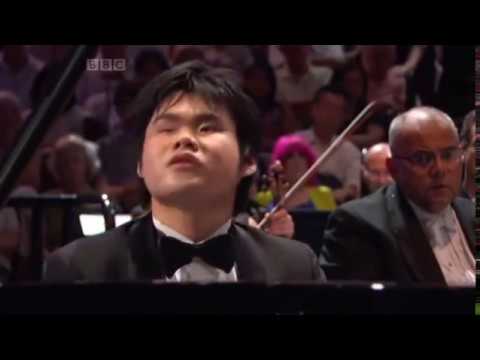
Rachmaninoff, one of Russia’s most renowned composers, wrote a total of four piano concertos, and this Second Concerto is the most popular, the work that brought him to worldwide prominence.
After the piano evokes the sound of bells inspired by the Russian Orthodox Church, the first movement is followed by a weighty orchestra that conjures the vast Russian landscape; the second movement is marked by a sweet, heartrending melody; and the third movement is brilliant and grand.
Across all three movements, the work conveys both the grandeur of Russia and Rachmaninoff’s deepest emotions.

Oriental Sketch in B-flat majorSergei Rachmaninov

This is a short piece composed in 1917, amid the unfolding Russian Revolution, alongside Prelude in D minor and Fragments.
It was originally untitled, but later took its name from the composer’s own description, “Oriental Sketch.” Lasting just under two minutes, it is characterized by a flowing yet fiercely restless melody.