

Rachmaninoff’s masterpieces. Recommended pieces by Rachmaninoff.

Sergei Rachmaninoff is one of the composers who represent Russia.
Although his talent was recognized by fellow Russian composer Tchaikovsky, Rachmaninoff once experienced a setback in his musical career.
Perhaps because his works were born from that state of mind and environment, they resonate with people today as well—their wistful, fleeting, and at times passionate style captivates everyone who listens.
This time, I’ve selected pieces ranging from symphonies performed by orchestra to vocal works and piano pieces.
Even when you hear a piece you don’t know, you might find yourself thinking, “Ah, this is Rachmaninoff.”
Please give them a listen.
- [Ultra-Advanced] Even challenging for advanced players! A curated selection of highly difficult piano pieces
- [Beginner-Friendly] Rachmaninoff’s Piano Pieces | A Curated Selection of Accessible Works!
- Sibelius’s famous piece. Popular classical music.
- [Advanced] Super cool if you can play it! Selection of famous piano pieces
- For Advanced Players: Showstopping Classics to Play at a Piano Recital
- [Masterpiece Classics] A special showcase of gem-like masterpieces so beautiful they’ll move you to tears
- Robert Schumann | Introduction to his famous and representative works
- Masterpieces of the bolero. Recommended popular pieces in bolero form and outstanding performances.
- [Violin] A curated selection of beloved classic masterpieces and popular pieces that continue to be cherished across eras
- Piano Masterpieces: Surprisingly Easy Despite Sounding Difficult!? A Curated Selection Perfect for Recitals
- [Orchestra] Introducing famous and popular pieces
- [For Advanced Players] A Curated Selection of Classical Masterpieces to Tackle at Piano Recitals
- A masterpiece by Alexander Borodin. Popular classical music.
Rachmaninoff’s masterpieces. Recommended Rachmaninoff pieces (91–100)
Prelude Op. 23 No. 5Sergei Rachmaninov
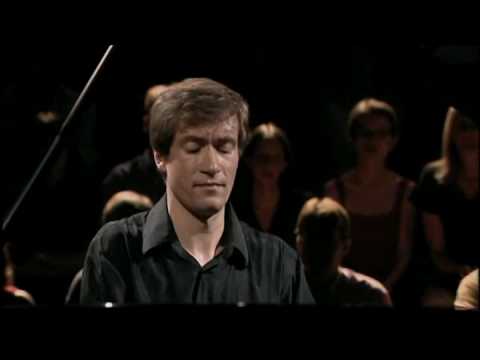
Speaking of Rachmaninoff, while the Piano Concerto that Nodame and Chiaki played in Nodame Cantabile is popular, this piece is actually well-loved too.
Its catchy, brisk rhythm runs from beginning to end.
It’s straightforward, full of drive, and emotionally expressive—a piece with many different shades.
Easter from a Fantastical PaintingSergei Rachmaninov

Each piece in Fantastical Pictures is a duet for two pianos.
The work depicts the journey toward a “holy victory,” as chants from the Russian Orthodox Easter and the resonance of bells are repeated and layered ever more thickly.
One is overwhelmed by the solemn peal of the bells.
VocaliseSergei Rachmaninov

Vocalise originally refers to a method of singing using only vowels such as [a] and [u], but Rachmaninoff used it as the title of an art song that became one of his signature works.
Composed in June 1912 for soprano or tenor with piano, it was later arranged for orchestra several times by Rachmaninoff himself.
Rhapsody on a Theme of Paganini, Op. 43, Variation 18: Andante cantabileSergei Rachmaninov

Sergei Rachmaninoff was both a great pianist and a great composer.
Among his works, the one I especially recommend is the Rhapsody on a Theme of Paganini, Op.
43, Variation 18, “Andante cantabile.” It shifts to D-flat major, the parallel major, in 3/4 time, and—as the title indicates—drops the tempo to Andante.
Often performed as a solo piece, it is an exquisitely sweet and consummately crafted masterpiece for piano.

Rhapsody on a Theme of Paganini in A minor, Op. 43, Variation 18Sergei Rachmaninov

One of Sergei Rachmaninoff’s signature works, Rhapsody on a Theme of Paganini, is a set of variations on the theme from Niccolò Paganini’s Caprice No.
24 for solo violin.
The piece consists of the theme and 24 variations, and among them, the Variation 18 introduced here is especially often performed on its own and frequently used as background music in films.
Its sweet yet wistful melody may sound familiar to you.
Some may feel that the 18th variation truly comes alive with the violin, but its melody is more than beautiful enough to be enjoyed as a piano solo.
It’s an accessible and highly recommended piece even for newcomers to classical music.

Island of DeathSergei Rachmaninov

It is a symphonic poem composed by Rachmaninoff in 1909 after he saw the copperplate engraving of the same title by Max Klinger.
The original work on which the engraving was based is an oil painting by the Swiss painter Arnold Böcklin.
Later, upon seeing the oil painting, Rachmaninoff was surprised by its unexpectedly bright color palette and remarked, “If I had seen this, I would not have written that piece.”
Trio of Sorrow No. 1 (G minor)Sergei Rachmaninov

A trio consisting of piano, violin, and cello.
While the violin and cello carry much of the main melody, the sparkling piano in the background also has a strong presence.
It may not be as flashy as an orchestra, but the interplay of the three instruments is even more enjoyable when accompanied by visuals, not just the sound.