

Ranking of popular classical pieces

Timeless classical masterpieces composed hundreds of years ago are still loved today.
We encounter them in many moments of our everyday lives, don’t we?
If you’re a classical music fan, you might go to hear orchestral performances; and if you play the piano or violin, there’s a good chance you’ve performed some of these pieces yourself.
We’ll introduce these classical masterpieces—arguably a genre listened to and cherished around the world like no other—in a ranking format!
It’s a ranking packed with masterpieces that we hope not only beginners to classical music but also dedicated fans will enjoy.
- [Masterpiece Classics] A special showcase of gem-like masterpieces so beautiful they’ll move you to tears
- [Orchestra] Introducing famous and popular pieces
- Cool classical masterpieces. Recommended classical music.
- Classical masterpieces. Recommended classical music.
- [Classical] Introducing Recommended Moving/Touching Pieces
- Timelessly beautiful classical masterpieces. Recommended classical music.
- Classical piano masterpieces: legendary performances from around the world you should hear at least once
- Taro Hakase’s famous and popular songs
- Ludwig van Beethoven Popular Songs Ranking [2026]
- Franz Liszt Popular Song Ranking [2026]
- Pick up Beethoven’s famous and representative works!
- Pyotr Tchaikovsky Popular Song Rankings [2026]
- [Classical] A comprehensive introduction to famous love pieces: recommended popular works
Classical Popular Songs Ranking (81–90)
Invitation to the DanceCarl Maria von Weber85rank/position

This piece, notable for its brilliant waltz rhythm, is a piano solo that Carl Maria von Weber dedicated to his wife on their wedding anniversary.
Rich in narrative, it musically depicts the encounter and parting of a man and woman at a ball, and is known as a representative work of Romantic music.
In addition to the piano solo version, Hector Berlioz’s orchestral arrangement is also famous and was used in 1841 during a performance of Der Freischütz at the Paris Opéra.
With its lively rhythm and delicate emotional expression, this work is recommended even for those not familiar with classical music.
Clair de Lune from the Suite bergamasqueClaude Debussy86rank/position
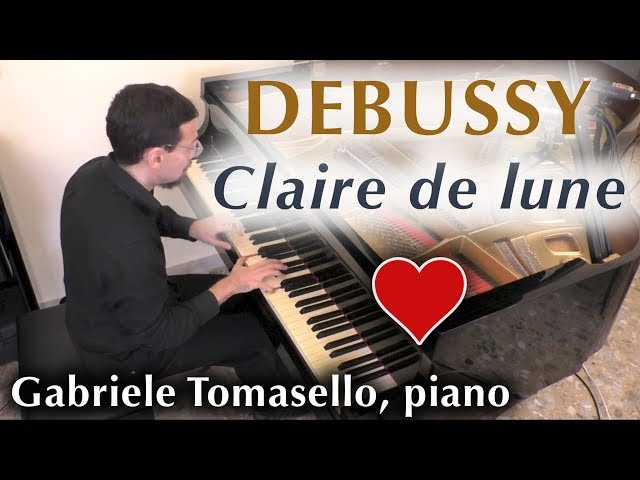
Debussy’s masterpiece “Clair de Lune.” Composed almost entirely in pianissimo from beginning to end, it’s a quiet, gentle, and soothing work.
While the tone evokes a calm night with a hazy moonlight, the original title was actually “A Sentimental Stroll.” Knowing that, doesn’t it also begin to sound like a piece that conjures the image of someone walking dejectedly, steeped in sorrow? Try listening with that background in mind as well.

GymnopédiesErik Satie87rank/position

A signature work by Erik Satie whose translucent melodies seep into the heart.
Composed in 1888, these three piano pieces were named after ancient Greek rituals.
Amid the gentle tones reminiscent of watercolor paintings, the occasional poignant chords leave a strong impression.
They are frequently used as background music in films and television programs, and their universal appeal has influenced many artists.
When you want to take a breather in your busy daily life or calm your mind, why not give them a listen? Flowing with a sense of tranquility, this work will surely become an oasis for your heart.
Song of SpringFelix Mendelssohn88rank/position

A masterpiece born from Mendelssohn’s Songs Without Words, it captivates the heart with its fresh melody and bright character, enriched by the warm sonority of A major.
Among the many celebrated works Mendelssohn composed, this piece stands out as a gem that balances gentleness with brilliance.
Published in 1844, it has long been beloved as background music for films and television, and exists not only as a piano solo but also in arrangements for various instruments such as violin and flute.
Its light, sunny atmosphere and refined melody make it perfect for weddings and receptions.
With graceful elegance and a warm tone, it is highly recommended as a beautiful soundtrack to brighten a special day.
Years of Pilgrimage, Book II: Italy, S.161 — No. 7 “Après une lecture de Dante – Fantasia quasi Sonata”Franz Liszt89rank/position

For those who want to perform a lesser-known piece at a piano recital, I recommend Liszt’s “Années de pèlerinage, Deuxième année: Italie, S.161, No.
7 ‘Après une lecture du Dante – Fantasia quasi Sonata.’” In terms of difficulty, it’s easier than Chopin’s Fantasy and not prohibitively hard, yet it’s perfect for showcasing solid technique.
Unusually for Liszt, it has a high performance payoff, so it’s enjoyable even as a straightforward piece.
The leaps in the coda are quite challenging, so if you’re confident in your technique, definitely give it a try.
12 Etudes, Op. 25 No. 11 “Winter Wind”Frederic Chopin90rank/position

Alongside Étude Op.
25 No.
6, Chopin’s Étude Op.
25 No.
11 “Winter Wind” ranks among his most technically demanding works.
Also known as the “Winter Wind Étude,” its difficulty is quite straightforward: the relentless rapid sixteenth notes make it hard to play.
For those who struggle with finger independence, it may feel extraordinarily difficult; however, for others, the frequent repetition means it may not seem as challenging as Op.
25 No.
6.
Ranking of Popular Classical Pieces (91–100)
Gaspard de la nuit, No. 3: ScarboMaurice Ravel91rank/position

Gaspard de la nuit, a piano suite composed in 1908 by Maurice Ravel, one of France’s foremost composers.
The third piece, Scarbo, is a virtuosic work depicting the vibrant figure of a mischievous imp that appears in the darkness of night.
In Samson François’s performance, a dynamic tone evocative of an orchestral sonority and a delicate touch fully convey the piece’s charm, interweaving humor and fantasy.
It is a superb rendition that I highly recommend not only to pianists who possess both advanced technique and musicality, but also to anyone who wishes to savor the profound depths of Ravel’s music.