

Ranking of popular classical pieces

Timeless classical masterpieces composed hundreds of years ago are still loved today.
We encounter them in many moments of our everyday lives, don’t we?
If you’re a classical music fan, you might go to hear orchestral performances; and if you play the piano or violin, there’s a good chance you’ve performed some of these pieces yourself.
We’ll introduce these classical masterpieces—arguably a genre listened to and cherished around the world like no other—in a ranking format!
It’s a ranking packed with masterpieces that we hope not only beginners to classical music but also dedicated fans will enjoy.
- [Masterpiece Classics] A special showcase of gem-like masterpieces so beautiful they’ll move you to tears
- [Orchestra] Introducing famous and popular pieces
- Cool classical masterpieces. Recommended classical music.
- Classical masterpieces. Recommended classical music.
- [Classical] Introducing Recommended Moving/Touching Pieces
- Timelessly beautiful classical masterpieces. Recommended classical music.
- Classical piano masterpieces: legendary performances from around the world you should hear at least once
- Taro Hakase’s famous and popular songs
- Ludwig van Beethoven Popular Songs Ranking [2026]
- Franz Liszt Popular Song Ranking [2026]
- Pick up Beethoven’s famous and representative works!
- Pyotr Tchaikovsky Popular Song Rankings [2026]
- [Classical] A comprehensive introduction to famous love pieces: recommended popular works
Classical Music Popularity Rankings (11–20)
Etude Collection (Studies) No. 4, Op. 10-4 in C-sharp minorFrederic Chopin15rank/position

A fiercely passionate piece that grips the listener’s heart and won’t let go.
Its rapid sixteenth-note passages and continuous intricate figures in both hands create an impact like a storm.
Composed in August 1832, this work is acclaimed as having artistic value that far surpasses a mere study.
It is recommended not only for those aiming to improve their piano technique, but also for anyone who loves passionate music.
While the performance demands advanced technique, the sense of accomplishment is all the greater.
If you want to experience the appeal of classical music, why not give it a try?
Piano Sonata No. 8 “Pathétique,” Second MovementLudwig van Beethoven16rank/position
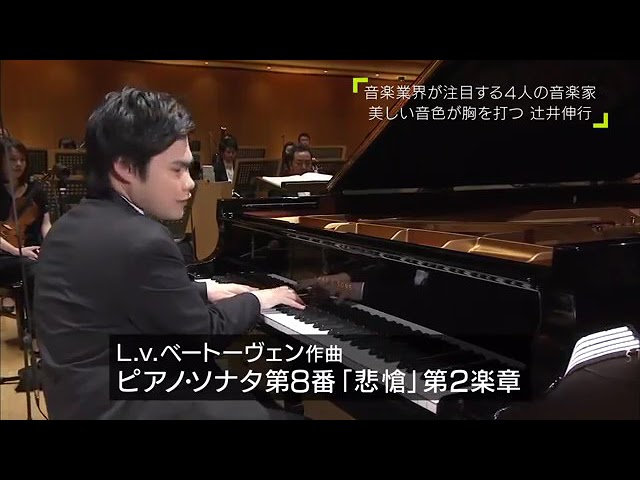
Piano Sonata No.
8 “Pathétique,” a hallmark of Beethoven’s early piano works.
Among its movements, the second is often said to be one of the most beautiful melodies Beethoven ever wrote, and it has been used frequently as incidental music in films and television dramas.
The melody itself is simple and the range is not particularly wide, but because the other parts have substantial thickness, the melody can easily get buried unless one plays while listening carefully to the balance.
Listen calmly, keeping in mind the gracefully flowing, unhurried melody that warmly envelops the listener’s heart, and the weighty chords that support it.

Sacred and Secular DancesClaude Debussy17rank/position

Among Claude Debussy’s works, Danses sacrée et profane is one in which Impressionist elements are particularly prominent.
Composed to explore new possibilities for the harp, the piece is said to represent Debussy’s attempt to break away from conventional musical frameworks through a quest for freer forms and harmonies.
Consisting of two contrasting sections—the solemn “Sacred Dance” and the buoyant “Profane Dance”—this work fully showcases Debussy’s gift for expressing silence, nature, and abstract images through sound.
Sorrow of LoveFritz Kreisler18rank/position

A masterpiece steeped in the nostalgic charm of old Vienna, where wistfulness and elegance meld: Liebesleid.
Composed by the Austrian violin virtuoso Fritz Kreisler, it stands as a quintessential work of salon music.
Infused with a bittersweet emotion beneath its sweetly singing melody, the piece survives in a recording made by Kreisler himself in May 1910, and its vocal, singing tone has not faded with time.
In 1923, George Balanchine adopted it for ballet, and it has since been cherished not only in concert halls but also in the world of stage art.
Its gently swaying waltz rhythm and graceful sonority make it perfect for calming the mind while working or for focusing on study.
BoleroMaurice Ravel19rank/position

This is a representative orchestral work by the French composer Maurice Ravel.
It is known as a ballet score commissioned by Ida Rubinstein and premiered at the Paris Opéra in November 1928.
Its distinctive structure features two melodic ideas repeated with almost no alteration over a steady rhythm maintained by the snare drum.
At the beginning, the flute quietly presents the main theme, requiring exquisite control from the performer.
The same melody is then passed from one instrument to another, ultimately expanding into a massive sonority.
It’s recommended for those who want to savor orchestral coloristic changes in depth, as you can enjoy the process of this gradual enlargement.
Toccata in C major, Op. 7Robert Schumann20rank/position

One of the signature works by the great Romantic composer Robert Schumann, the Toccata in C major, Op.
7.
Composed in his youth, this virtuosic piano piece can be viewed as an ambitious work that challenged the limits of its time.
Samson François’s performance opens with bold chords and syncopations, and the unrelenting stream of sixteenth notes engulfs the listener like waves of emotion.
While deploying advanced technique, his interpretation fully conveys Schumann’s imaginative world and emotions—breathtaking in its brilliance.
Highly recommended for those who want to experience the essence of Romantic music or explore the possibilities of the piano as an instrument.
Ranking of Popular Classical Pieces (21–30)
November StepsTakemitsu Tōru21rank/position

The Japanese composer Toru Takemitsu’s November Steps.
Composed for biwa, shakuhachi, and orchestra, this work brought Takemitsu wide international recognition.
It opened a new frontier by fusing Western and traditional Japanese instruments.
The piece was initially titled Water Ring, but the title was changed to one meaning November due to comments that the original evoked a bathtub and because the premiere was to take place in November.
It’s apparently not intended as an autumnal piece, but doesn’t the shakuhachi’s breathy tone somehow sound like the rustling of fallen leaves?