

Ranking of popular classical pieces

Timeless classical masterpieces composed hundreds of years ago are still loved today.
We encounter them in many moments of our everyday lives, don’t we?
If you’re a classical music fan, you might go to hear orchestral performances; and if you play the piano or violin, there’s a good chance you’ve performed some of these pieces yourself.
We’ll introduce these classical masterpieces—arguably a genre listened to and cherished around the world like no other—in a ranking format!
It’s a ranking packed with masterpieces that we hope not only beginners to classical music but also dedicated fans will enjoy.
- [Masterpiece Classics] A special showcase of gem-like masterpieces so beautiful they’ll move you to tears
- [Orchestra] Introducing famous and popular pieces
- Cool classical masterpieces. Recommended classical music.
- Classical masterpieces. Recommended classical music.
- [Classical] Introducing Recommended Moving/Touching Pieces
- Timelessly beautiful classical masterpieces. Recommended classical music.
- Classical piano masterpieces: legendary performances from around the world you should hear at least once
- Taro Hakase’s famous and popular songs
- Ludwig van Beethoven Popular Songs Ranking [2026]
- Franz Liszt Popular Song Ranking [2026]
- Pick up Beethoven’s famous and representative works!
- Pyotr Tchaikovsky Popular Song Rankings [2026]
- [Classical] A comprehensive introduction to famous love pieces: recommended popular works
Ranking of Popular Classical Pieces (91–100)
Sword DanceAram Khachaturian92rank/position
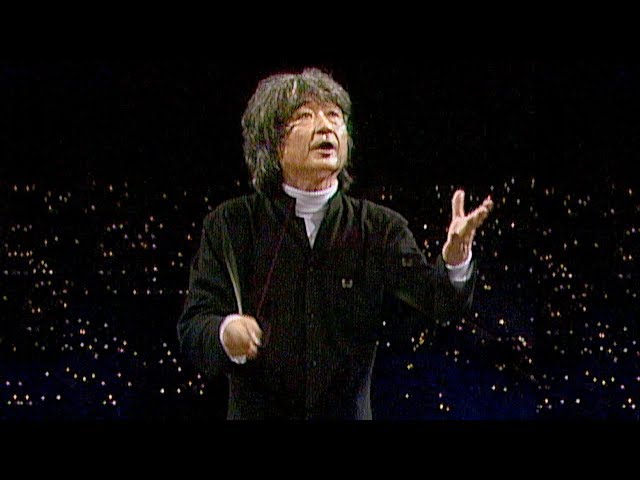
The lively xylophone runs of “Sabre Dance” are from the final act of the ballet suite Gayane by the Russian composer Aram Khachaturian.
It is said to depict a battle dance performed by Kurds using sabres.
The piece is also known for its short duration of about two minutes.
At sports festivals, it’s a great choice for events like individual footraces, bread-biting contests, and obstacle courses, as well as timed ball-toss games, where participants can keep tossing in time with the music’s rhythm.

Sonatina Op. 13-1, First MovementDmitri Kabalevsky93rank/position

Dmitry Kabalevsky, the Russian composer and pianist known for writing many excellent works for children, is especially celebrated for his Sonatina Op.
13 No.
1, a piece often performed at recitals.
Its lively character, which shifts moods playfully, captivates many young players.
The first movement, which opens with brilliant chords, is a highly impactful piece full of variety.
Aim for a performance with clear contrasts by differentiating between the crisp opening, the indescribably relaxed middle section, and the recapitulation, where the brisk energy returns.

Cello Sonata No. 2 in D major, Op. 58Felix Mendelssohn94rank/position

This work is a chamber piece composed by Mendelssohn in 1843.
It blends features of the early Romantic period with Classical traditions, offering a rich musical texture for cello and piano.
It consists of four movements and has a performance time of about 25 minutes.
In particular, the third movement features recitative-like passages for the cello that quote Bach’s Chromatic Fantasy and Fugue, expressing Mendelssohn’s reverence for Bach.
Expressive and technically demanding, this piece is an important part of the cello repertoire and is one that every classical music enthusiast should hear.
light cavalryFranz von Suppé95rank/position

An overture composed by the Austrian composer Franz von Suppé.
Light Cavalry was written as an operetta and is said to depict a glamorous military life set in southern Germany.
The opening trumpet fanfare is striking, and although it bears the name “cavalry,” the piece has an elegant and lavish structure.
It is widely used as background music for sports days and is recommended as an entrance or marching tune! Let’s all march together, feeling the excitement and anticipation before the big event!
Concert Allegro in A major, Op. 46Frederic Chopin96rank/position

Chopin’s solo piano piece “Allegro de concert,” known as a notoriously difficult work.
From within it, I’d like to recommend the “Allegro de concert in A major, Op.
46.” What makes this piece especially challenging is, above all, the rapid octaves.
Beyond hand size, it demands swift and precise positioning, making it a high-difficulty work.
Yet it’s not merely difficult—the refined pianistic effects that are quintessentially Chopin are outstanding.
Be sure to give it a listen.

Hungarian Dance No. 5Johannes Brahms97rank/position

Johannes Brahms’s Hungarian Dance No.
5 is a duet practice piece that you often hear at recitals.
It’s a famous work that just about everyone has heard at least once.
Strongly influenced by Romani music, it features melodies throughout that foreshadow later gypsy jazz.
Rather than simply being showy, its themes convey passionate intensity, while the middle section gathers into a bright melody that also feels gentle.
Keeping the brilliance of the duet intact, solo piano arrangements have also been published—so be sure to give it a try!
Für EliseLudwig van Beethoven98rank/position

Ludwig van Beethoven is one of the most important composers in the history of classical music, known both as the culmination of the Classical era and a pioneer of the Romantic era.
His works are characterized by complexity, innovation, and emotional depth, reflecting the political and cultural upheavals of his time.
Für Elise, believed to have been composed around 1810, is one of Beethoven’s most popular pieces.
Although there are various theories about to whom it was dedicated, its simple and catchy melody continues to be loved by many.
It is a masterpiece recommended for a wide range of listeners, from classical music beginners to seasoned enthusiasts.