



“I want to learn some cool four-character idioms!” Many elementary school students probably feel that way—wanting to use them in school essays or speeches, or even make them their future goals.
Four-character idioms are full of words that express strong will and admirable attitudes.
Because they carry deep meanings, the more you learn about them, the more appealing they become.
Even though they’re just four characters long, many of them really resonate in your heart.
In this article, we’ll introduce four-character idioms that are easy for elementary school students to remember and use.
If you try them in conversations with friends or in your writing, you’re sure to develop wonderful expressive skills.
- Interesting four-character idioms for elementary schoolers! Words you'll want to use once you understand their meanings
- For Elementary School Students: Four-Character Idioms You Can Use for New Year’s Resolutions — How to Set Cool Goals!
- Easy-to-remember, positive four-character idioms for elementary school kids! Words that brighten the heart
- Popular even among elementary school students! Stylish and easy-to-remember four-character idioms
- Easy for elementary school students to remember! A four-character idiom that expresses the feeling of trying your best
- [For Elementary School Students] Four-character idioms you can use in sports! Words that are helpful for cheering and goal setting
- [For Elementary Students] A Collection of Beautiful Four-Character Idioms to Know
- Recommended for elementary school class goals! A collection of impactful ideas using four-character idioms
- Perfect for elementary school slogans! A collection of four-character idiom ideas you'll want to use
- Four-character idioms that help elementary schoolers not give up: words that spark the power to keep trying
- [For Elementary School Students] Inspiring Four-Character Idioms for Shaping the Future at a Glance! Words that Spark Courage
- [Elementary School Students] Perfect for Kakizome! A Collection of Four-Character Idiom Ideas
- Strive toward your goals! Four-character idiom ideas that resonate with elementary school students
Learn Meanings Too! Cool Four-Character Idioms Elementary Schoolers Want to Remember (1–10)
telepathy; tacit understanding (literally: ‘heart-to-heart communication’)

Communicating solely through the heart is called “ishin-denshin.” Normally, when we convey something to someone, we use spoken or written words.
But there are times when it’s hard to express things in words.
In such moments, it’s nice to have someone who can pick up on how you feel.
With a close friend, you may sometimes understand each other without putting your feelings into words.
Someone you can share ishin-denshin with is likely a person who always pays close attention to you and understands you deeply.

to be surrounded on all sides; isolated with no allies (literally: ‘songs of Chu on all four sides’)
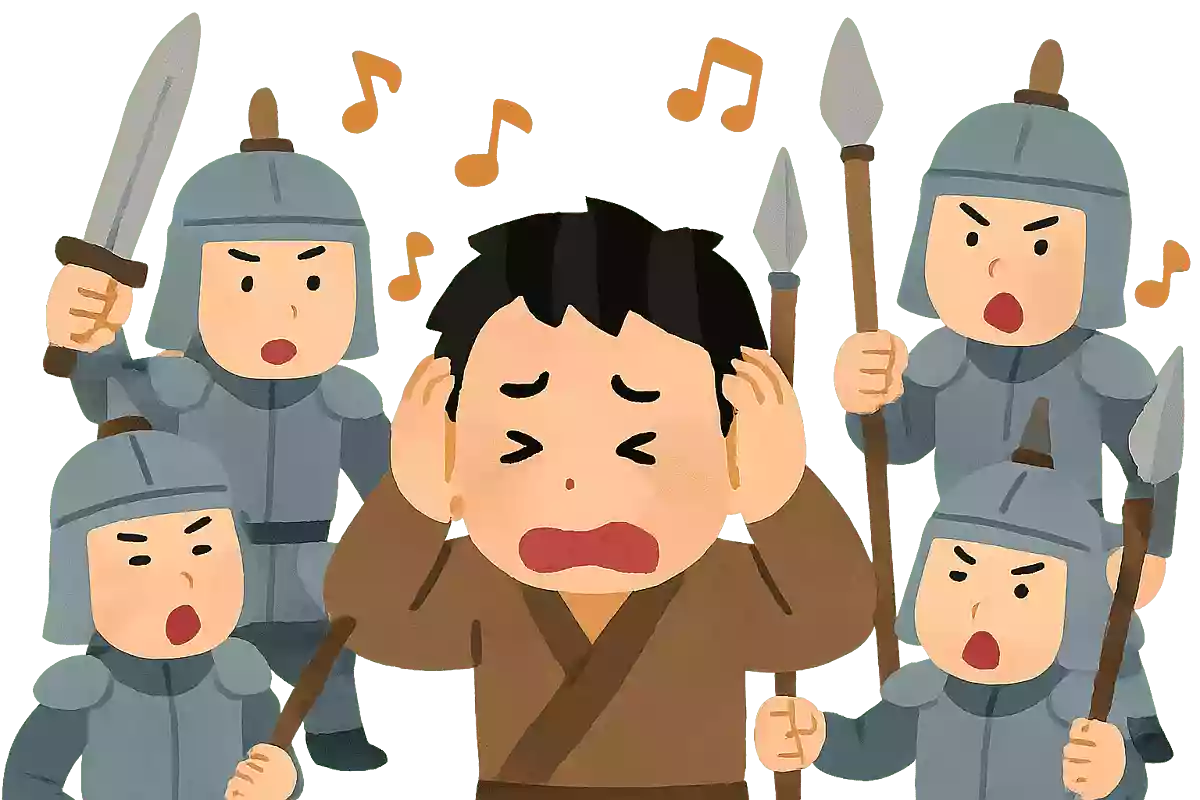
“Shimensoka” is read as ‘shi-men-so-ka’ and refers to a situation where you’re surrounded by enemies with no allies.
For an elementary schooler, it’s like playing tag or dodgeball and everyone else becomes ‘it’ or moves to the outside, leaving only you in the middle… You’ve probably experienced that kind of situation.
That is exactly what ‘shimensoka’ describes.
Expressions like “isolated and without support” or “all is lost” carry similar meanings.
Because ‘shimensoka’ describes a rather unfavorable state, it’s all the more important to find your next move from there.
Late bloomer
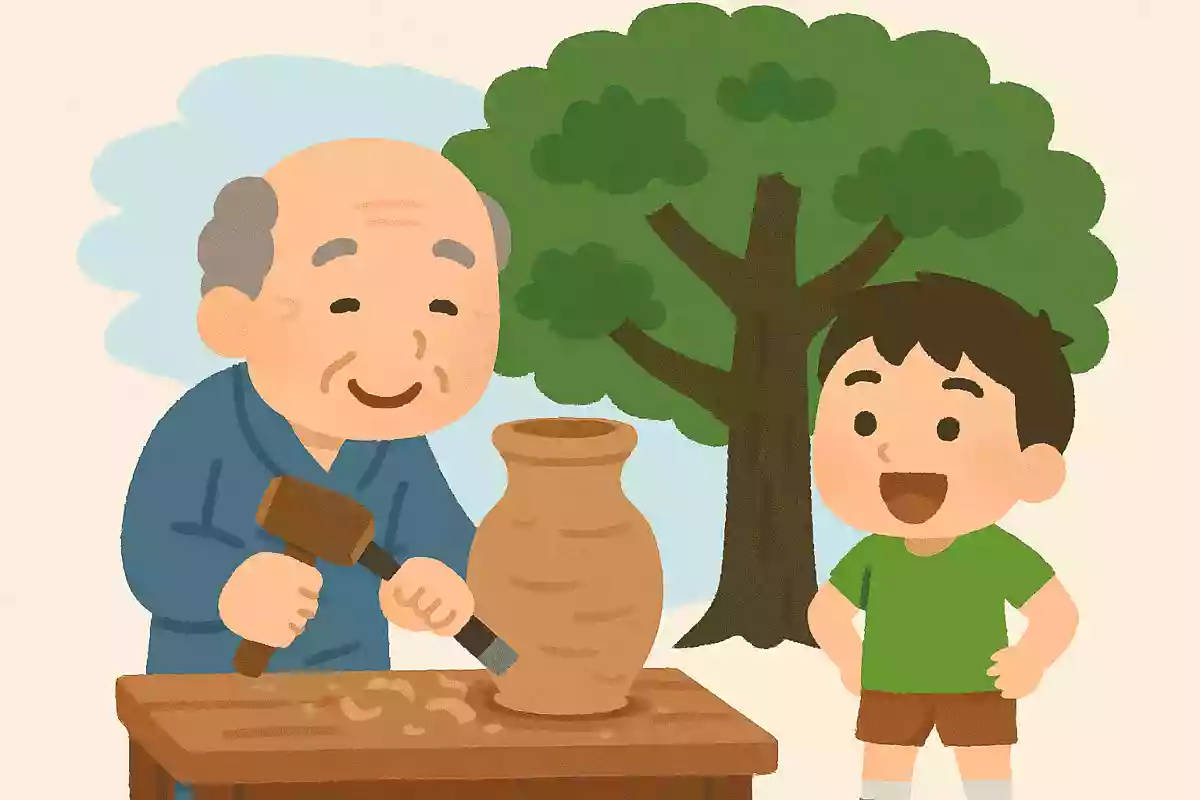
This four-character idiom expresses the idea that great talent and extraordinary people often go unnoticed in their youth and achieve greatness later than others.
Just as it takes time to craft a large vessel, it likewise takes time to shape a great person.
Its origin is said to come from the writings of Laozi, the ancient Chinese philosopher, which shows it’s a phrase with historical depth.
It also conveys a positive outlook: the fact that one hasn’t succeeded yet means they’re accumulating the ability needed for the future.

self-serving; putting one’s own interests first; bending things to one’s advantage
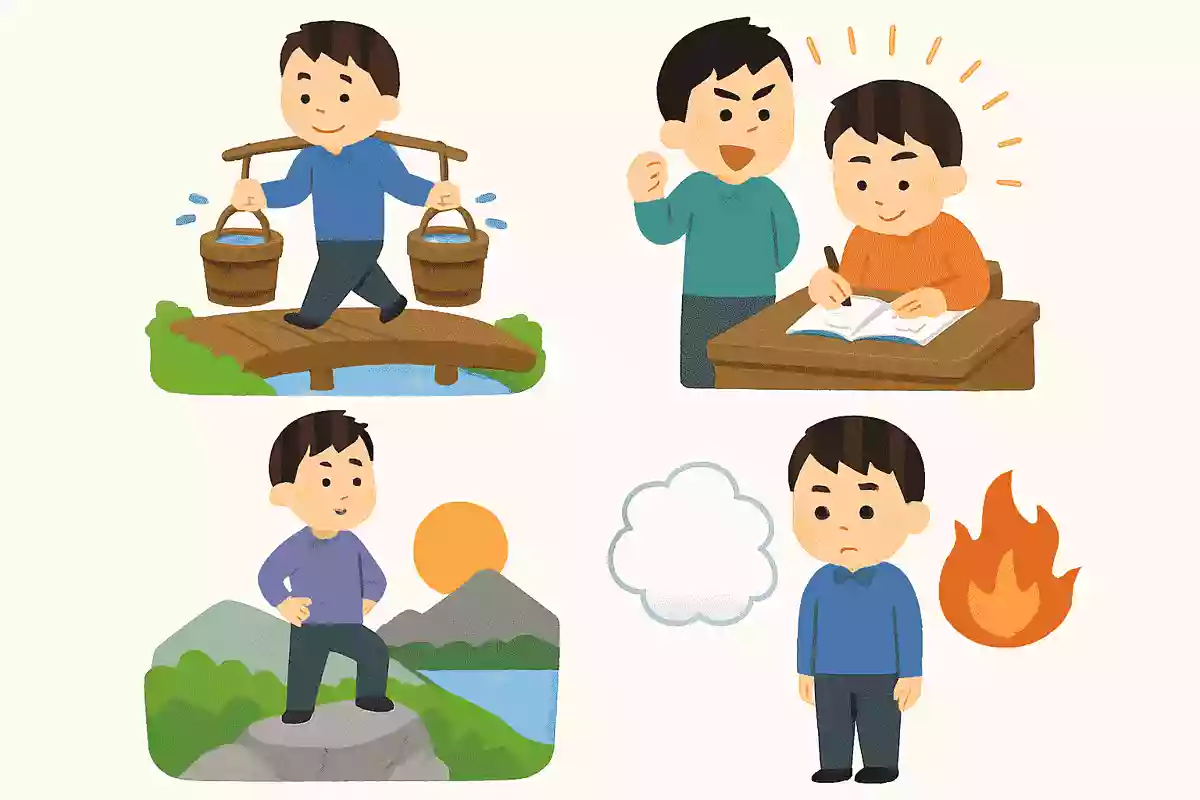
It’s a four-character idiom that carries a somewhat negative image, referring to actions or interpretations that consider only one’s own convenience without regard for others.
As the characters suggest—“drawing water only to one’s own rice field”—it’s used to describe a self-centered attitude.
It’s used when criticizing someone or when you feel someone is imposing their own convenience on others.
Because it implies self-centeredness, deliberately using this term can also express confidence in one’s individuality or a determination to charge ahead as one sees fit.
steady progress day by day; making rapid strides

It’s a four-character idiom that expresses continuous, unbroken, and rapid progress—a phrase that conveys a strong sense of growth.
It’s said that “month” and “step” were added to “daily advance” (nisshin) to supplement its meaning, forming this word.
People often think it describes slow, gradual growth, but that’s incorrect; if anything, it’s used to express rapid growth.
Because it’s frequently used when one is impressed by growth or development, the term carries a strongly positive nuance.
Learning new things by revisiting the old
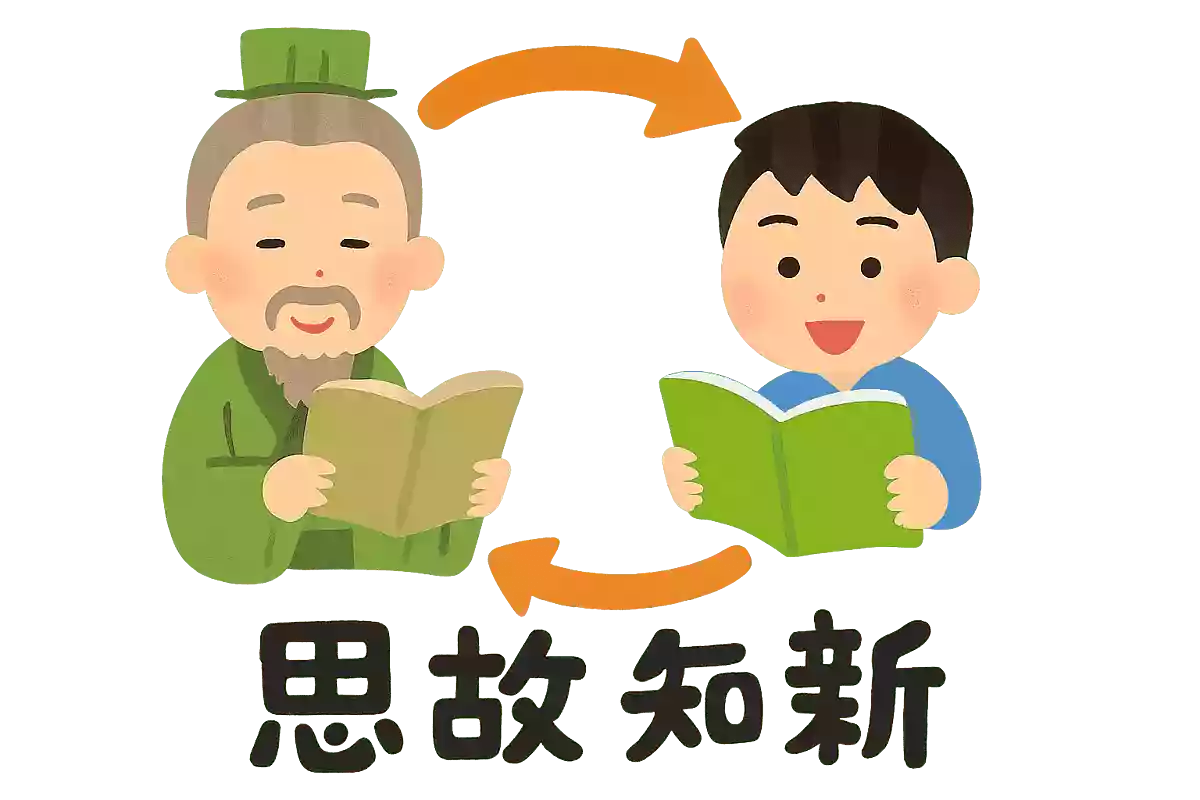
When you’re studying history, you might wonder, “Why do I need to learn about things that are already over?” In times like that, remember this four-character idiom: Onko chishin.
It means gaining new knowledge by learning from the past.
For example, say you try something and fail.
If you leave it at that, it’s just the past.
But if you think about why you failed and find a new approach, it can lead to success next time.
Even things that don’t seem necessary now might actually be connected to a better future for you.
being absorbed in something; being frantic; in a daze; wholeheartedly; with all one’s might

The state of being so absorbed or captivated by one thing that you lose sight of your surroundings or even yourself is expressed as “muga-muchu” (literally, selfless absorption).
There are times when we forget the time while reading or playing games, right? And when you’re running away from the ‘oni’ in a game of tag, everyone runs in a muga-muchu state.
It’s a four-character idiom you surprisingly encounter often in daily life and is easy to use.
Getting engrossed in something is a wonderful thing, but if you get too absorbed without paying attention to your surroundings, it can lead to injury, so it’s something to be careful about.
battle-hardened; seasoned (literally: experienced in a hundred battles)
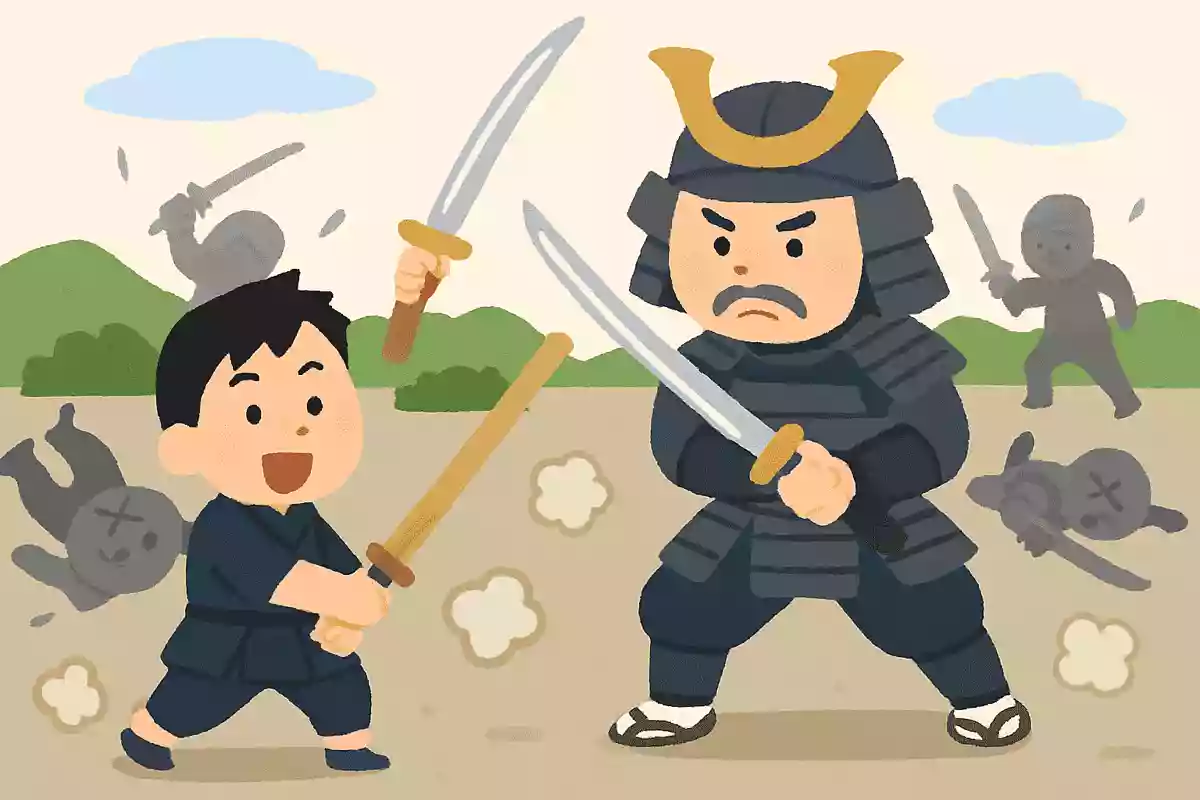
This four-character idiom describes an excellent state in which one’s martial skills, mind and body, and abilities have been honed through numerous real battles and experiences.
“Hyaku” (hundred) signifies a large number, expressing repeated combat, while “renma” means to polish and refine martial arts.
By using this phrase, you convey that you’ve thoroughly accumulated experience and also express the will to push forward.
It evokes the image of mustering confidence to advance by making use of all past experience.
flexible; adaptable; responding appropriately to the situation

Taking appropriate actions according to the situation at hand—that is what we call being “flexible and adaptable.” For example, saying, “We planned to go to the pool today, but since it started raining, we decided to watch anime at home instead,” is an example of adaptability.
Even when faced with bad weather, finding another way to enjoy yourself—isn’t that wonderful? Take this opportunity to learn the term ‘flexible and adaptable’ (rinkiohen), and be sure to develop the ability to handle troubles with resilience and flexibility.
self-praise

This is a four-character idiom that describes praising or boasting about one’s own actions and thoughts.
It comes from the image of someone writing a poem or prose praising a picture they themselves painted.
People often confuse the characters for “painting” and “self,” so be careful.
Because it carries a strong negative nuance and is mainly used to criticize conceited people, you should use it with caution.
If you deliberately apply it to yourself, though, it can suggest that you’re moving forward in your own way and taking on challenges with confidence.