

Learn the meanings too! Cool four-character idioms that elementary school students will want to remember

“I want to learn some cool four-character idioms!” Many elementary school students probably feel that way—wanting to use them in school essays or speeches, or even make them their future goals.
Four-character idioms are full of words that express strong will and admirable attitudes.
Because they carry deep meanings, the more you learn about them, the more appealing they become.
Even though they’re just four characters long, many of them really resonate in your heart.
In this article, we’ll introduce four-character idioms that are easy for elementary school students to remember and use.
If you try them in conversations with friends or in your writing, you’re sure to develop wonderful expressive skills.
- Interesting four-character idioms for elementary schoolers! Words you'll want to use once you understand their meanings
- For Elementary School Students: Four-Character Idioms You Can Use for New Year’s Resolutions — How to Set Cool Goals!
- Easy-to-remember, positive four-character idioms for elementary school kids! Words that brighten the heart
- Popular even among elementary school students! Stylish and easy-to-remember four-character idioms
- Easy for elementary school students to remember! A four-character idiom that expresses the feeling of trying your best
- [For Elementary School Students] Four-character idioms you can use in sports! Words that are helpful for cheering and goal setting
- [For Elementary Students] A Collection of Beautiful Four-Character Idioms to Know
- Recommended for elementary school class goals! A collection of impactful ideas using four-character idioms
- Perfect for elementary school slogans! A collection of four-character idiom ideas you'll want to use
- Four-character idioms that help elementary schoolers not give up: words that spark the power to keep trying
- [For Elementary School Students] Inspiring Four-Character Idioms for Shaping the Future at a Glance! Words that Spark Courage
- [Elementary School Students] Perfect for Kakizome! A Collection of Four-Character Idiom Ideas
- Strive toward your goals! Four-character idiom ideas that resonate with elementary school students
Learn the meanings too! Cool four-character idioms that elementary schoolers will want to remember (31–40)
Harmony and united cooperation
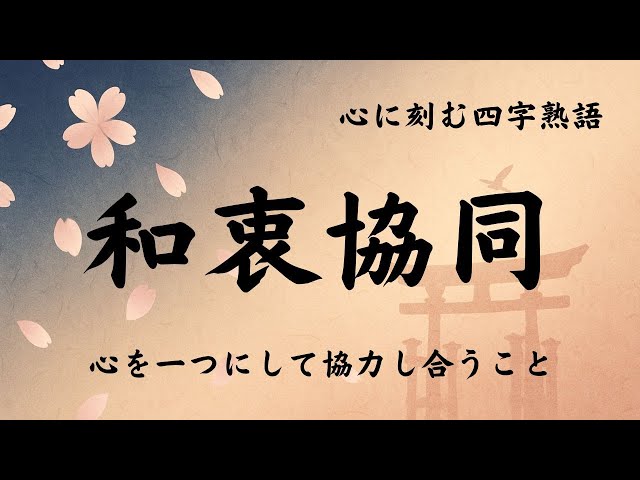
This four-character idiom expresses joining hearts as one, cooperating, and tackling things together.
Setting it as a class goal makes it easier for students to be mindful of kindness and a cooperative attitude toward their friends.
When everyone faces the same direction and acts together during group activities or choir practice, better results follow.
It isn’t enough for just one person to work hard; when everyone contributes their strength, a sense of unity grows throughout the class.
The experience of respecting and helping one another becomes an important ability that remains useful even as students move up a grade.
It’s a warm expression that helps students feel the joy of cooperation.

joy, anger, sorrow, and pleasure

This four-character idiom expresses the wide range of human emotions and teaches that joy, anger, sorrow, and fun are all important movements of the heart.
Incorporating it as a class goal can provide an opportunity to learn how to express feelings honestly while being considerate of others.
Sharing joy deepens friendship, calmly conveying anger reduces misunderstandings, understanding sorrow nurtures kindness, and sharing fun strengthens a sense of unity.
Facing emotions during the elementary school years enriches relationships with others and fosters the ability to value one’s own feelings.
It is a phrase that resonates in the heart, showing that expressing oneself honestly is the first step toward building trust.
consistent throughout
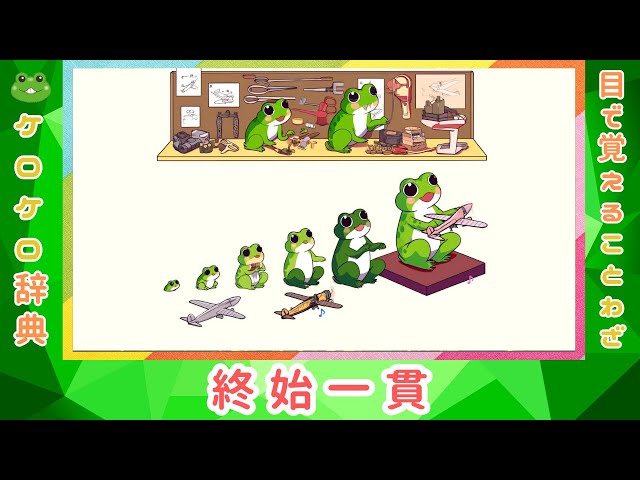
This is a four-character idiom that means remaining unwavering and consistent from beginning to end.
When facing difficulties, hesitating or changing course along the way can render the efforts you’ve built up meaningless.
However, by keeping this phrase in mind, you can stay steady against doubts and temptations that arise on the path to your goal and make steady progress.
In any challenge, maintaining an unshakable attitude and conviction leads to results.
Consistent actions also make it easier to earn the trust of those around you, which becomes a powerful asset in gaining their cooperation.
When you want to keep challenging yourself without giving up, this phrase will serve as a guiding support for your heart.

cutting straight through with a single stroke
It is a four-character idiom that means deciding things clearly without hesitation.
It conveys the strength to cut off doubt and hesitation, make judgments immediately, and take action.
The word evokes the image of neatly resolving even complex problems and worries, and despite its brevity, it communicates the weight of decisive action.
Just hearing it brings a bracing tension and gives you the courage to move forward without wavering.
It is a powerful phrase that teaches the importance of facing matters without hesitation and of having a firm will.
Single-minded focus spanning a vast distance
@hiroaki946 Banri Ikkuu Shorts short video mini video idiom four-character idioms proverbs Japanese meaning of words wordplay learning education trivia Japanese culture pastime study knowledge trivia everyday life the power of words VOICEVOX: Shikoku Metan Satisfying four-character idiom to hear: “Banri Ikkuu.” Example sentence: After starting his company, Mr. Yamada faced many difficulties over several years, but each time he handled them calmly and always kept a broad perspective, looking ahead to the company’s future. One day, he gathered all the employees and said, “The goal we should aim for is not merely to solve the problems in front of us, but to achieve growth with a view to a more distant future.” Inspired by this “Banri Ikkuu” spirit, the employees united as one and pledged to work hard for the company’s future. Meaning: “Banri Ikkuu” literally describes a vast landscape stretching out under a single, continuous sky. This four-character idiom symbolizes having clear foresight and a broad perspective. It is especially used to refer to people or situations that can see far ahead into the future. That is all.
Original song – hiroaki946 – hiroaki946
Pronounced “banri ikkuu.” “Banri” means extremely far, and “ikkū” means the sky is one.
Originally, it conveyed the idea that no matter how far you go, the sky is connected as one.
Nowadays, it’s used to mean persevering and working hard toward a goal without giving up.
Even if a goal feels distant, thinking that steady effort will lead to achieving it can encourage children to say, “I’ll try a little harder.”
Learn the Meanings Too! Cool Four-Character Idioms Elementary Schoolers Want to Remember (41–50)
Three Monjus (Three Manjushris)

It’s a phrase that expresses the idea that even if you can’t come up with good ideas on your own, wonderful wisdom emerges when three people gather and consult.
It’s a compact version of the proverb “Sannin yoreba Monju no chie” (“When three people come together, they have the wisdom of Manjushri”), and it conveys the importance of cooperating as a group.
Monju refers to Manjushri, the bodhisattva who symbolizes wisdom, and this saying lets you feel the excellence of ideas born from collaboration.
It’s a phrase that could prompt people who tend to work alone to take a more effective path.

flash in the pan

It’s a four-character idiom that refers to starting things but quickly getting bored and not sticking with them, as well as to the person who is easily bored.
The “three days” used here isn’t a literal number but a way of saying a short period, so it doesn’t mean that lasting only three days is acceptable—this is an important point.
It’s said to originate from a monk who quit after three days because the training was so harsh, and it’s used to criticize fickleness.
Receiving this criticism can motivate someone to overcome the “three-day” barrier and keep going for longer, right?