

Learn the meanings too! Cool four-character idioms that elementary school students will want to remember

“I want to learn some cool four-character idioms!” Many elementary school students probably feel that way—wanting to use them in school essays or speeches, or even make them their future goals.
Four-character idioms are full of words that express strong will and admirable attitudes.
Because they carry deep meanings, the more you learn about them, the more appealing they become.
Even though they’re just four characters long, many of them really resonate in your heart.
In this article, we’ll introduce four-character idioms that are easy for elementary school students to remember and use.
If you try them in conversations with friends or in your writing, you’re sure to develop wonderful expressive skills.
- Interesting four-character idioms for elementary schoolers! Words you'll want to use once you understand their meanings
- For Elementary School Students: Four-Character Idioms You Can Use for New Year’s Resolutions — How to Set Cool Goals!
- Easy-to-remember, positive four-character idioms for elementary school kids! Words that brighten the heart
- Popular even among elementary school students! Stylish and easy-to-remember four-character idioms
- Easy for elementary school students to remember! A four-character idiom that expresses the feeling of trying your best
- [For Elementary School Students] Four-character idioms you can use in sports! Words that are helpful for cheering and goal setting
- [For Elementary Students] A Collection of Beautiful Four-Character Idioms to Know
- Recommended for elementary school class goals! A collection of impactful ideas using four-character idioms
- Perfect for elementary school slogans! A collection of four-character idiom ideas you'll want to use
- Four-character idioms that help elementary schoolers not give up: words that spark the power to keep trying
- [For Elementary School Students] Inspiring Four-Character Idioms for Shaping the Future at a Glance! Words that Spark Courage
- [Elementary School Students] Perfect for Kakizome! A Collection of Four-Character Idiom Ideas
- Strive toward your goals! Four-character idiom ideas that resonate with elementary school students
Learn the meanings too! Cool four-character idioms elementary schoolers will want to memorize (91–100)
Queen of the Night
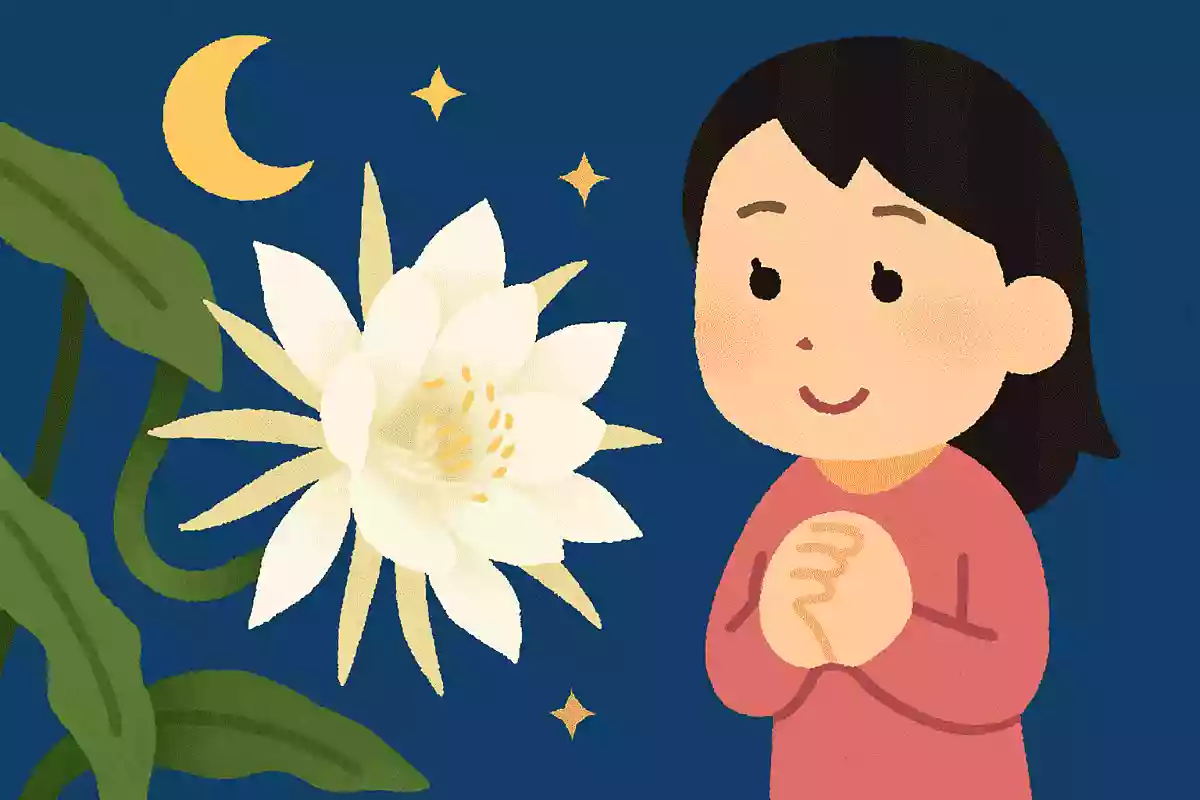
Gekka-bijin is the name of a flower, also affectionately known by the alternative name “Night Queen,” a type famed for blooming only at night.
The way it quietly displays its beauty while people are fast asleep makes it seem as if it deliberately conceals its own charm.
Another point is that its beauty has spawned various folk tales, suggesting that it has long been cherished as a special flower.
Strictly speaking, it’s not a four-character idiom but simply a name; still, as a cool four-character word, it comes highly recommended.

Say what you mean, do what you say.

It’s a four-character idiom meaning “to firmly carry out what you say.” For example, if you say, “I’ll study every day starting tomorrow!” then actually continuing to study every day is yūgen-jikkō (literally, ‘spoken words, carried out’).
Instead of stopping at just talk, seeing things through once you decide to do them builds your confidence.
For instance, if you tell everyone before a soccer match, “I’m going to score a goal!” and you really do score, that’s super cool and feels great, right? Even with small things, if you start with what you can do and act responsibly according to your words, people around you will trust you more.
Starting today, try aiming for ‘yūgen-jikkō’!

Learn the meanings too! Cool four-character idioms elementary schoolers will want to remember (101–110)
Future-oriented
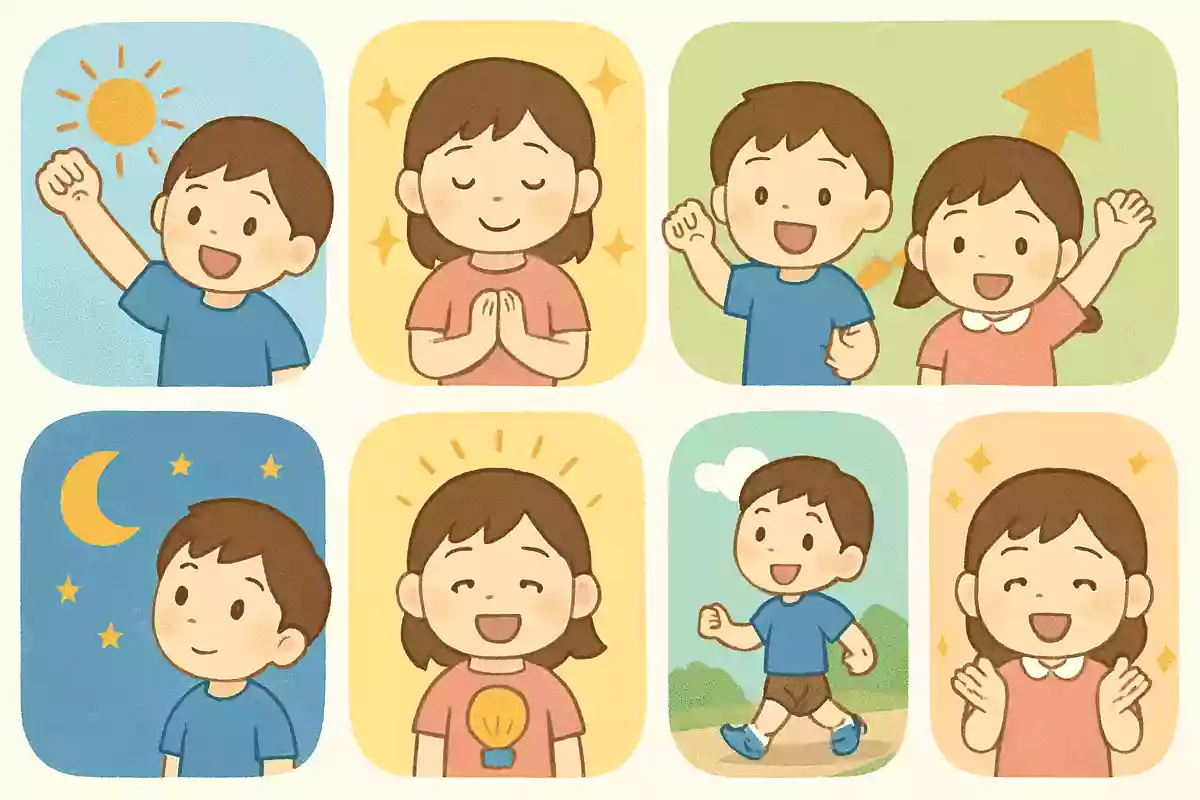
It means “thinking positively about what lies ahead and aiming for a better future.” For example, even if you make mistakes on a test, thinking “I’ll do my best next time!” is future-oriented thinking.
Instead of dwelling on past failures or unpleasant experiences, it’s important to ask yourself, “How can I make things better?” The feeling of “I can’t swim yet, but if I practice every day, I’ll be able to someday!” is also future-oriented.
When both adults and children adopt a future-oriented mindset, their spirits lift and their actions become more positive.
The future is something we create from now on.
That’s why it’s important to focus on what you can do and what you want to do, and enjoy each and every day!
A hundred flowers in full bloom
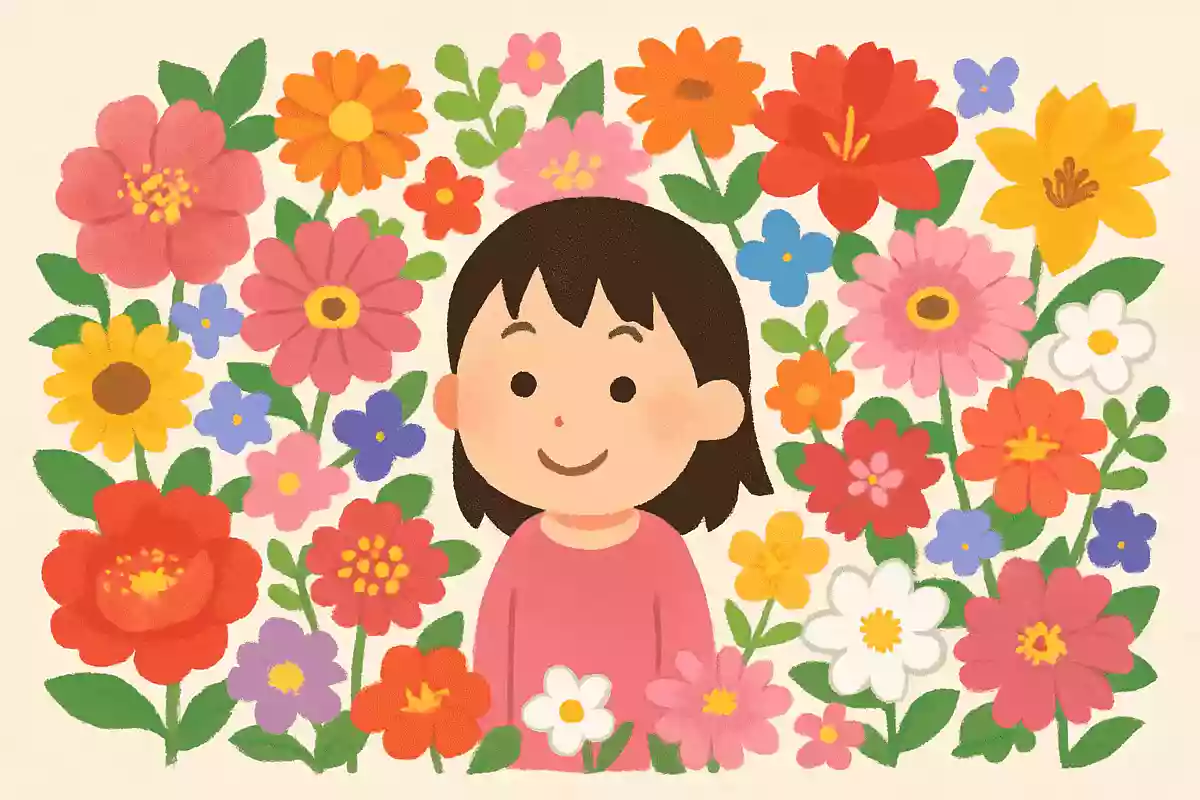
A four-character idiom that describes the scene of many flowers blooming beautifully all at once.
It also means that various things are shining beautifully at the same time.
For example, when everyone showcases different strengths at a school cultural festival, you can say, “It’s like hyakka ryōran.” The image of this phrase is that many unique personalities and talents sparkle all at once.
It’s easier to remember if you picture a spring landscape full of blossoms.
When everyone’s good qualities come together, the world becomes more fun—like a flower field in full hyakka ryōran.
flowery rhetoric

They’re “beautiful words” and “lovely turns of phrase.” For example, things like “You look super cool!” or “That picture is like a dream!”—words that feel nice to hear.
Using flowery expressions makes your speech and writing more enjoyable and really resonates with the listener.
“Your smile shines like the sun!” is another example.
When you use words with care, you can make others happy and lift their spirits.
Try using lots of kind, beautiful words at school and at home that will make others smile!
The beauties of nature — flowers, birds, wind, and the moon (a poetic expression appreciating nature’s elegance)
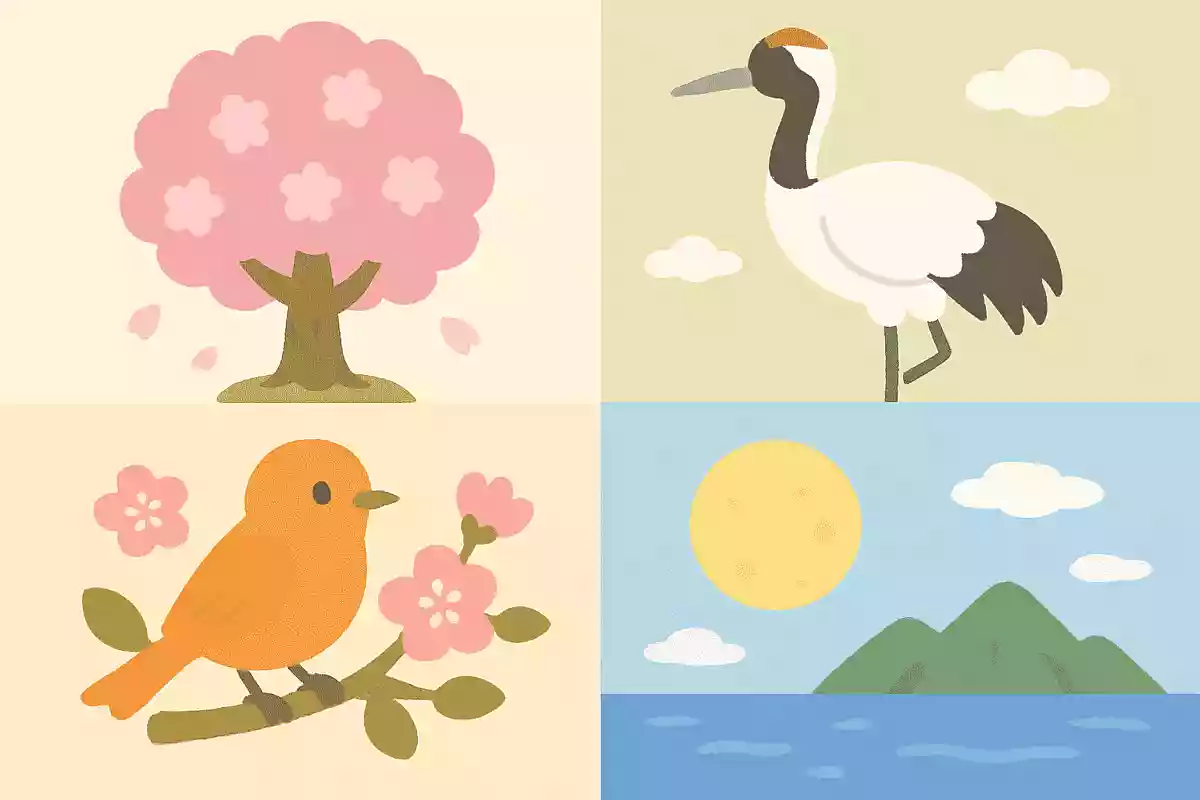
A four-character idiom that expresses an appreciation for the beauty of nature—flowers, birds, wind, and the moon.
It refers to things like feeling excited when seeing spring blossoms, feeling good when hearing birdsong, relaxing in a gentle breeze, and finding peace when gazing at the moon in the night sky.
For example, during summer vacation, going to the mountains to listen to birds or chatting while looking at the moon are times when you’re enjoying “kacho-fugetsu.” By sensing the beauty of nature, your heart becomes kinder and you notice new things.
Both children and adults should cherish the spirit of “kacho-fugetsu,” spending unhurried time in nature to make each day more enjoyable!
sincerity

It means “to work with all your heart, sincerely and earnestly.” For example, when a friend is in trouble, helping them honestly and wholeheartedly is an act of ‘seishin seii.’ Remembering this phrase can brighten your mood, because when you are sincere, the people around you smile and trust grows.
If you study for a test with ‘seishin seii,’ you’ll gain confidence and feel happy.
Both children and adults should cherish this phrase and spend each day energetically and joyfully!