

Learn the meanings too! Cool four-character idioms that elementary school students will want to remember

“I want to learn some cool four-character idioms!” Many elementary school students probably feel that way—wanting to use them in school essays or speeches, or even make them their future goals.
Four-character idioms are full of words that express strong will and admirable attitudes.
Because they carry deep meanings, the more you learn about them, the more appealing they become.
Even though they’re just four characters long, many of them really resonate in your heart.
In this article, we’ll introduce four-character idioms that are easy for elementary school students to remember and use.
If you try them in conversations with friends or in your writing, you’re sure to develop wonderful expressive skills.
- Interesting four-character idioms for elementary schoolers! Words you'll want to use once you understand their meanings
- For Elementary School Students: Four-Character Idioms You Can Use for New Year’s Resolutions — How to Set Cool Goals!
- Easy-to-remember, positive four-character idioms for elementary school kids! Words that brighten the heart
- Popular even among elementary school students! Stylish and easy-to-remember four-character idioms
- Easy for elementary school students to remember! A four-character idiom that expresses the feeling of trying your best
- [For Elementary School Students] Four-character idioms you can use in sports! Words that are helpful for cheering and goal setting
- [For Elementary Students] A Collection of Beautiful Four-Character Idioms to Know
- Recommended for elementary school class goals! A collection of impactful ideas using four-character idioms
- Perfect for elementary school slogans! A collection of four-character idiom ideas you'll want to use
- Four-character idioms that help elementary schoolers not give up: words that spark the power to keep trying
- [For Elementary School Students] Inspiring Four-Character Idioms for Shaping the Future at a Glance! Words that Spark Courage
- [Elementary School Students] Perfect for Kakizome! A Collection of Four-Character Idiom Ideas
- Strive toward your goals! Four-character idiom ideas that resonate with elementary school students
Learn the meanings too! Cool four-character idioms elementary schoolers will want to remember (101–110)
Future-oriented
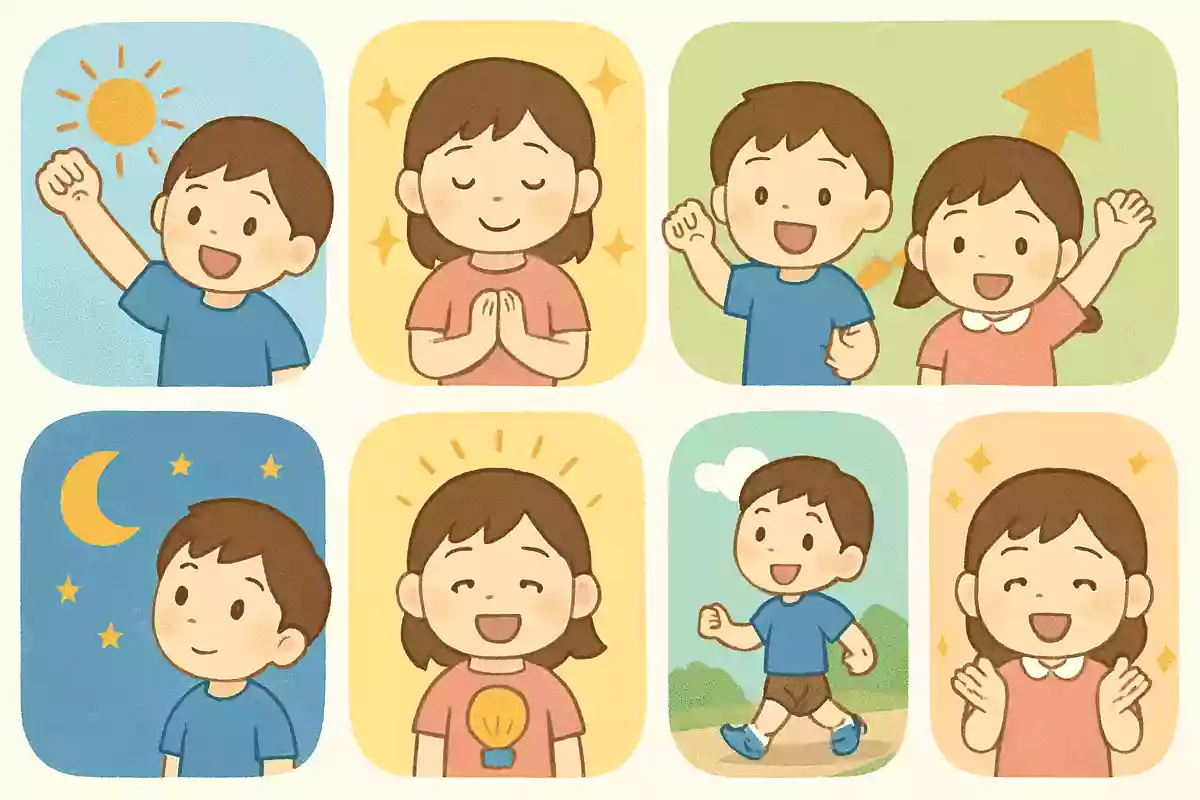
It means “thinking positively about what lies ahead and aiming for a better future.” For example, even if you make mistakes on a test, thinking “I’ll do my best next time!” is future-oriented thinking.
Instead of dwelling on past failures or unpleasant experiences, it’s important to ask yourself, “How can I make things better?” The feeling of “I can’t swim yet, but if I practice every day, I’ll be able to someday!” is also future-oriented.
When both adults and children adopt a future-oriented mindset, their spirits lift and their actions become more positive.
The future is something we create from now on.
That’s why it’s important to focus on what you can do and what you want to do, and enjoy each and every day!

A hundred flowers in full bloom
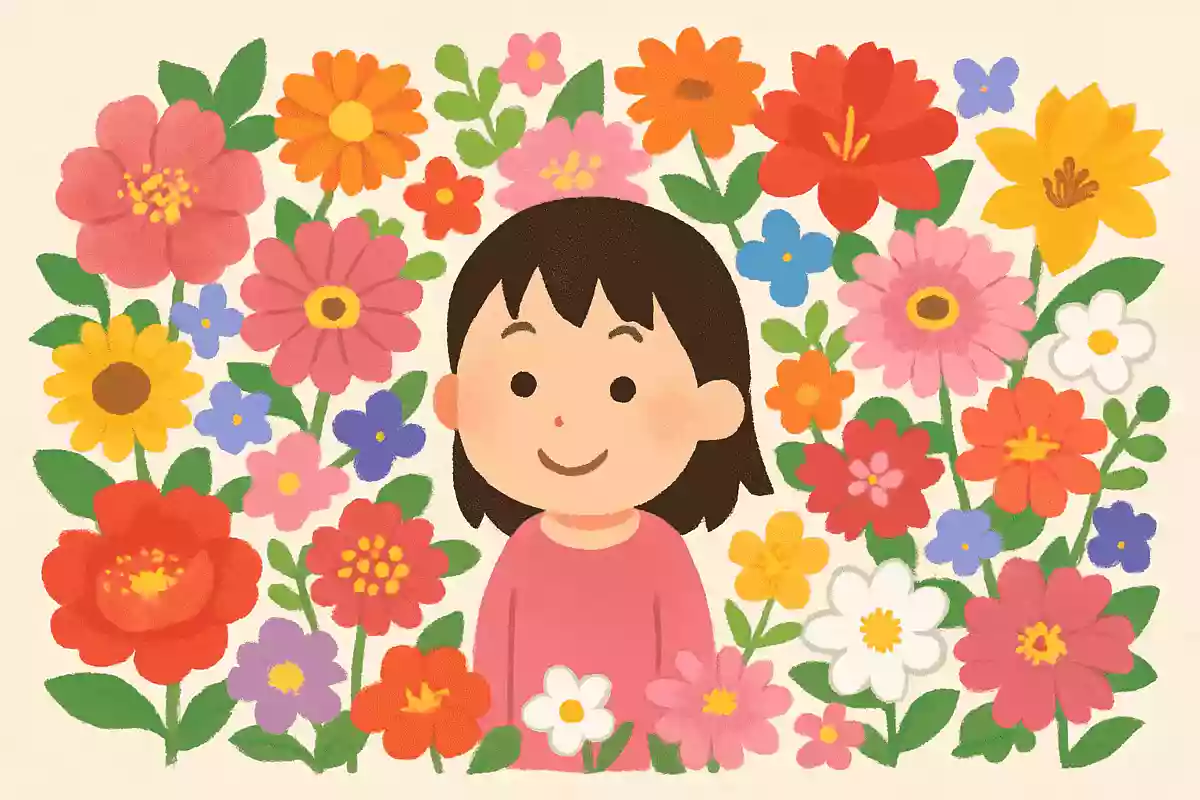
A four-character idiom that describes the scene of many flowers blooming beautifully all at once.
It also means that various things are shining beautifully at the same time.
For example, when everyone showcases different strengths at a school cultural festival, you can say, “It’s like hyakka ryōran.” The image of this phrase is that many unique personalities and talents sparkle all at once.
It’s easier to remember if you picture a spring landscape full of blossoms.
When everyone’s good qualities come together, the world becomes more fun—like a flower field in full hyakka ryōran.
flowery rhetoric
They’re “beautiful words” and “lovely turns of phrase.” For example, things like “You look super cool!” or “That picture is like a dream!”—words that feel nice to hear.
Using flowery expressions makes your speech and writing more enjoyable and really resonates with the listener.
“Your smile shines like the sun!” is another example.
When you use words with care, you can make others happy and lift their spirits.
Try using lots of kind, beautiful words at school and at home that will make others smile!
The beauties of nature — flowers, birds, wind, and the moon (a poetic expression appreciating nature’s elegance)
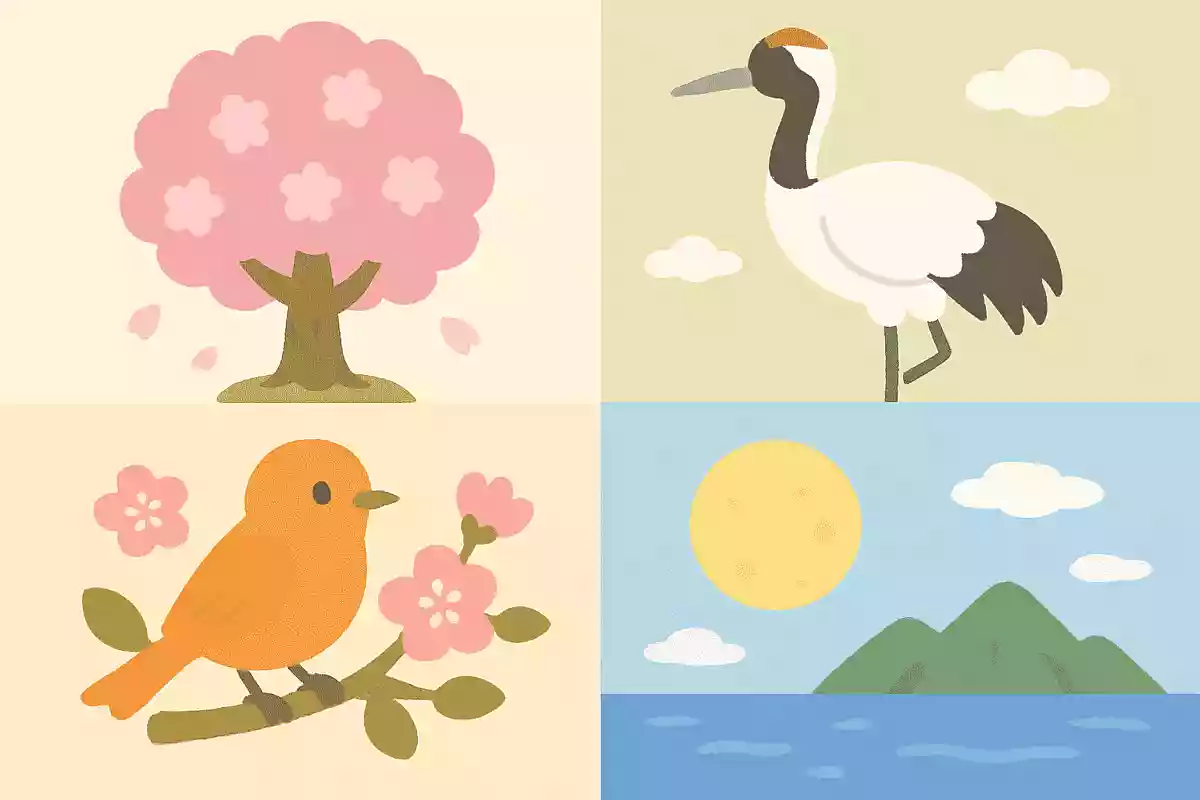
A four-character idiom that expresses an appreciation for the beauty of nature—flowers, birds, wind, and the moon.
It refers to things like feeling excited when seeing spring blossoms, feeling good when hearing birdsong, relaxing in a gentle breeze, and finding peace when gazing at the moon in the night sky.
For example, during summer vacation, going to the mountains to listen to birds or chatting while looking at the moon are times when you’re enjoying “kacho-fugetsu.” By sensing the beauty of nature, your heart becomes kinder and you notice new things.
Both children and adults should cherish the spirit of “kacho-fugetsu,” spending unhurried time in nature to make each day more enjoyable!
sincerity

It means “to work with all your heart, sincerely and earnestly.” For example, when a friend is in trouble, helping them honestly and wholeheartedly is an act of ‘seishin seii.’ Remembering this phrase can brighten your mood, because when you are sincere, the people around you smile and trust grows.
If you study for a test with ‘seishin seii,’ you’ll gain confidence and feel happy.
Both children and adults should cherish this phrase and spend each day energetically and joyfully!
Snow, Moon, Wind, and Flowers
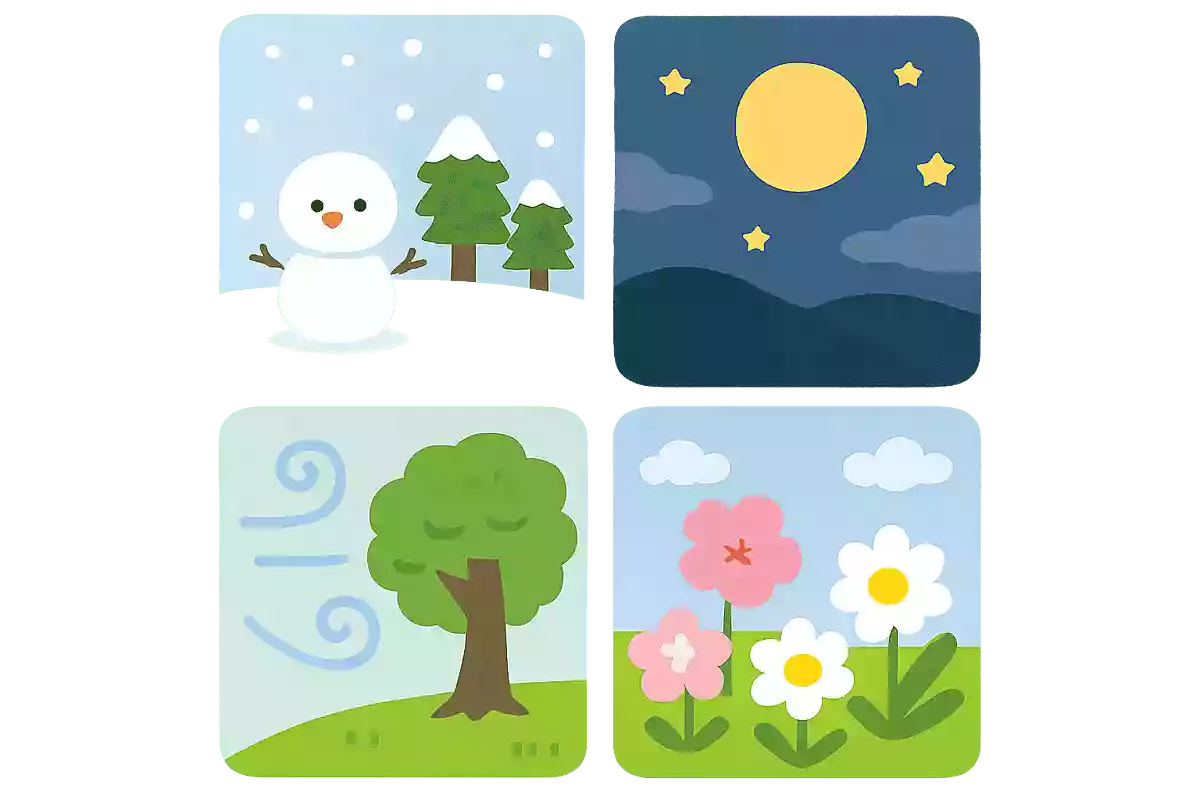
This four-character idiom depicts the beautiful natural scenery of each season.
By listing the symbols of each season—winter’s snow, autumn’s moon, summer’s wind, and spring’s flowers—it expresses the changing of the seasons.
Each symbolizes the beauty of its season, conveying a sense of affection for nature.
Displaying this idiom as something you value also highlights your appreciation of elegance and refinement.
It’s an idiom that evokes history as well, suggesting a beauty that remains unchanged across the ages.

Blue sky beyond the clouds
Ungai Sōten (雲外蒼天) is a four-character idiom meaning “Beyond the clouds, the blue sky awaits,” or more broadly, “After enduring hardships, a clear, bright future lies ahead.” For example, even if studying for a test is tough, if you don’t give up and keep trying, it can lead to good results and greater confidence.
You might use it like this: “I thought it was impossible, but I kept practicing without giving up and finally did it.
It truly felt like ‘ungai sōten.’” Just as there is always blue sky above the clouds, this saying teaches us that no matter how hard things get, a brighter future surely awaits beyond.
When times are tough, remember these words and keep moving forward!
blue sky and white sun

Originally, it was a term that described a perfectly clear, cloudless day, and from there it came to be used to mean “having a clear conscience and being pure” or “having false charges lifted.” It is a four-character idiom said to originate from the words of the Chinese poet Han Yu, and it spread as a symbol of a pure heart.
It’s even said that the flag of the Republic of China was once designed based on this expression, which shows how highly it has been valued.
Let’s use this word to clearly convey that we are people of integrity.
A sudden resolve; making a firm decision (to start afresh).
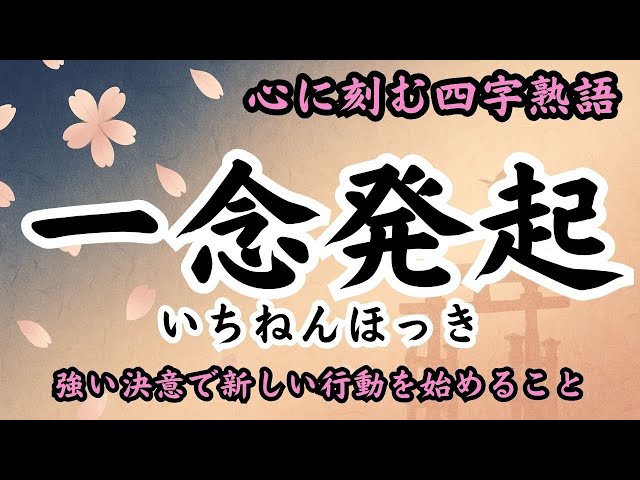
Ichinenhokki (一念発起) means making a firm decision—like saying, “Alright, let’s do this!”—and renewing your mindset to work hard.
For example: “I’m slow at running, but after I made up my mind and practiced running every day, I was chosen for the relay team at the school sports day!” That’s ichinenhokki—deciding to give your best from today on and taking action, even in areas like studying or sports that you’ve always found difficult.
It’s okay to fail.
What matters is the heart that stands back up without giving up.
If you set your mind toward your dreams and goals and take that first step, you can change your future.
Make up your mind—ichinenhokki—and carve out your own future!
indomitable; unyielding
It is a four-character idiom that means not giving up and facing challenges with a strong will, no matter what difficulties you encounter.
It teaches the importance of continuing to work hard without losing heart, even when things don’t go as planned in daily life—whether in studies, sports, or friendships.
Even for elementary school children, it conveys the importance of having the inner strength to keep trying despite failure.
By keeping this phrase in mind, you gain the courage to approach things positively and nurture the determination to never give up, even in tough situations.
It is a courageous saying that gives you the strength to step forward toward the future.
