

Four-character idioms that help elementary schoolers not give up: words that spark the power to keep trying

To children who strive with a spirit of never giving up, we want to convey important messages through four-character idioms.
Many teachers and parents may feel the same way.
In this article, we introduce four-character idioms that are easy for elementary school students to understand and perfect for fostering motivation and a positive mindset.
These expressions can be used in a variety of situations—daily life, study, club activities, and more—so please find the words that will resonate with elementary school children according to their environment!
- Easy for elementary school students to remember! A four-character idiom that expresses the feeling of trying your best
- Easy-to-remember, positive four-character idioms for elementary school kids! Words that brighten the heart
- Strive toward your goals! Four-character idiom ideas that resonate with elementary school students
- [For Elementary School Students] Four-character idioms you can use in sports! Words that are helpful for cheering and goal setting
- Learn the meanings too! Cool four-character idioms that elementary school students will want to remember
- Recommended for elementary school class goals! A collection of impactful ideas using four-character idioms
- Four-character idioms that express an indomitable spirit! Words to know when facing difficulties
- [For Elementary School Students] Inspiring Four-Character Idioms for Shaping the Future at a Glance! Words that Spark Courage
- Perfect for elementary school slogans! A collection of four-character idiom ideas you'll want to use
- For Elementary School Students: Four-Character Idioms You Can Use for New Year’s Resolutions — How to Set Cool Goals!
- [Elementary School Students] Perfect for Kakizome! A Collection of Four-Character Idiom Ideas
- Interesting four-character idioms for elementary schoolers! Words you'll want to use once you understand their meanings
- Popular even among elementary school students! Stylish and easy-to-remember four-character idioms
Four-character idioms that support elementary schoolers’ hearts and never give up! Words that spark the power to try hard (61–70)
strenuous effort; hard-fought struggle5

It’s a four-character idiom that expresses fighting with every ounce of strength and mustering the courage to face difficulties.
“Rikisen” conveys the state of battling with full force, while “funtō” conveys the act of rousing one’s spirit to confront challenges.
By combining these two stances of confrontation, the expression emphasizes a sense of power.
Another key point is that it contains two characters related to combat, clearly conveying the fact of standing up to a challenge.
Depending on how you pair it with your goal, you can strongly convey your own mindset.

Grand unity5
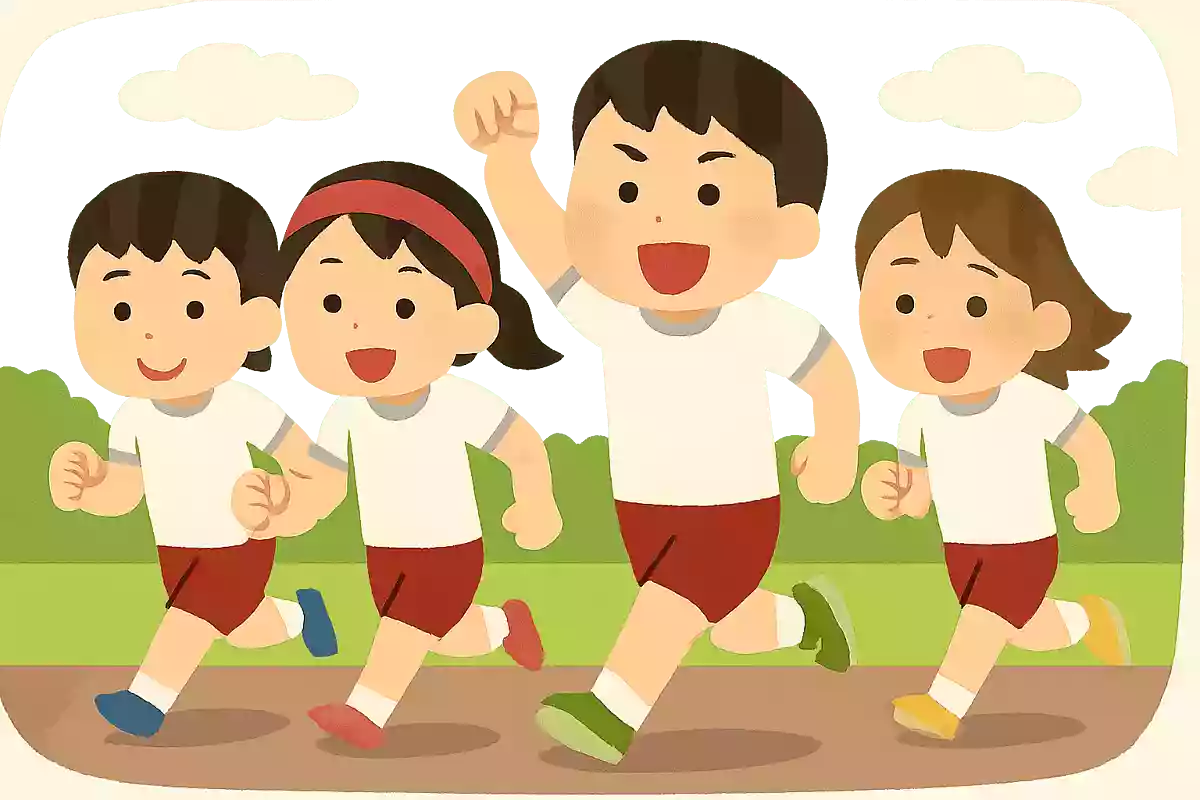
This is a four-character idiom that means different groups or parties overcome their differences, join forces, and unite for a common purpose.
Because of the Daidō Danketsu (Great Unity) movement in mid-Meiji Japan, the term also carries a strong political nuance.
Still, the idea of a large number of people advancing toward a goal conveys a sense of strength.
Moving forward together toward a major objective also entails seeking understanding from those around you, and within this brief phrase you can feel the resolve to win their acceptance.
Since the word presupposes many people combining their strength, it clearly conveys the sense of striving toward a grand ideal.
majestic and dignified5

Ifu Dodo (Pomp and Circumstance) refers to a very dignified, imposing appearance.
Imagine a small child standing before everyone, facing straight ahead with their back straight.
Ifu Dodo is basically a compliment, so if someone says, “You were ifu dodo,” they’re telling you, “You looked really cool!” That feels great, doesn’t it? When we’re anxious or scared, we tend to hunch our backs and look down, but that’s exactly when we should stand with a majestic, confident bearing—so our spirit doesn’t lose.

complete combustion5
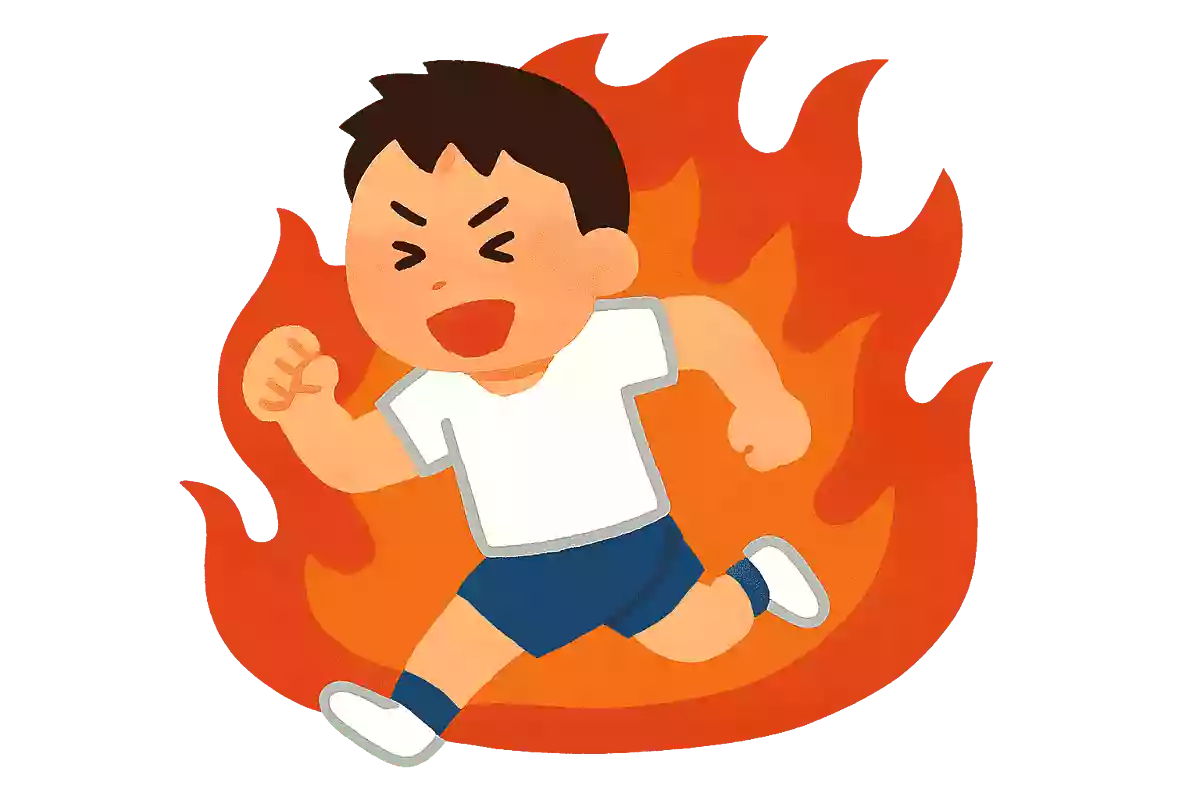
We call giving your all until the very end “kanzen-nenshō” (complete combustion).
You use it when you’ve put every bit of your strength into something.
For example, after sprinting at full speed in a sports day relay and crossing the finish line, you might say, “I completely burned out.” It can also be used after you’ve enjoyed something to the fullest.
Have you ever experienced complete combustion? In everyday life, it may be rare to get that engrossed or desperate, but I hope you try experiencing complete combustion at least once, as a way to understand your own limits.
Different bodies, one mind5
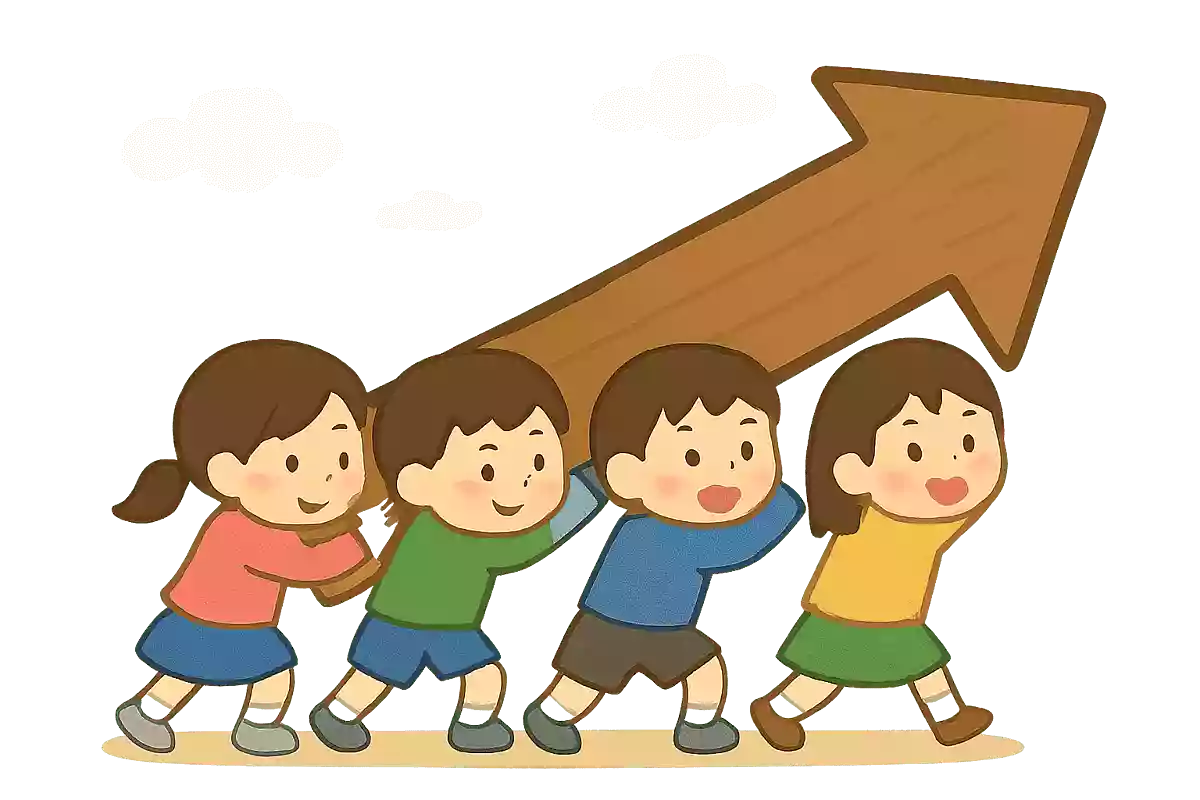
It means a deep relationship where, though your bodies are separate, your hearts are as one.
In other words, you care for each other and are very close.
When you’re aiming for a goal, there are times you can’t keep going alone.
But if you have close friends whose hearts are in tune with yours, you might be able to encourage each other and persevere.
A relationship where you can regard each other as precious is truly irreplaceable.
If you have friends with whom you can say you share itai-dōshin—different bodies, one heart—please cherish them.