

Easy-to-remember, positive four-character idioms for elementary school kids! Words that brighten the heart

Do you ever find it hard to put your positive, upbeat feelings into words? Four-character idioms are full of expressions that convey encouragement and hope.
Especially for elementary school students, it’s a great chance to learn the meanings of tricky kanji while finding idioms that can boost your own spirits and those of your friends.
In this article, we’ll introduce positive four-character idioms that elementary schoolers can use in everyday life, along with easy-to-understand example sentences.
We hope you find words that truly resonate with your heart!
- Easy for elementary school students to remember! A four-character idiom that expresses the feeling of trying your best
- Learn the meanings too! Cool four-character idioms that elementary school students will want to remember
- [For Elementary School Students] Four-character idioms you can use in sports! Words that are helpful for cheering and goal setting
- Interesting four-character idioms for elementary schoolers! Words you'll want to use once you understand their meanings
- Four-character idioms that help elementary schoolers not give up: words that spark the power to keep trying
- Four-character idioms that wish for happiness! Words that will warm the hearts of elementary school children
- [For Elementary School Students] Inspiring Four-Character Idioms for Shaping the Future at a Glance! Words that Spark Courage
- For Elementary School Students: Four-Character Idioms You Can Use for New Year’s Resolutions — How to Set Cool Goals!
- Recommended for elementary school class goals! A collection of impactful ideas using four-character idioms
- Perfect for elementary school slogans! A collection of four-character idiom ideas you'll want to use
- Popular even among elementary school students! Stylish and easy-to-remember four-character idioms
- Strive toward your goals! Four-character idiom ideas that resonate with elementary school students
- [Elementary School Students] Perfect for Kakizome! A Collection of Four-Character Idiom Ideas
Easy-to-remember positive four-character idioms for elementary schoolers! Uplifting words that brighten the heart (81–90)
Indomitable; unyielding (literally: ‘unbent by a hundred setbacks’)

A four-character idiom that gives you strength in life.
It’s read as “hyakusetsu-futō.” It means that no matter how many times you fail, you don’t bend your goals or convictions.
You can picture the attitude of continuing to strive without yielding, even when you’ve failed a hundred times and feel like your spirit might break.
Many guardians probably hope that even children who get bored easily or who often give up will persist in the goals they decided to work hard toward.
How about sharing this as a motto at such times? The words themselves seem to give you power.
Good fortune comes to a smiling household.

From people who are always smiling, you may sense a warm, magnetic aura.
Perhaps such an aura captivates not only people but even the gods.
Those who radiate brightness through their laughter often have the power to repel difficulties and crises.
Life isn’t all fun and games, but we’d like to spend as much of it as possible with a smile, wouldn’t we? There are even medical findings suggesting that laughter can boost immunity and activate the brain.

to devote oneself body and soul; to make every possible effort; with utmost dedication

It is a phrase that means to put forth every ounce of effort, to the point of grinding your bones and exhausting yourself.
It symbolizes an attitude of using all the strength you have and never giving up until the very end, conveying strong determination and passion.
Despite being only four characters long, it expresses the importance of effort and seriousness.
For elementary school students, it teaches the mindset of giving their all in daily club activities and competitions.
It is a phrase that reminds us to take one step at a time and do our utmost even when facing difficulties.

to lie on firewood and taste gall (an idiom meaning to endure hardship and persevere for future revenge or success)
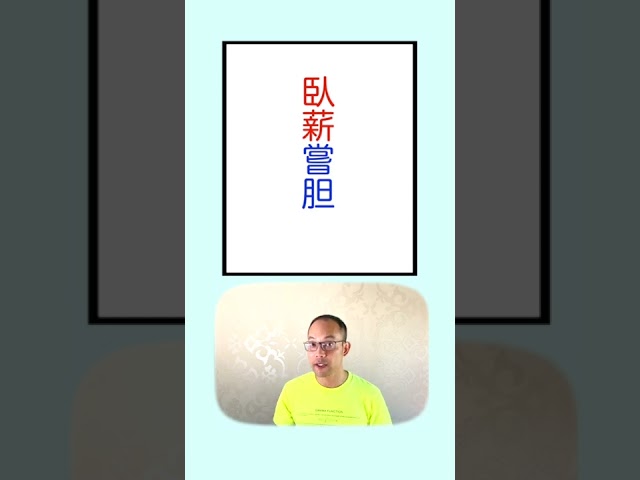
This four-character idiom, read as “gashinshōtan,” means to endure hardship and persevere over a long period of time to achieve one’s goals.
If you keep making an effort, there will be moments of failure and discouragement.
At such times, some children may find strength in this idiom.
Even if they experience setbacks, it would be wonderful if they could use those experiences as a springboard to aim higher and ultimately achieve their goals.
For the parents and guardians who watch their children’s efforts most closely, being encouraged by this idiom can be a real source of power.
watching like a tiger for the chance; biding one’s time with a predatory eye (waiting for the perfect moment to strike)
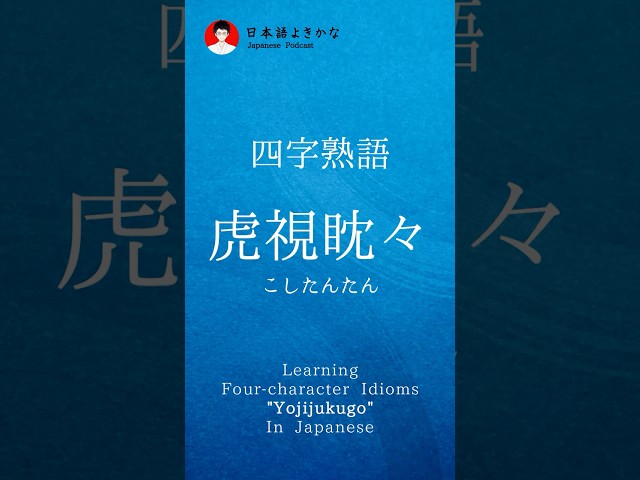
It’s a phrase that means waiting for the right moment while watching for an opportunity, like a tiger intently stalking its prey.
You can feel the quiet yet precise focus it conveys.
It emphasizes the importance of staying alert and preparing thoroughly.
Though short, it carries a strong sense of both concentration and composure.
As a phrase that symbolizes careful readiness toward a goal or opportunity and the strong will to achieve it, it gives an inspiring, upright feeling just by hearing it.
It’s a powerful four-character idiom that even teaches elementary school children the importance of patience when preparing to pursue their goals.
The achievement attained through diligent study by lamplight—success won by hard, persistent effort
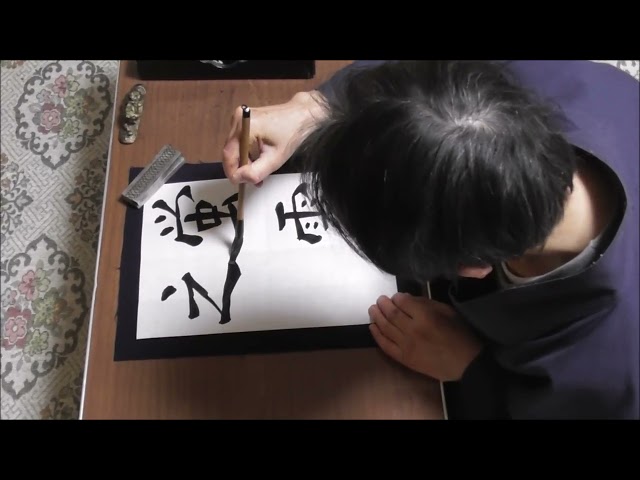
A four-character idiom derived from a Chinese classical anecdote.
It’s read as “keisetsu no kō,” and it carries the meaning that if you keep persevering and working hard, success awaits you in the end.
While you’re in the midst of making an effort, there are times when even you don’t notice your small steps of growth.
It’s an idiom with a message you’d want to convey when someone is struggling and on the verge of losing heart.
As you steadily work toward your goal, there will be moments when you feel like leaning on someone.
These are words that gently wrap around your feelings at such times.
trial and error

A four-character idiom that many people know.
It’s read as “shikō sakugo,” and it seems to mean repeatedly trying various methods, accumulating failures, and pursuing a solution.
Failure is part and parcel of taking on challenges, and there are moments when results don’t keep pace even with continued effort.
However, if you look at life from a long-term perspective, you could say that experiencing a single example means you’re still in the process of exploring solutions.
It’s best to adjust your approach and find a path that suits you.
enterprising and proactive

A four-character idiom that overlaps with the image of a child heading straight toward a goal.
It’s read “shinshu-kakan.” “進取 (shinshu)” refers to proactively tackling things on one’s own initiative, and “果敢 (kakan)” means being decisive and acting boldly.
Combined, the idiom expresses an attitude of actively taking on new challenges and moving into action without hesitation.
Seeing a child’s earnest effort can fire up their guardians as well.
Even then, it’s best to watch over them while keeping a calm, unhurried mindset.
lightning speed

It’s a term that expresses extremely fast movement, like a flash of lightning or a sudden spark.
In sports, it’s perfect for describing quick reactions and agile play.
Whether you’re stealing the ball in soccer before your opponent or sprinting swiftly across the bases in baseball, keeping this word in mind will sharpen your movements.
In cheering, its energetic image spreads to teammates, helping the whole team approach the game with a sense of speed.
Make it your daily practice motto, and it will boost your motivation to improve explosiveness.
It’s a reliable four-character idiom that gives you a push when you need to focus.
fiery and high-spirited; brimming with passionate enthusiasm
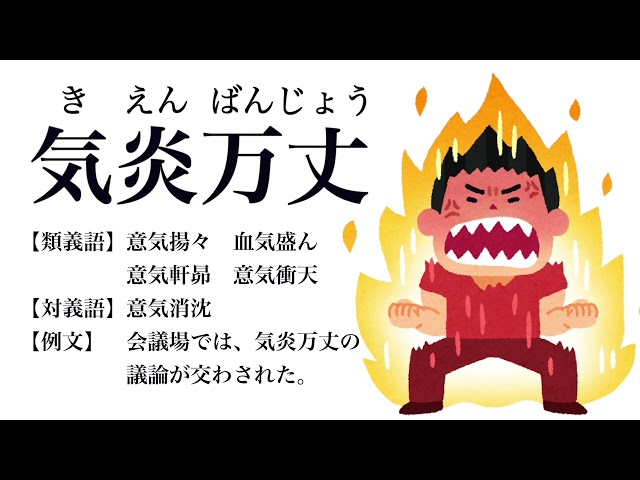
It’s a word that describes a state where strong spirit and momentum flare up like a rising flame.
In sports, it’s perfect for the moment when you’re full of motivation and ready to give it your all.
If you say it before a match, both you and your teammates will feel fired up and get off to a great start.
Used during cheering, it conveys the desire to get everyone hyped, spreading energy throughout the team.
Especially in adversity, it reminds you not to give up and stirs the strength to see things through to the end.
When striving toward a goal, it becomes a powerful ally that rallies your resolve.