

Surprisingly unknown? Trivia Quiz [Multiple Choice: 3 Options]


Fun facts make you want to share them with others, don’t they? In this article, we’ll introduce little-known facts about health and daily life in a quiz format—things that many people surprisingly don’t know.
You’ll find plenty of everyday topics with reasons that will make you say, “Oh, so that’s why!” Learn while having fun with the quiz, and the knowledge you gain might come in handy in different situations later on! It’s a multiple-choice quiz with three options, so kids can enjoy it too.
How many of these unusual and little-known fun facts do you already know?
- [Killing Time] A Collection of Fun Trivia Quizzes You'll Want to Share with Someone
- [Challenging] General Knowledge Quiz Compilation: Difficult and Interesting Multiple-Choice Questions (3 Options)
- A three-choice quiz of useful trivia: a collection of questions you can use in everyday life
- Aim for a perfect score! A three-choice common knowledge quiz that deepens your understanding
- Let's take on a four-choice quiz that everyone can enjoy together!
- [Did you know?] Fun Trivia Quiz About Health
- Trivia quiz with useful tips to know: fun facts that come in handy at school or at home [for kids]
- Didn't want to know?! Fascinating and scary trivia & fun facts
- Trivia quiz about dogs: three-choice questions to learn fun facts
- Become a trivia master with a multiple-choice quiz for elementary schoolers! A fun problem collection that captivates both kids and adults
- [For Seniors] Liven Things Up! 3-Choice Ranking Quiz
- [Challenge] Stimulate your intellectual curiosity with a general knowledge quiz you might not know!
- Trivia you think you know but surprisingly don’t? August trivia and fun facts quiz!
Japanese Culture and History Trivia Quiz (1–10)
Which of the following about the size of Go stones is correct?

- The black stone is bigger.
- Shiraishi is bigger.
- Black stones and white stones are the same size.
See the answer
The black stone is bigger.
To prevent visual illusions, black stones are made slightly larger than white stones. This is because white is an expanding color that appears larger than it actually is, while black is a contracting color that appears smaller than it actually is.

Which of the following was called the ‘Flower of Edo’?
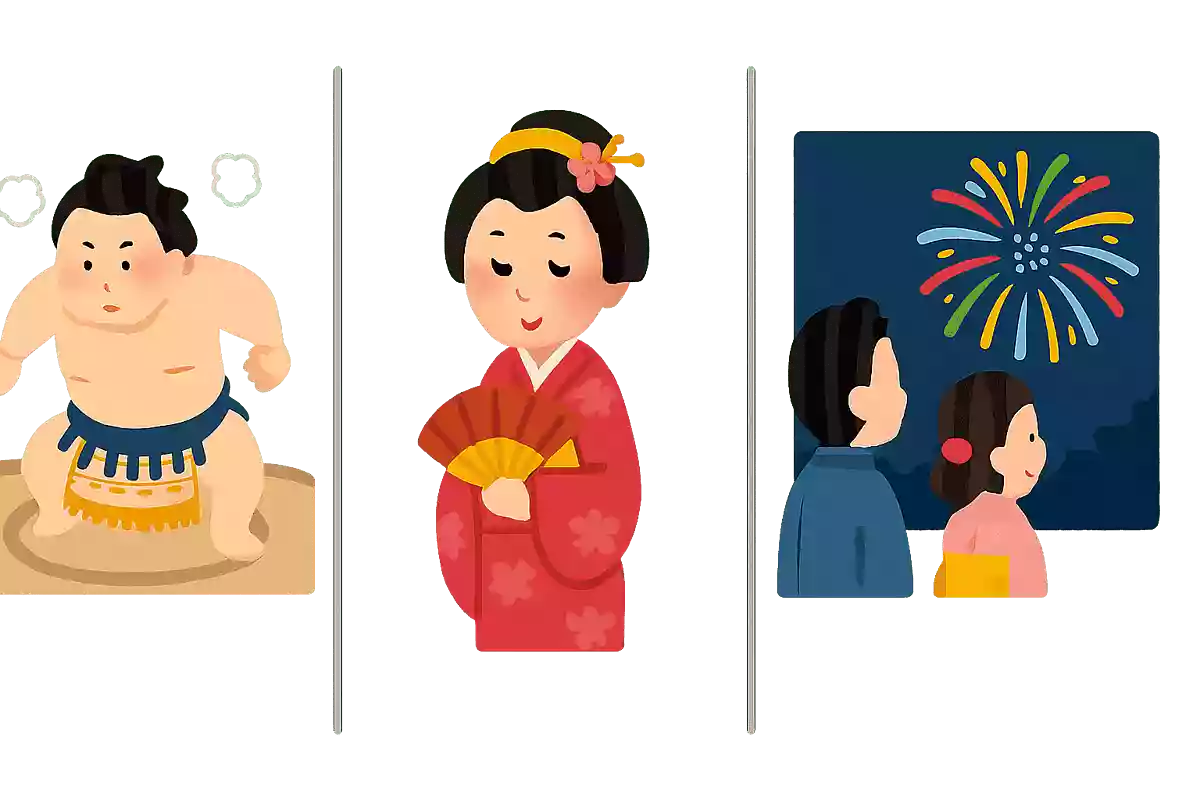
- fire (a fire; blaze)
- Kabuki
- cherry blossom
See the answer
fire (a fire; blaze)
When you hear the word “hana” (flower), you tend to picture something beautiful, but what was called the “flower of Edo” was actually fires. Because fires were so frequent in the city of Edo, people referred to them this way. Similarly, it’s said that fights were also called the “flower of Edo.”

Who eats the school lunch first at school?

- principal
- lunch duty
- homeroom teacher
See the answer
principal
At school, the first person to eat the school lunch is the principal. This is done so that students can eat safely and enjoyably, and it is called a “sample inspection.” About 30 minutes before lunchtime, they check whether any foreign objects are mixed in, whether there is any strange odor, and whether the food has been heated properly.
Japanese Culture & History Trivia Quiz (11–20)
Which flowers were favored for flower viewing during the Nara period?
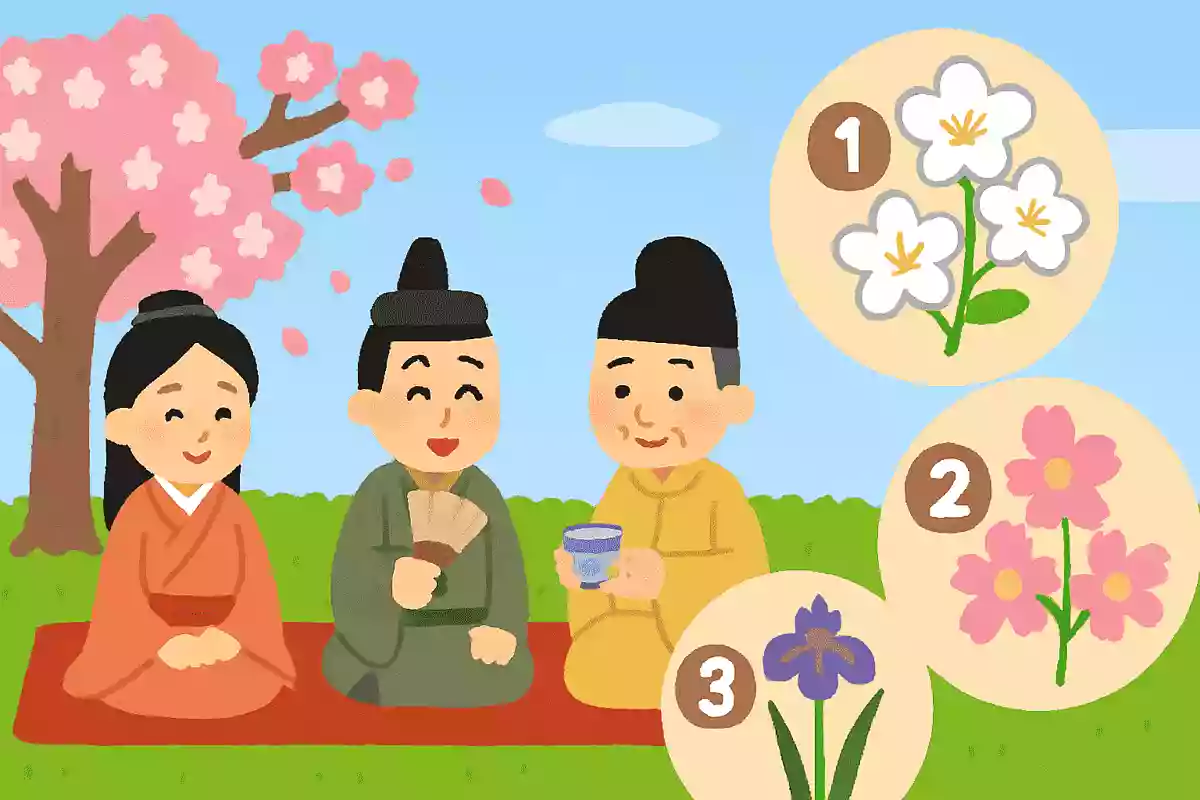
- cherry blossom
- plum
- chrysanthemum
See the answer
plum
Today, cherry blossoms are the standard for hanami (flower viewing), but in the Nara period, plum blossoms were the norm. This is said to be because plum blossoms were more popular at the time, and cherry blossoms were treated as something sacred. Entering the Heian period, the flower viewed during hanami shifted from plum blossoms to cherry blossoms.
What is the etymology of sushi?
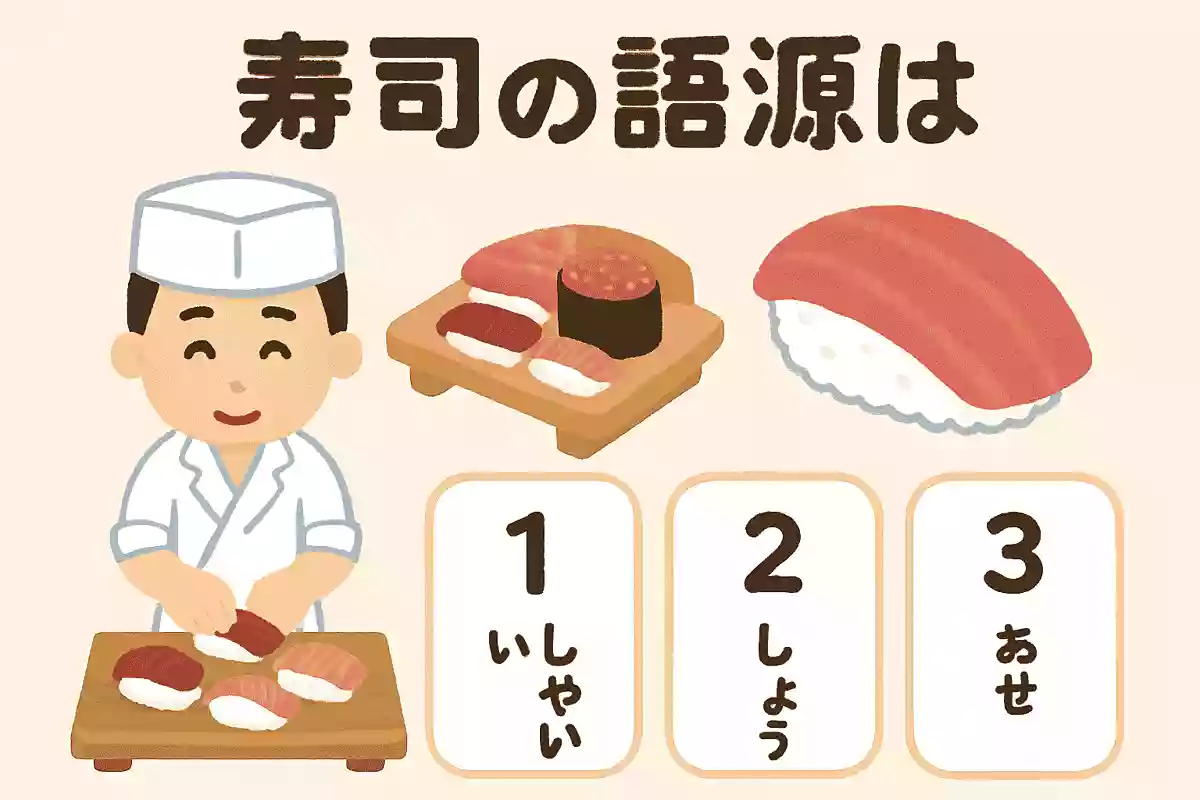
- vinegar-marinated fish
- Because it’s sour.
- Food that governs/embodies longevity
See the answer
Because it’s sour.
Sushi, a food that represents Japan, got its name from the word for “sour,” su. Today, sushi vinegar is used to add acidity to the rice (shari), but in the past, people would ferment the rice and marinate fish in it.