

[Weber] Masterpieces by the founder of German opera

Carl Maria von Weber was a German composer, conductor, and pianist of the early Romantic period, born in 1786.
With his opera Der Freischütz, he established the style of German Romantic opera and came to be known as the “founder of German opera.”
He is also known for leaving a profound legacy for future generations, such as reorganizing the orchestra into a layout closer to the modern arrangement and being among the first to use a baton.
While he composed many operas and orchestral works, he also performed as a pianist and was considered one of the finest of his time.
In this article, we introduce some of Weber’s masterpieces and signature works.
Be sure to give them a listen!
- Carl Maria von Weber Popular Song Rankings [2026]
- [Masterpiece Classics] A special showcase of gem-like masterpieces so beautiful they’ll move you to tears
- [Weber’s Piano Works] Exquisite Masterpieces by the Founder of German Opera
- Masterpieces by Franz Schubert: Sparkling classical works left by the King of Song. Recommended classical music.
- A masterpiece by Richard Wagner. Popular classical music.
- Robert Schumann | Introduction to his famous and representative works
- Mozart: An Introduction to His Signature and Popular Works
- Masterpieces of the Romantic Era: A sweeping introduction to soul-stirring, celebrated gems!
- Famous pieces recommended for opera beginners. Recommended opera songs.
- [Orchestra] Introducing famous and popular pieces
- Masterpieces by Gustav Mahler. Popular classical music.
- Classical Masterpieces: Recommended Works You Should Hear at Least Once
- Mendelssohn’s Masterpieces | Popular Classical Music
[Weber] Masterpieces by the Founder of German Opera (41–50)
Waltz in A majorCarl Maria von Weber

Carl Maria von Weber, a master of the early German Romantic era.
His solo piano piece Waltz in A major captivates listeners with its brilliant melody and lively rhythm.
This work is one of six pieces Weber composed for Empress Marie-Louise of France, combining an air of refinement with an approachable charm.
Exemplifying Weber’s pianistic style—melding virtuosic difficulty with rich emotional expression—this piece is recommended not only for piano enthusiasts but for classical music fans in general.
Grand Polonaise, Op. 21Carl Maria von Weber
Carl Maria von Weber, hailed as the “founder of German opera,” revealed his musical talent at a young age and flourished as an important composer of the German Romantic school.
Among his piano works, the Grand Polonaise, composed in 1808, stands out for its dazzling and memorable character.
Its stately main theme is interwoven with inventive harmonies and virtuosic passages, showcasing Weber’s distinctive expressive power to the fullest.
Combining strength with elegance, this piece allows listeners to savor the piano’s allure in abundance.
It is recommended both for those looking to become familiar with Romantic music and for intermediate to advanced players seeking to refine their technique.
Hunters’ ChorusCarl Maria von Weber

Overall, the strong and cheerful melody is striking.
The key is to play boldly and with confidence.
Make sure to keep the rhythm lively so the fun piece doesn’t feel heavy.
In the latter half, create contrast between the light, crisp “ta-ta-tan” passages and the rest.
Invitation to the DanceCarl Maria von Weber

As wonderful as a song may be, it’s safest to avoid tracks that evoke parting when choosing BGM for a wedding ceremony or reception.
Invitation to the Dance was a piece Weber presented to his wife, and in true European fashion it depicts a gentleman inviting a lady to dance.
Although it’s a piano piece, the orchestrated arrangement is elegant and well-suited for candle services and the like.
Invitation to the Dance, Op. 65Carl Maria von Weber

Carl Maria von Weber, an early figure in German Romantic music, played a decisive role in the development of German Romantic opera.
Invitation to the Dance, Op.
65—also known as the Brilliant Rondo—is one of his piano works and a perennial favorite.
Composed in 1819 for his wife Caroline and first published in Paris in 1821, the piece takes the form of a set of waltzes with an introduction and coda, depicting a dramatic narrative.
Beyond the refinement and passion required to align the delicate notes elegantly, the work is also notable for its many arrangements, including Berlioz’s orchestral version.
Invitation to the Dance — Brilliant Rondo, Op. 65Carl Maria von Weber

Carl Maria von Weber, known as a key composer of the German Romantic movement.
Although he was born with disabilities, he showed musical talent from an early age and studied under his father to become a prodigy.
Invitation to the Dance, composed in 1819, is a rondo for piano characterized by a style that is brilliant and passionate yet refined.
It depicts the interplay between a man and a woman at a ball, delicately expressing romantic scenes.
Overflowing with the charm that invites one into the joy of social dancing, this piece is one I would recommend to everyone studying the piano.
Invitation to the DanceCarl Maria von Weber

A piano piece composed by the German composer Weber.
As the title suggests, it depicts a gentleman inviting a lady to dance.
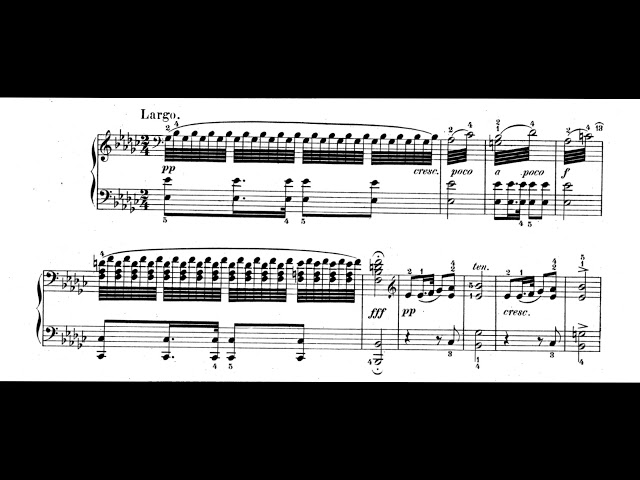
In the introduction and opening section, a sequence of exchanges at the ballroom is portrayed: the left hand represents the gentleman’s invitation, while the right hand expresses the lady’s responses.
His first invitation is declined, but the gentleman persists, and gradually a conversation develops.
Once they have warmed to each other and grown closer, the gentleman asks her to dance again—third time’s the charm.
The lady accepts, and the two disappear into the whirl of the ball, a progression rendered beautifully in the music.
