

![[Weber] Masterpieces by the founder of German opera](https://i.ytimg.com/vi/1MQ7oSpptH4/sddefault.jpg)

Carl Maria von Weber was a German composer, conductor, and pianist of the early Romantic period, born in 1786.
With his opera Der Freischütz, he established the style of German Romantic opera and came to be known as the “founder of German opera.”
He is also known for leaving a profound legacy for future generations, such as reorganizing the orchestra into a layout closer to the modern arrangement and being among the first to use a baton.
While he composed many operas and orchestral works, he also performed as a pianist and was considered one of the finest of his time.
In this article, we introduce some of Weber’s masterpieces and signature works.
Be sure to give them a listen!
- Carl Maria von Weber Popular Song Rankings [2026]
- [Masterpiece Classics] A special showcase of gem-like masterpieces so beautiful they’ll move you to tears
- [Weber’s Piano Works] Exquisite Masterpieces by the Founder of German Opera
- Masterpieces by Franz Schubert: Sparkling classical works left by the King of Song. Recommended classical music.
- A masterpiece by Richard Wagner. Popular classical music.
- Robert Schumann | Introduction to his famous and representative works
- Masterpieces of the Romantic Era: A sweeping introduction to soul-stirring, celebrated gems!
- Famous pieces recommended for opera beginners. Recommended opera songs.
- [Orchestra] Introducing famous and popular pieces
- Masterpieces by Gustav Mahler. Popular classical music.
- Classical Masterpieces: Recommended Works You Should Hear at Least Once
- Mendelssohn’s Masterpieces | Popular Classical Music
- Pick up Beethoven’s famous and representative works!
[Weber] Masterpieces by the Founder of German Opera (1–10)
Invitation to the Dance, Op. 65 in D-flat majorCarl Maria von Weber
A dazzling waltz for piano composed in the early 19th century, dedicated to Weber’s wife.
It features virtuosic piano writing and reflects the world of social dance of the time.
At the opening, you can hear a conversational exchange like that between a man and a woman, which gradually evolves into a brilliant waltz rhythm.
The piece conveys the joy and elegance of a ball, making it recommended for those who want to savor the atmosphere of a ballroom or who are interested in Romantic-era music.
The Grand Rondo “Capriccio,” Op. 62Carl Maria von Weber

Rondo Brillante “Capriccio,” E-flat major, Op.
62.
This piece was written to be performed in the Dresden court salon, and Weber is said to have completed it in four days.
It is one of the most graceful and brilliant of his piano works.
Piano: Isabella Krasnova.
Clarinet Concerto No. 1 in F minor, Op. 73Carl Maria von Weber
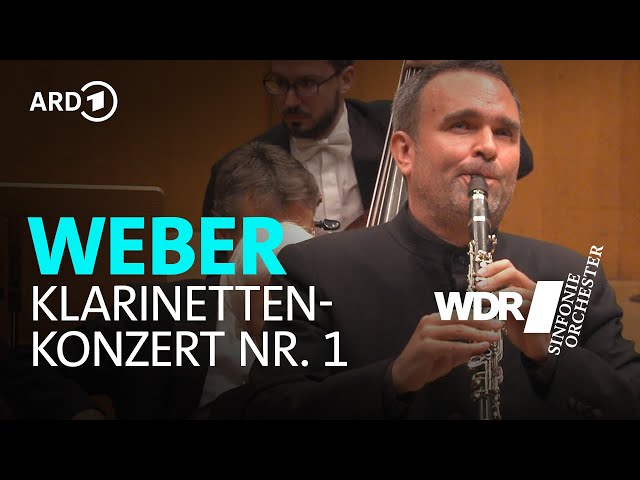
One of the representative concertos of the German Romantic school, this is a beautiful work that fully draws out the clarinet’s allure.
In the first movement, a dramatic introduction is followed by the clarinet singing an emotionally rich melody.
The second movement is notable for its warm tone, with a wistful melody that deeply touches the heart.
In the third movement, amidst a lively tempo, a succession of virtuosic clarinet passages captivates the listener.
Written for the clarinet virtuoso Heinrich Bärmann, it premiered in Munich on June 13, 1811.
As a groundbreaking work that expanded the instrument’s possibilities, it remains beloved by many to this day.
Concert Piece in F minor, Op. 79Carl Maria von Weber

A masterpiece of Romantic music woven from the dialogue between piano and orchestra.
The progression from the dark hues that begin in F minor to the piano’s delicate solos and the orchestra’s powerful accompaniment unfolds like a story.
Completed in 1821 and premiered two years later, this work brings out the pianist’s full virtuosity.
There are passages that demand advanced technique, such as octave glissandi and rapid trills.
It’s a highly recommended piece not only for piano enthusiasts but also for anyone interested in Romantic music.
If you want to savor emotional shifts and dramatic developments, be sure to give it a listen.
Festive Overture “Acclamation”Carl Maria von Weber

This overture was composed to be performed at the beginning of a celebratory concert marking the 55th anniversary of King Friedrich August I’s reign in the Kingdom of Saxony.
It is performed by the Staatskapelle Dresden under the direction of Giuseppe Sinopoli.
Bassoon Concerto in F major, Op. 75Carl Maria von Weber

A work for bassoon composed by Weber in his youth.
It consists of three movements and is characterized by dramatic, opera-like expression.
The first movement is forceful and virtuosic, the second features a beautiful, songlike melody, and the third is light and lively.
At the time of its composition in 1811, the piece showcased new possibilities for the bassoon.
The dialogue between the orchestra and the bassoon is striking, fully drawing out the instrument’s wide tonal range and expressive power.
If you love classical music—or if you’d like to discover the charm of the bassoon—be sure to give it a listen.
Clarinet Concerto No. 2 in E-flat major, Op. 74Carl Maria von Weber

This work shines like a jewel from the treasure chest of classical music.
Premiered in 1811, it has continued to captivate audiences ever since.
Comprising three movements, each reveals a different character: the first has a heroic air, the second is deeply sentimental, and the third is a brilliant dance—like experiencing a compact drama.
It brings out the full allure of the clarinet and offers beautiful interplay with the orchestra.
Highly recommended for those drawn to the clarinet’s timbre or eager to savor the charms of Romantic music.
It also includes technical challenges, making it a delight for listeners who want to appreciate the performer’s virtuosity.