

[For Seniors] Fun Brain Training! Lively Whiteboard Activities


In this article, we’ll introduce recreational activities for seniors that use a whiteboard! All you need is a whiteboard and some markers, making it easy and convenient to play.
There’s a wide variety—from brain-training games to quizzes and voice-based activities—so it’s fun to start by discussing and choosing together.
These activities are perfect for senior facilities like day service centers when you’re short on time and wondering what to do.
They’re enjoyable even in brief sessions, so give them a try!
- [For Seniors] Play Long and Have Fun! A Whiteboard Activity with Brain-Training Elements
- [For Seniors] Brain-Training Recreation Using a Whiteboard
- [For Seniors] Lively Wordplay Game: Fun Recreation for Elderly Care
- [For Seniors] Brain Training with a Whiteboard! Fill-in-the-Blank Exercises & Quizzes
- [For Seniors] Test Your Memory!? Ideas for Whiteboard Games
- [For Seniors] Brain Training! Recall Quiz Collection!
- [For Seniors] Simple Recreational Activities You Can Enjoy While Seated
- [Brain Training] Lively Word Quiz for Seniors
- For seniors: Fun shiritori—enjoyable and easy to play
- [For Seniors] Fun Recreational Activities Without Equipment
- Recommended for brain training: a proverb quiz using a whiteboard
- [For Seniors] Simple Tabletop Games: Fun and Engaging Recreational Activities
- [For Seniors] Recreational Activities Enjoyable in Large Groups
[For Seniors] Fun Brain Training! Exciting Whiteboard Activities (31–40)
Common Radical Fill-in Quiz

If you want to tackle a slightly more complex task, I also recommend the common radical fill-in quiz.
A radical is a component that makes up a kanji.
For example, the common radical in “松” (matsu), “村” (mura), and “林” (hayashi) is the tree radical (kihen).
First, pick out many kanji that share a common radical, then remove the radical and line up what remains to create the quiz.
Alternatively, you can use YouTube videos and the like.
In that case, adjust the difficulty by pausing the video to give time to think, and so on.

Fill-in crossword

This is a game where you complete a crossword puzzle by filling in the remaining blanks, with most of the letters already in place.
Thinking about which letters work both vertically and horizontally, and slotting them in one after another, helps activate the brain.
The more blanks there are to fill, the higher the difficulty, so encourage players to gradually try puzzles with multiple blank patterns.
Sometimes letters alone won’t lead you to the answer; in those cases, it’s recommended to unlock hints that tell you the meanings of the words going across and down.

tic-tac-toe
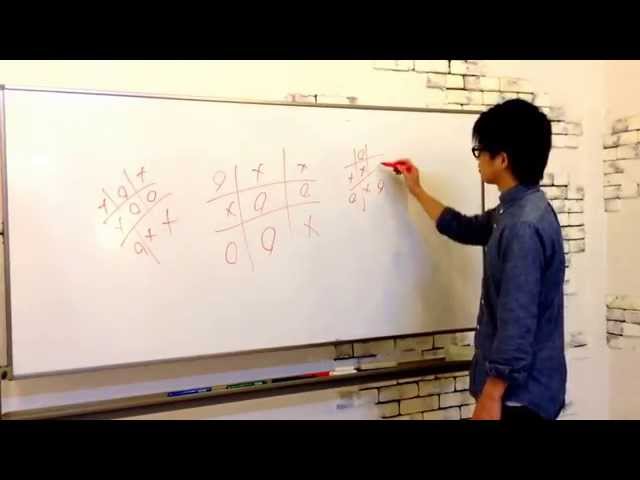
The tic-tac-toe game everyone knows can be played anywhere as long as you have paper and a pen.
If you use a whiteboard, you can erase it as many times as you like, so it’s easy to enjoy anytime.
Since it’s a nine-square territory game, it doesn’t take much time, and even with many people, everyone can take a turn in a short time.
You can play one-on-one, but with some creativity—like holding a tournament or team matches—everyone can have fun together.

Kanji shiritori

Speaking of shiritori, it’s a game where you take the last character of a word and continue from it—but this is a kanji shiritori, where we try it using kanji.
You can play regular shiritori with kanji, but let’s start with a twist: skip one character at the outset and proceed while looking for the next connecting character.
There are cases with multiple possible answers, so it’s fun to liven things up by sharing ideas together.

Arunashi quiz

Let’s try an “Aru-Nashi Quiz,” the kind you often see on TV quiz shows, using a whiteboard! Whiteboard activities can be done without moving around, so even seniors or people worried about their legs and back can safely enjoy them while seated.
In the “Aru” column, there’s a certain rule at work; in the “Nashi” column, there are similar words, but they don’t follow that rule.
The quiz is to figure out what the rule is.
It’s a recommended recreation that also serves as brain training through thinking.
[For Seniors] Fun Brain Training! Lively Whiteboard Activities (41–50)
Sukiyaki Rock-Paper-Scissors

Let’s play Sukiyaki Rock-Paper-Scissors, a game where you compete for ingredients by playing rock-paper-scissors.
Draw your favorite ingredients on paper, color them in, and make Sukiyaki cards.
Then split into two teams and play rock-paper-scissors; the winner draws a card.
Keep playing until all the cards are gone, and see if the set of cards—your ingredients—makes a delicious sukiyaki!
Restricted Shiritori: Autumn Foods
@thinkbodyjapan Whiteboard lecture!CaregivingCaregiverNursing care facilitytranslationRecreation
♫ Original song – TBJ / Care • Rehabilitation • Nursing – TBJ / Care • Rehabilitation • Nursing
This is a word chain game that becomes brain training by intentionally setting constraints.
On a whiteboard, write “Starts with 〇 and ends with 〇,” then play shiritori using autumn foods that meet those conditions.
For example, with a word that starts with “sa” and ends with “n,” you could use “sanma” (Pacific saury).
The quiz master sets the conditions, and everyone thinks of words that fit.
By writing answers in sequence in a grid, it’s visually easy to follow, and the overall flow is clear, which helps build excitement.
Making the theme autumn foods lets you enjoy a seasonal feel while playing, and it also encourages broader conversation.
As autumn-specific foods keep coming up, participants can share memories and stories as well.
