

Folk Songs, Children's Songs, and Nursery Rhymes of Aomori: Japanese Songs from Tsugaru and Hachinohe that Resonate with the Heart

Aomori Prefecture is alive with a rich tradition of culture and performing arts.
In the lands of Tsugaru and Hachinohe, the emotive strains of folk songs still resound today.
Coupled with the powerful tones of the Tsugaru shamisen, Aomori’s folk music speaks deeply to our hearts.
In this article, we have carefully selected “folk songs, children’s songs, and nursery rhymes of Aomori,” born from the lives of people shaped by mountains, the sea, and a harsh climate.
We present timeless masterpieces that have been lovingly sung and passed down through the ages.
Won’t you lend an ear to the world of songs that can truly be called the heart of Aomori?
- [Songs of Aomori] A collection of local songs depicting the grandeur of nature and the warmth of its people.
- [Japanese Folk and Regional Songs] A Collection of Beloved Masterpieces from Across Japan, Brimming with Local Pride
- Folk songs, children's songs, and nursery rhymes of Iwate: the heart of the hometown passed down through song
- [Folk Songs and Children's Songs of Akita] A curated selection of local masterpieces that evoke love for one’s hometown
- Beautiful Folk Songs Passed Down in Miyagi Prefecture: A Collection of Masterpieces that Play the Heart of the Hometown
- Folksongs, children's songs, and nursery rhymes of Fukushima: the heart of our hometown passed down in song
- Ranking of Popular Folk Songs
- Niigata’s folk songs, children’s songs, and nursery rhymes: the heart of our hometown passed down in song
- Folk songs, children's songs, and nursery rhymes of Toyama: the enduring heart of our hometown passed down through song
- [Folk and Children's Songs of Hokkaido] Songs of Hokkaido that continue to be loved across generations
- [February Songs] Introducing children's songs, folk songs, nursery rhymes, and hand-play songs about Setsubun and winter!
- [Folk Songs of Yamagata] The Heart of Our Hometown Passed Down in Song: Feelings Woven into Nostalgic Melodies
- Tokushima’s Folk Songs, Children’s Songs, and Nursery Rhymes | Traditional Songs Rooted in the Region, Including Awa Odori
Aomori Folk Songs, Children's Songs, and Nursery Rhymes | Soul-Stirring Japanese Songs Living On in Tsugaru and Hachinohe (1–10)
Southern Dodoitsu
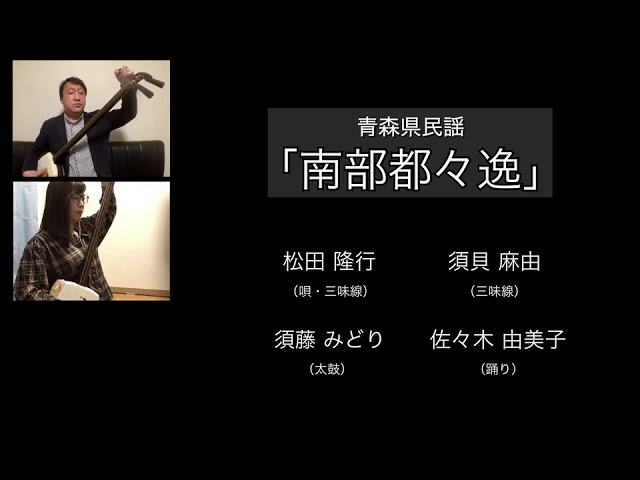
This piece is a song that took shape in Edo during the Tenpō era with a 7-7-7-5 meter, was carried to the Nanbu region of Aomori, and nurtured into a distinct folk tune.
Beyond love songs, it weaves in everyday wisdom and the humor of common people who laugh off hardship, all expressed through the local dialect.
Its generous melodic phrasing offers a gentle flavor unique to Okunanbu, different from Tsugaru folk songs.
While it originally centered on singing, choreography was codified in the Showa period, and it came to be enjoyed as a dance as well.
Why not immerse yourself in this simple, heartwarming world born from local life?
Apple tune

Composed in 1954, this is a relatively new folk song themed around Aomori’s famed apples.
Its lyricist and composer, Untake Narita, hails from Nishitsugaru in Aomori.
Tsugaru folk songs are now renowned nationwide, but there was a time when they were looked down upon as beggars’ songs.
Nambu Tawatsumi Uta

This is a kadozuke song handed down in Sannohe District, Aomori Prefecture.
Kadozuke songs are performed when entertainers visit the gates or parlors of homes, showcasing arts like drumming, shamisen, and dance, and receive money or goods in return.
At New Year’s, kadozuke performers would sing this lively folk song, lavishly praising the master’s storehouses and residence.
Focusing on the lyrics—basically showering the head of the household with praise like “the master of this house is amazing”—you can picture how, in the past, having kadozuke songs boisterously performed at New Year’s was a status symbol for the wealthy.
Aomori Folk Songs, Children's Songs, and Nursery Rhymes | Soul-stirring Japanese Songs Alive in Tsugaru and Hachinohe (11–20)
Tsugaru Aiya-bushi

Tsugaru Aiya-bushi is one of the five great folk songs of Tsugaru, alongside Tsugaru Ohara-bushi, Tsugaru Yosare-bushi, Tsugaru Jongara-bushi, and Tsugaru Sansagari.
“Aiya” is a chant meaning “south wind,” shouted by fishermen as they set sail.
The original pronunciation was “hae,” which evolved over time to hae → haea → haeya → haiya → aiya.
With its brisk tempo, this bright folk song captures the vigor of fishermen heading out to sea while praying for a big catch.
Tsugaru Ondo

Although it’s named like an ondo (lead chant) and has “Ondo” in the title, the song “Tsugaru Ondo” differs in style from a traditional ondo.
The original piece for this work is a song called “Akita-bushi.” In order to bring a forgotten folk song to the public, Untyoku Narita, a master of the Tsugaru folk music world, gave it the impactful title “Tsugaru Ondo,” under which it became widely known.
Tsugaru Ohara Bushi

“Ohara-bushi” is a style of folk song sung throughout Japan, and “Tsugaru Ohara-bushi” is cherished as one of the representative folk songs of the Tsugaru region.
It is said that this song, traditionally performed at drinking parties, originated as a variation of the Miyagi prefectural folk song “Shiogama Jinku.”
An Apple’s Soliloquy

This is a children’s song told from the very endearing perspective of a bright red fruit narrating its own journey.
It vividly sings, with rhythmic expression, of being jostled by a train from fields in the far north to the markets of the big city.
Knowing that lyricist Toshiko Takeuchi drew inspiration while bedridden from a get-well gift of apples may deepen one’s sense of her yearning for a freer world and her feelings for her hometown.
The song was recorded in February 1940, sung by Junko Kawamura.
It has even been adopted as the arrival melody at JR Gono Line’s Fujisaki Station, and is cherished as a piece that strongly evokes Aomori.