

Folk Songs, Children's Songs, and Nursery Rhymes of Aomori: Japanese Songs from Tsugaru and Hachinohe that Resonate with the Heart

Aomori Prefecture is alive with a rich tradition of culture and performing arts.
In the lands of Tsugaru and Hachinohe, the emotive strains of folk songs still resound today.
Coupled with the powerful tones of the Tsugaru shamisen, Aomori’s folk music speaks deeply to our hearts.
In this article, we have carefully selected “folk songs, children’s songs, and nursery rhymes of Aomori,” born from the lives of people shaped by mountains, the sea, and a harsh climate.
We present timeless masterpieces that have been lovingly sung and passed down through the ages.
Won’t you lend an ear to the world of songs that can truly be called the heart of Aomori?
- [Songs of Aomori] A collection of local songs depicting the grandeur of nature and the warmth of its people.
- [Japanese Folk and Regional Songs] A Collection of Beloved Masterpieces from Across Japan, Brimming with Local Pride
- Folk songs, children's songs, and nursery rhymes of Iwate: the heart of the hometown passed down through song
- [Folk Songs and Children's Songs of Akita] A curated selection of local masterpieces that evoke love for one’s hometown
- Beautiful Folk Songs Passed Down in Miyagi Prefecture: A Collection of Masterpieces that Play the Heart of the Hometown
- Folksongs, children's songs, and nursery rhymes of Fukushima: the heart of our hometown passed down in song
- Ranking of Popular Folk Songs
- Niigata’s folk songs, children’s songs, and nursery rhymes: the heart of our hometown passed down in song
- Folk songs, children's songs, and nursery rhymes of Toyama: the enduring heart of our hometown passed down through song
- [Folk and Children's Songs of Hokkaido] Songs of Hokkaido that continue to be loved across generations
- [February Songs] Introducing children's songs, folk songs, nursery rhymes, and hand-play songs about Setsubun and winter!
- [Folk Songs of Yamagata] The Heart of Our Hometown Passed Down in Song: Feelings Woven into Nostalgic Melodies
- Tokushima’s Folk Songs, Children’s Songs, and Nursery Rhymes | Traditional Songs Rooted in the Region, Including Awa Odori
Aomori Folk Songs, Children's Songs, and Nursery Rhymes: Japanese Songs That Resonate in the Heart, Alive in Tsugaru and Hachinohe (21–30)
Hachinohe Port Festival Ondo
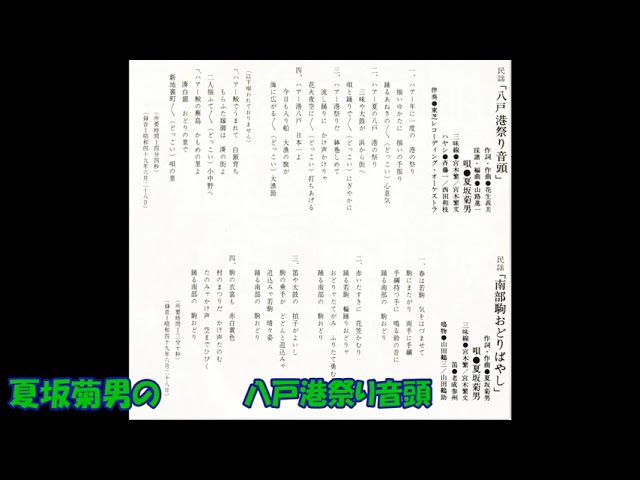
A lively local folk dance song that sounds just like the bustling postwar port of Hachinohe itself.
The up-tempo melody woven from shamisen, shakuhachi, and spirited calls conveys the heat of a port rejoicing in a big catch and the exhilaration of a festival.
The lyrics depict boats and the lives of fishermen, and just listening to it makes your heart skip, doesn’t it? A recording by the folk singer Kikuo Natsusaka survives, and the song has long been cherished as the official dance tune of the Hachinohe Port Festival.
Doesn’t it make you feel as if you can see the port town’s vigorous breath and the smiles of its people?
Nambu Cattle Drivers’ Song
A cattle-driving song sung by drovers from the former Nanbu domain’s Sannohe region as they led their oxen on the road.
They loaded salt, fish, and sundries landed at Hachinohe Port onto the oxen’s backs to sell in Kazuno District, Akita Prefecture, and on the return trip carried ore from Kazuno.
It is said the song was sung like a lullaby to the oxen, as if to ease the drovers’ loneliness during the long journey.
Aomori Folk Songs, Children’s Songs, and Nursery Rhymes | Japanese Songs that Resonate in the Heart, Alive in Tsugaru and Hachinohe (31–40)
Tsugaru Shiogama JinkuSasaki Rie

This is a song sung by people involved in salt making in the early Meiji period.
The Shiogama Jinku from Miyagi Prefecture is also well known, but the original song is “Nambu Aiya-bushi,” and up until the mid-Meiji period the Shiogama Jinku was called “Aiya-bushi.” It was then effectively reimported by Same Port in Hachinohe, Aomori Prefecture, and became known as “Tsugaru Shiogama Jinku.” Perhaps they sought to soothe the harshness of their heavy labor through song.
Tsugaru Mountain SongSatō Nobuo

It is a celebratory song that has been sung in mountain villages in the western part of Aomori Prefecture.
It is also known as a celebratory song called “Jūgosshichibushi,” found across the Tohoku region in Akita, Iwate, and Aomori.
In Aomori, it serves as a celebratory song dedicated to the mountain deity in connection with mountain worship, such as at Mount Iwaki.
Tsugaru mountain songs have two styles of singing: the “East Route” and the “West Route.” The “East Route mountain song” has a rather old-fashioned melody and is not often sung today, whereas the “West Route mountain song” is the folk style that is commonly performed.
Silver Killer
This song blends the wistful strains of the Nanbu Jinku with the familiarity of a children’s lullaby.
Set in the port town of Hachinohe in Aomori Prefecture, it gives voice to the fishermen’s conflicted feelings about visiting the red-light district and the guilt they carry toward the families they leave at home—an aching, helpless state of mind.
Some may wonder why such a heavy theme has been passed down in so gentle a melody.
Originally an orally transmitted song, it was compiled as a new folk song around 1954 by Narita Untyoku, a promoter of Tsugaru folk music.
When you want to enter a musical world infused with the complex emotions of people who lived in a harsh land, you’ll find yourself drawn to listen closely to its profound depths.
Mountain Pilgrimage Climbing Festival Music

Born from deep faith in Mount Iwaki, the sacred peak of Tsugaru, this is a solemn melody of prayer.
The penitential feelings of those who journey toward the mountain echo in the heart as a repeating motif.
The festival music woven by conch shells, flutes, and drums seems to depict the very essence of Tsugaru’s harsh yet beautiful nature.
This sacred worldview was also brilliantly reimagined by the post-rock unit Kuuki Koudan.
Their 2013 cover, while honoring the ritualistic atmosphere of the original, breathes new life into it with a contemporary sensibility.
Listen when you wish to quiet your mind and touch the soul of Japan, and you will find yourself enveloped in a purifying air.
Hachinohe Great Catch Ondo
Created in celebration of the renovation of Hachinohe’s port in 1931, this is one of the region’s representative folk songs.
The lively rhythm of the ondo seems to express the robust spirit of fishermen brimming with hope and joy for a big catch.
The lyrics skillfully weave in the names of fish like sardines and mackerel, evoking the bustle of a port town and the merriment of festive banquets.
The song is included on folk singer Eijiro Azuma’s 1998 album “Minyo Kiko.” Its cheerful tune naturally gets your body moving, making it perfect for singing and dancing together at festivals and celebrations.
Why not listen to it while reflecting on Hachinohe’s rich fishing culture?