

[Diction Training] A Collection of Tongue Twisters to Improve Articulation

Tongue twisters are phrases that you repeat as fast as you can, even though they’re hard to say.
Many of you may have played with them when you were kids.
Tongue twisters aren’t just a fun pastime—they’re also effective for improving your articulation.
In this article, we’ll introduce tongue twisters that help you speak more clearly!
They’re great not only for articulation practice if you’re aiming to become an announcer or voice actor, but also useful when you’re asked to give a wedding speech or have to present in front of your class.
Practice hard and use them to achieve your dreams and goals!
- A collection of long tongue twisters. Also recommended for practicing announcements and narration.
- Tongue twisters that will make you laugh out loud! Super funny
- Challenging tongue twisters: Introducing high-difficulty phrases and sentences!
- [Recreation] Challenge! A roundup of tongue twisters recommended for elementary school students
- [Diction Training] A Collection of Tongue Twisters to Improve Articulation
- Perfect for pronunciation practice! A collection of English tongue twisters.
- Can you say them? A collection of Hakata-dialect tongue twisters
- Nagoya dialect tongue twisters are exquisite! A fun collection where your tongue gets tied in knots with regional dialects
- “Chau chau, anta” — a Kansai-dialect tongue twister. A phrase only Kansai folks can say.
- [For Seniors] Boost Oral Function with Tongue Twisters! Recommended Picks to Try
- Chinese tongue twisters: A collection of rao kou ling helpful for learning Chinese
- Challenge together! A roundup of word games for adults
- [Rec] Interesting! A roundup of wordplay games
[Diction Training] A Collection of Tongue Twisters to Improve Articulation (21–30)
Ultimate luxury aircraft at a deserted Kyushu airport

This passage contains many words starting with the K sound, so many people might stumble over the latter half with “kyūkyoku kōkyū kōkūki” (ultimate luxury aircraft).
The first half, “kūkyona Kyūshū kūkō” (empty Kyushu airport), is still easier to say, but the shift from kōkyū to kōkūki is particularly tricky.
If you try to rush through it, your mouth won’t keep up, so be mindful of your speed and deliberately shape each word with your lips and tongue.
There’s a “no” in the middle of the sentence, so it’s helpful to imagine taking a brief pause there.
Once you can do that, practice saying the whole thing in one breath.

Director of the Tokyo Patent Approval Bureau suddenly had his leave request denied today.

This is a more difficult version of the classic tongue twister “Tokyo Patent Approval Office.” Even just the commonly played first half is quite challenging, but after that, many words using kya, kyu, and kyo appear, making it harder and harder to keep your tongue moving.
To avoid getting tripped up by these palatalized sounds, try emphasizing the words that don’t contain them.
It’s also recommended to practice by breaking the passage into a few parts.
Once you can pronounce each word cleanly, try saying the whole thing quickly.

Frogs go pyoko-pyoko, three pyoko-pyoko; together pyoko-pyoko, six pyoko-pyoko.
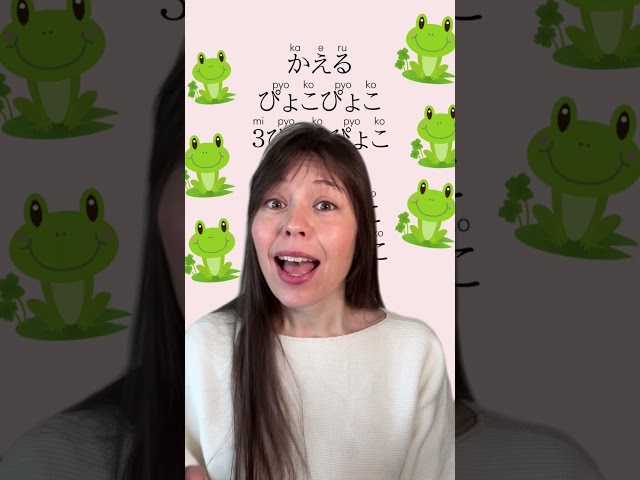
If you can say it clearly, it sounds cool—this is one of the classic tongue twisters.
“Pyoko-pyoko” is just so hard to say! Quite a few people end up turning “pyo” into “po.” To deliver this one quickly and stylishly, start by pronouncing it slowly and make sure “pyo” doesn’t become “po.” Even after you can say it slowly, don’t speed up all at once—gradually pick up the pace.
Practice until you can say it well enough to show off with confidence.
export car export hot water export vinegar

It’s a tongue twister that depicts various things being exported, and the fact that, aside from export cars, the other terms aren’t very familiar is part of what makes it amusing.
You might even find yourself wondering whether hot water or vinegar would ever actually be exported.
What matters first is pronouncing “yushutsu” (export) accurately—especially getting “shutsu” right—so you don’t get thrown off by what comes before and after it.
Start by pronouncing each word separately, then gradually increase your speed; that’s the recommended approach.

Victory in an osteoporosis lawsuit

There are probably many people who don’t feel confident they can clearly say even just “osteoporosis” quickly.
Even if you break it into parts, each one is hard to pronounce, right? Since “so” and “shō” share the same vowel, it’s only natural that they get mixed up.
That’s exactly why it looks super cool if you can link each part smoothly and pronounce it without stumbling! Start by separating it, making each word crisp and clear, then connect them all, gradually increasing your speed as you practice.