

A compilation of unsettling trivia and fun facts about Earth


Earth, home to humans and countless other living things.
Like outer space, it’s still full of mysteries, and research is advancing every day.
In this article, we’ll share general trivia and fun facts about our planet.
We’ve gathered a variety of information about Earth—from its history, to slightly scary stories about the future, to astonishing phenomena.
As you learn, you may feel a little unsettled, be inspired to act more environmentally friendly, or be moved to think more deeply about our planet.
Discover Earth’s surprising facts and hidden secrets!
- Didn't want to know?! Fascinating and scary trivia & fun facts
- A quiz of fun trivia: bite-sized knowledge that leads to new insights.
- Fun to Know! A Collection of Space Trivia [Rec]
- A collection of trivia and fun facts about space, brimming with dreams and romance
- Trivia and fun facts about food (summary)
- Trivia quiz with useful tips to know: fun facts that come in handy at school or at home [for kids]
- Make weather forecasts more fun! Trivia and fun facts about the weather
- Collection of trivia and fun facts about stars shining in the night sky
- English will become more fun! A collection of trivia and fun facts about the English language.
- Trivia you think you know but surprisingly don’t? August trivia and fun facts quiz!
- A roundup of insect trivia: fun facts you'll want to share
- [Snake Trivia] Things you actually don’t know about snakes. Packed with astonishing facts!
- Useful right away in daily life! Surprising trivia and handy tips
A collection of unsettling Earth facts and trivia (21–30)
There is another large river beneath the Amazon River.
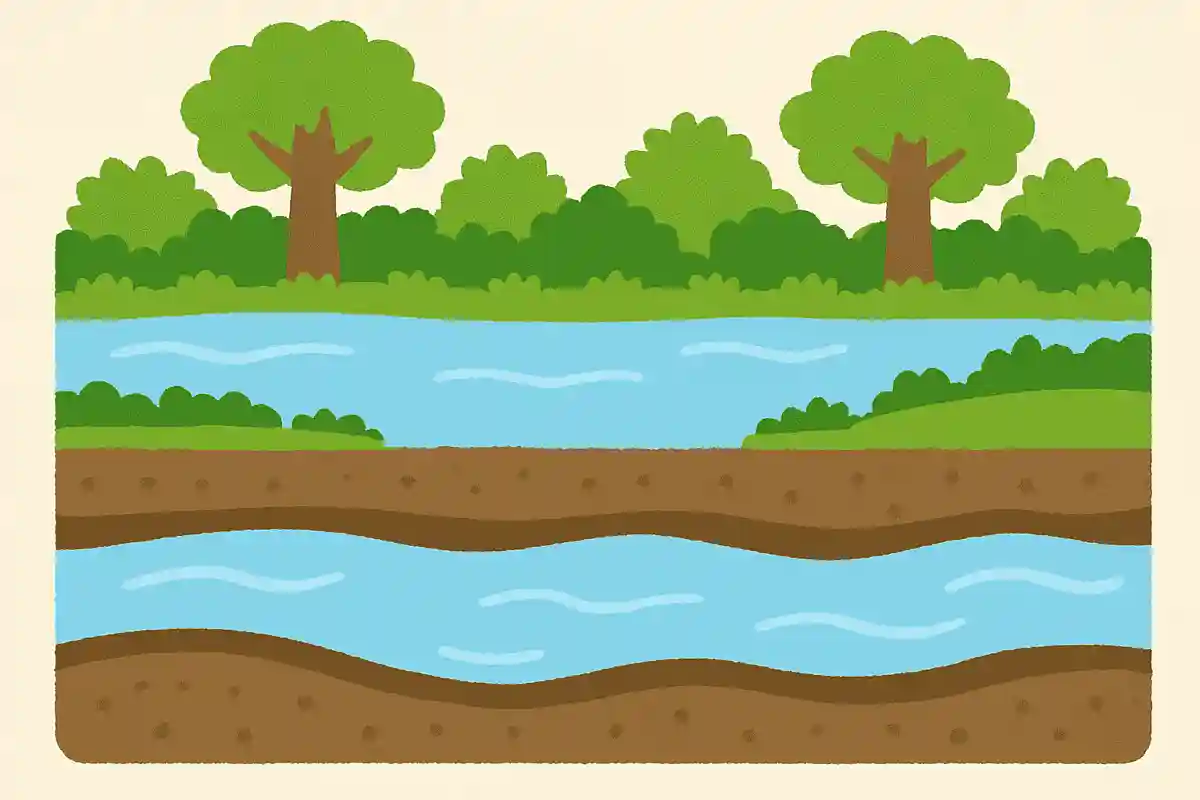
There’s probably no one who hasn’t heard of the Amazon River.
It’s the massive river that runs through the tropical rainforests around Brazil and flows into the Atlantic Ocean.
What’s less well known is that there’s another river flowing beneath it.
It’s called the Hamza River.
Because it carries a lot of sediment, its flow is slow, but in some places it’s said to be even wider than the Amazon.
There’s still a lot we don’t know about the Hamza River, but as research progresses, there’s a chance we’ll discover unknown forms of life.
It’s a little exciting to think about, isn’t it?

The distance around the Earth was first measured in the BCE era.
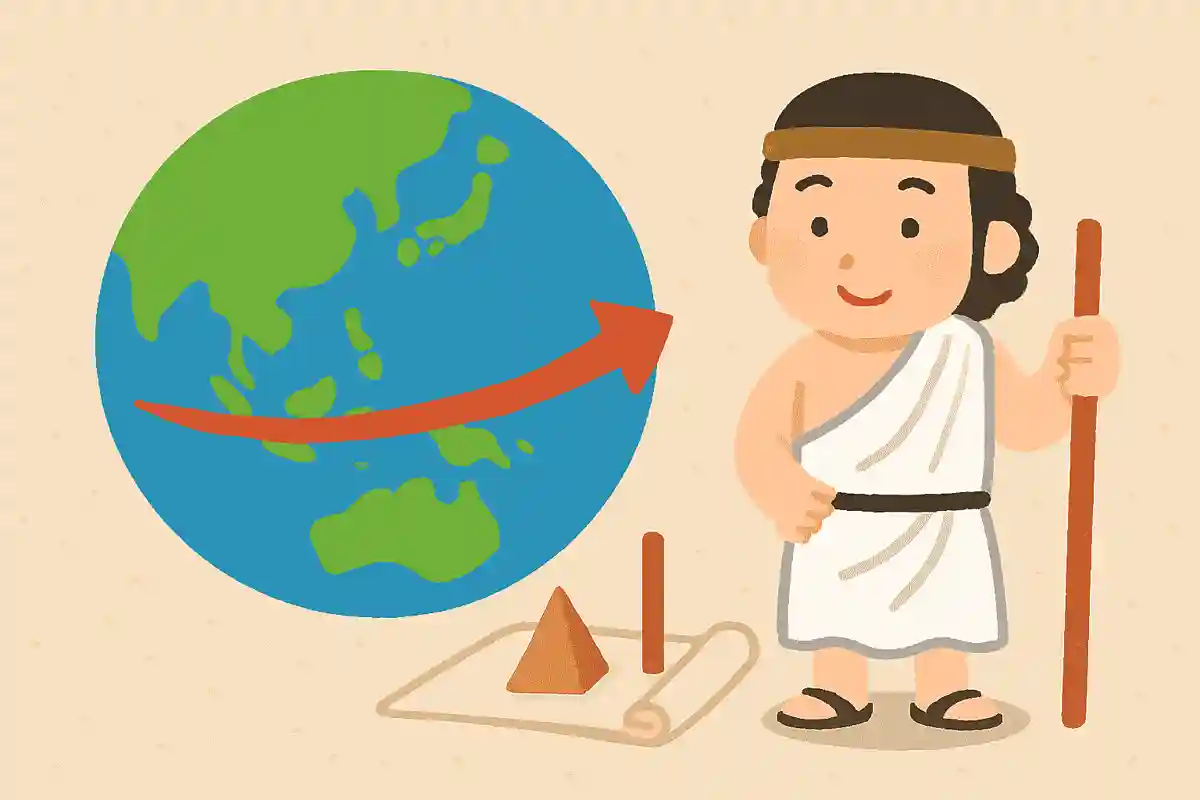
Can you calculate the distance around the Earth? You might think, “That’s impossible without a computer or a world map.” But in the 3rd century BCE, someone figured it out without even a calculator.
That person was Eratosthenes, an Egyptian astronomer.
Noticing that on the summer solstice there were places where sunlight shone directly and places where it didn’t, he used the distance between the two locations to calculate the Earth’s circumference and arrived at 45,000 km.
The actual distance is 40,075 km, so his result was a bit off—but still amazing, isn’t it?
The Earth could be swallowed by the Sun.
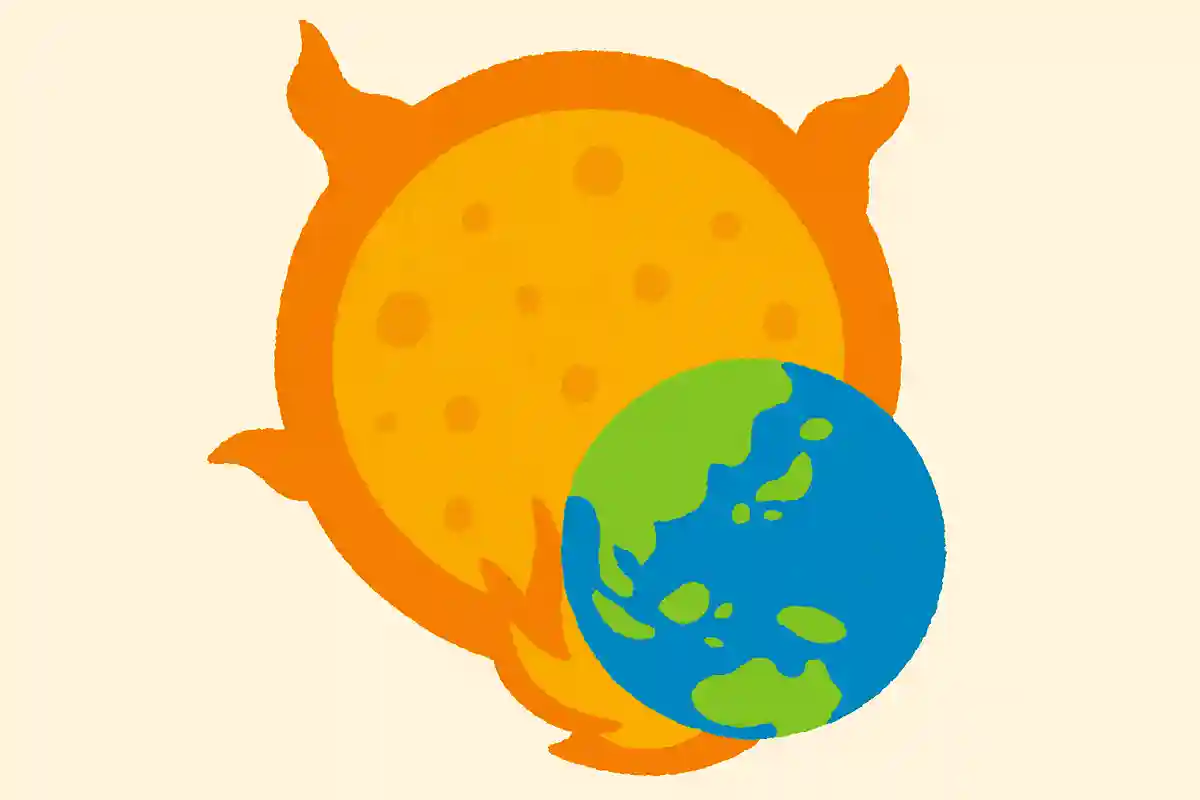
It’s a slightly shocking bit of trivia, but Earth may eventually be swallowed by the Sun.
That’s because the Sun is gradually expanding and inching closer to Earth.
Once it reaches a certain distance, it’s said that Earth’s surface will be scorched and the oceans will dry up.
It’s chilling to think about, isn’t it? And even if we could avoid that scenario, Earth still wouldn’t be saved, because the Sun is destined to burn out someday, and when it does, Earth’s plants would perish.
That said, this is still far in the future, so there’s no need to worry too much.
One circumnavigation of Earth is about 40,000 km.
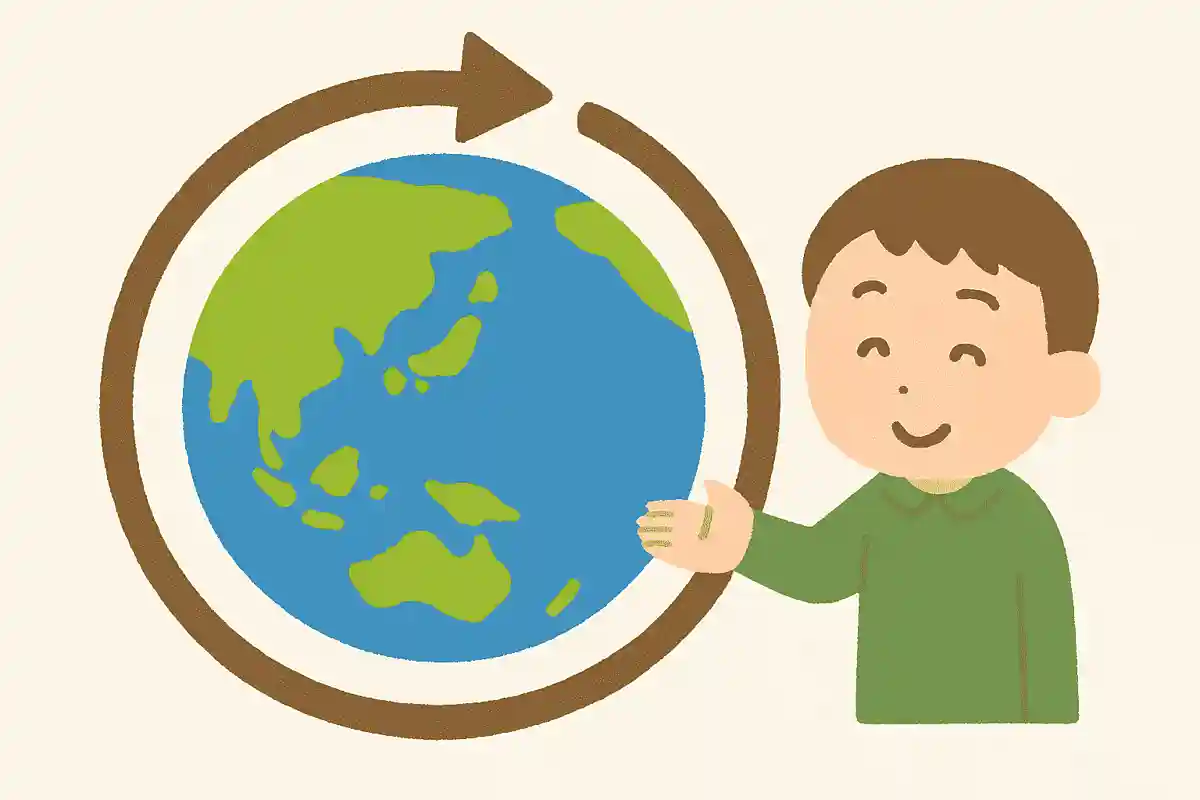
The length of one circuit around the Earth is about 40,000 kilometers, which is a nice round number.
The reason is that our current standard of length was based on the Earth’s circumference.
Toward the end of the 18th century, units of length varied around the world.
It was the Age of Exploration, and distances across the globe were shrinking, but differing units among countries caused problems.
So a global standard for length was established: one meter was defined as the distance along the meridian from the equator to the North Pole divided by ten million.
Since it’s 10,000 kilometers from the pole to the equator, multiplying by four gives the circumference of the Earth.

Only about 0.01% of the water on Earth is available for use.
The Earth we live on is covered by water over 70% of its surface.
Of that, 97.5% is salt water such as in the oceans, leaving only 2.5% as fresh water.
Moreover, since most fresh water is locked in glaciers, it’s said that only 0.01% is available as drinking water.
We usually use clean water as if it were a given, but it turns out it’s extremely precious.
Incidentally, if all the water on Earth were cut out as a single block, its volume would amount to 1.4 billion cubic kilometers.
If all the ice in the Arctic and Antarctic melts, many of the world’s cities will sink.
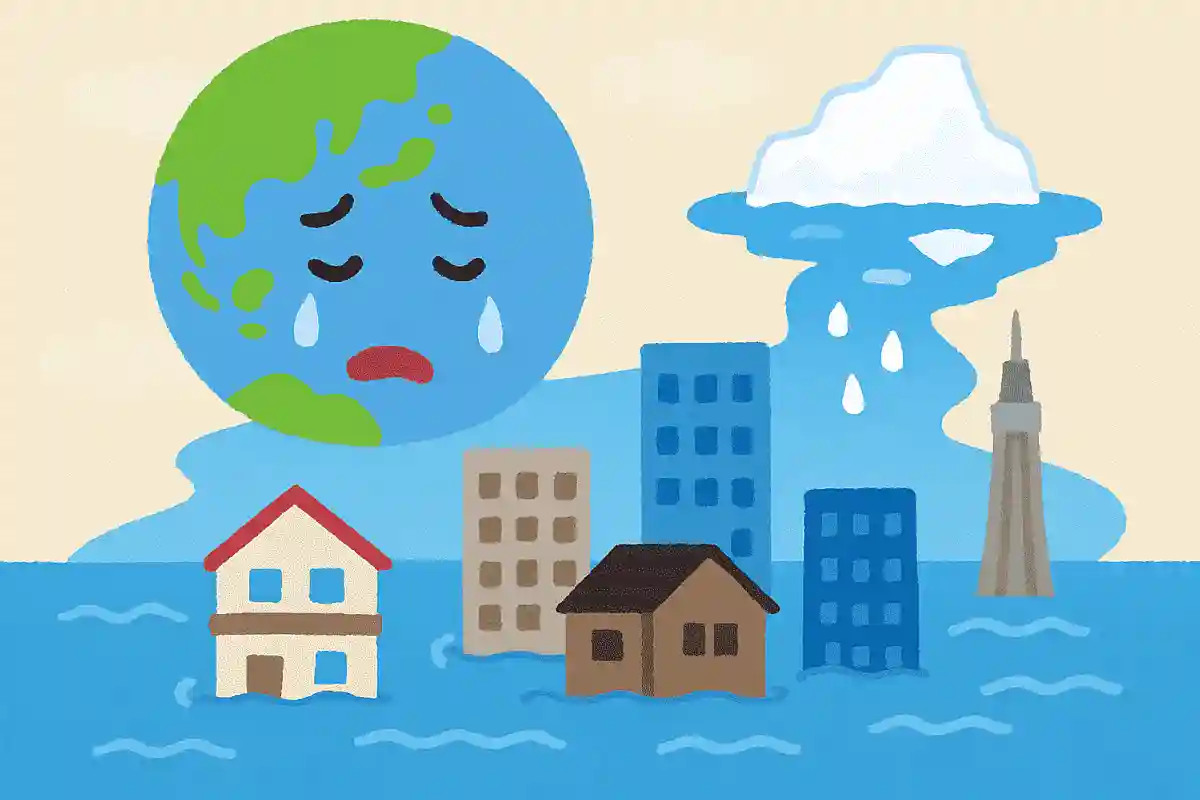
In recent years, with global warming being widely discussed, it’s said that the ice in Antarctica and the Arctic is melting.
That naturally raises the question: what happens when the ice melts? Put simply, sea levels will rise, and many areas of land will be submerged by the ocean.
It’s also said that environmental changes could lead to heat waves and the spread of infectious diseases.
To avoid such frightening scenarios, we should be mindful of our impact on the environment.
Incidentally, if the ice continues to melt at the current pace, it’s said that Japan’s sandy beaches will disappear by the year 2100.
How many times per second is lightning said to occur on Earth?
- about 10 times
- about 100 times
- About 1,000 times
See the answer
about 100 times
It’s estimated that about 100 lightning strikes occur every second across the entire Earth. This high number is because lightning is happening simultaneously all over the world. By the way, do you know which regions in Japan have the fewest thunderstorms? Hokkaido and Aomori. As you’d expect, lightning tends to occur more easily in warmer places.